dailynewsnblog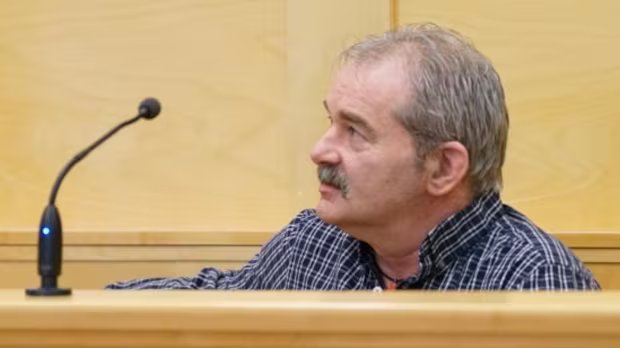
What to know about the defence’s closing arguments
Is Dean Penney capable of planning, executing and cleaning up a murder so perfectly that he left little to no physical evidence behind? Or is he just a gullible fisherman who sunk so deep into a fake criminal enterprise he felt he had no other choice but to confess to a crime he did not commit?
That’s the question defence lawyer Jeff Brace asked the jury during his closing submissions on Tuesday, in Penney’s first-degree murder trial for the disappearance of his wife, Jennifer Hillier-Penney in 2016.
Brace — a veteran defence lawyer from St. John’s — said the RCMP had “tunnel vision” and ignored crucial tips in the aftermath of Hillier-Penney’s disappearance. He said they ensnared his client in a five-year Mr. Big sting operation when they knew they had no other evidence to lay a charge.
That covert operation eventually resulted in two confessions: one in which Penney said his wife fell over the stairs during a heated argument and struck her head, and another in which he said he finished the job with a small mallet.
“One of two things is at play here: Mr. Penney is a criminal mastermind or this didn’t happen,” Brace told the jury. “I would suggest to you it didn’t happen.”
Brace’s closing arguments were lengthy, running from 10 a.m. until nearly 4 p.m. He covered a wide range of evidence heard during the trial, and how Penney was influenced by what he called the three Fs — finances, friendship and fear.
Penney was “destitute” when the undercover officers dangled the possibility of a job as a yacht captain for the fabricated criminal organization. His closest friend at the time was an undercover cop who, years into their friendship, confessed to killing someone in Saskatchewan. Police testified this scenario was concocted to make Penney feel comfortable confessing to his involvement in Hillier-Penney’s disappearance, but Brace said it only served to scare his client.
Brace also picked apart inconsistencies in the two videotaped confessions Penney eventually gave to the undercover officers. Aside from the major inconsistency in manner of death, Brace said there were other smaller variances between the two stories that didn’t add up. Did he wrap the body in a Sea-Doo cover or a duck decoy bag? Did he change his clothes at home or at his cabin? And what did he do with his boots?
“These images would be burned into your brain if they were true,” he told the jury.
Finally, Brace raised a question that did not sit well with the Hillier family seated in the courtroom: Is there evidence Jennifer Hillier-Penney is even dead? He raised this early in his submissions, and returned to it to close it out. Before the jury can convict Penney of anything, he said, they must first agree that Hillier-Penney is dead.
“If you’re sitting back and you’re saying ‘maybe,’ then your answer is not guilty.”
Crown prosecutors Shawn Patten and Kate Ashton will give their closing submissions on Wednesday morning. Justice Vikas Khaladkar said he could give his final instructions after that, which means deliberations could start as early as Wednesday afternoon or evening.