dailynewsnblog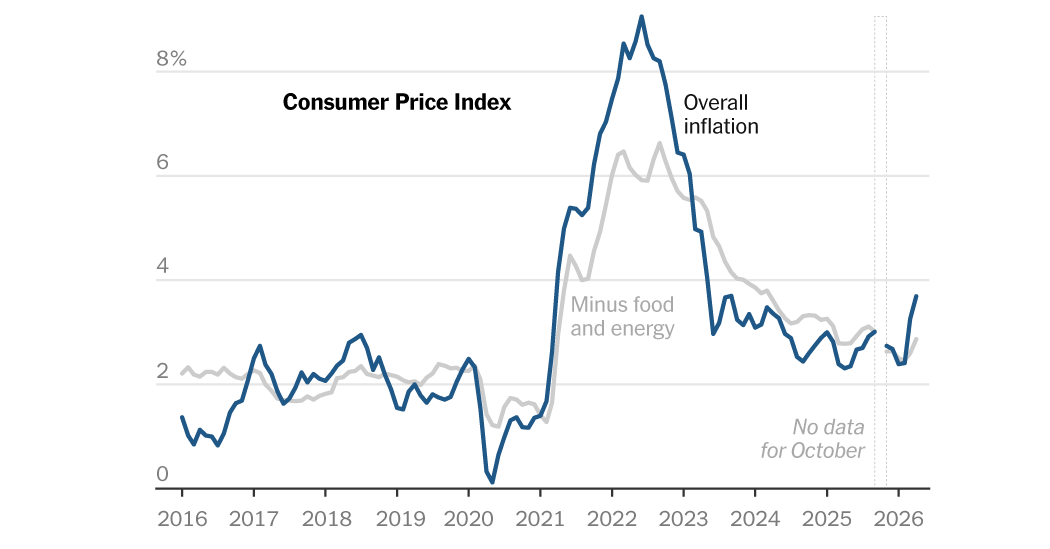
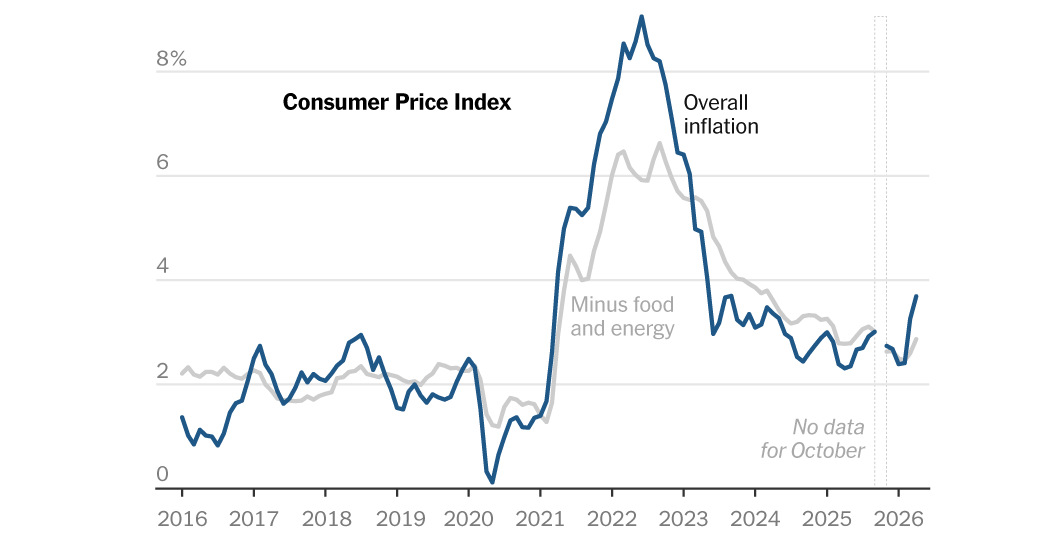
Consumer prices in the United States rose at the fastest rate since May 2023 last month, as sharp increases in energy costs caused by war in the Middle East made life more expensive for American consumers.
The Consumer Price Index rose 3.8 percent in April from a year earlier, the Labor Department reported on Tuesday, up from a 2.4 percent annual increase before the conflict started in February and a 3.3 percent increase in March.
The increase was driven largely by energy prices, up 3.8 percent since the previous month. But the “core” index, stripping out volatile food and energy prices, also rose 2.8 percent over the year in April, up from 2.6 percent in March.
As the heat from President Trump’s tariffs has faded from inflation readings this year, shortages of commodities blocked from transiting through the Strait of Hormuz are taking its place as a pressure on prices. Average gasoline prices are above $4.50 per gallon, according to AAA, while diesel prices have nearly doubled.
Higher fuel costs are bleeding into prices for transportation including airline fares, which rose 2.8 percent in April, as well as goods that get to market in a truck or on a boat. Grocery costs rose 2.9 percent since last April, driven largely by the price of beef, which has been rising because of smaller cattle herds.
A statistical quirk also pushed up the index, as federal surveys caught up from the government shutdown last fall. Unable to collect housing data on its normal schedule, the Bureau of Labor Statistics had to wait until April, masking what might have been a swifter deceleration given cooling rents and home prices. Rents and the measure of costs for people who own their home both rose 3.3 percent over the year, up from an annual increase of 3 percent for the previous three months.
Business leaders also see the higher costs filtering into prices. Chief executives surveyed quarterly by the Cleveland Fed on average see inflation running at 3.7 percent over the next year, the highest expectation since last April, after Mr. Trump imposed sweeping tariffs on most of the rest of the world.
After the Supreme Court overturned that subset of tariffs, the average overall tariff rate stands at about 11 percent, according to the Yale Budget Lab — before taking into account how consumers have gravitated toward goods subject to lower tariffs.
Consumers have registered their disapproval with higher prices as well, through record low economic sentiment measures and deeply negative approval ratings for Mr. Trump’s handling of the economy.
Although the Federal Reserve has said it looks past swings in energy costs, as they are generally expected to recede before translating into underlying inflation, the hotter-than-expected measure will weaken the case for cutting interest rates this year. With the strong jobs report last week, many analysts had already moved back their forecasts for cuts into 2027.