dailynewsnblog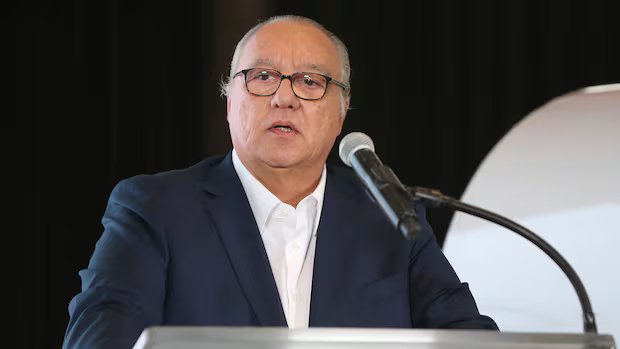

Listen to this article
Estimated 4 minutes
The audio version of this article is generated by AI-based technology. Mispronunciations can occur. We are working with our partners to continually review and improve the results.
The CEO of the American company that owns Hamilton-based steelmaker Stelco says he’s prepared to fight the Canadian government in court to preserve Stelco’s plan to lay off hundreds of workers.
Speaking Sunday on CBC’s Rosemary Barton Live, Cleveland-Cliffs CEO Lourenco Goncalves disputed the government’s characterization that the company is violating binding employment commitments under the Investment Canada Act.
Industry Minister Mélanie Joly said last week that Cleveland-Cliffs’ 2024 purchase of Stelco included “undertakings to continue to employ at least the same number of unionized employees and the vast majority of non-unionized employees as were employed when the transaction was announced” through 2029.
“There is no provision in the contract that I have to keep employment at a certain level every single day of the five years,” Goncalves said on Sunday. “If that was an imposition of the Canadian government, I would not have accepted.”
Goncalves reiterated Stelco’s position that the layoffs are a temporary measure until Canada and the U.S. reach a trade agreement, and that the jobs will be restored.
He also said he’s open to selling the company and voiced support for U.S. tariffs on Canadian steel, despite Stelco citing tariffs as a key reason for its economic struggles.

Lourenco Goncalves, CEO of Stelco parent company Cleveland-Cliffs, speaks with CBC’s Rosemary Barton following his company’s official response to the federal government’s threat of legal action amid layoffs at the company’s Hamilton, Ont.-based steel plant. In a letter obtained by CBC News, Stelco says it is not violating employment commitments.
Ultimatum from Canadian government
Joly issued an ultimatum to the company last week: share a plan to save the up to 500 jobs that could be impacted at the Hamilton plant or face potential legal action.
Prime Minister Mark Carney also said last week that Ottawa will “use all powers that we have” against Cleveland-Cliffs as it pursues the Ohio-based company to the “fullest extent of the law.”
Stelco Inc. said in a letter responding to Joly that the company will proceed with the layoffs and the government’s characterization of the move as a breach of undertakings is “false.”
The company emphasized “Stelco’s situation is a result of factors beyond its control,” citing the impact of U.S. President Donald Trump’s 50 per cent tariffs.
But Goncalves said Sunday he supports steel tariffs against Canada.
“I am in favour of tariffs against all the countries in the entire world that dump steel into the United States,” he said, adding that the Section 232 tariffs have brought “the American steel industry back.”

A drone photograph shows the Stelco Hamilton Works steel mill, owned by Cleveland-Cliffs, in Hamilton last month. (Carlos Osorio/Reuters)
“I’m in favour of Section 232. There’s no doubt about it.”
Asked whether he would consider selling the company, Goncalves said, “For a good offer, yes,” but added that he still believes the company can “continue to be a good citizen in Canada.”
He told CBC News in a previous interview that he “would not have acquired the Stelco if I knew that Canada and the United States would become what they became — enemies in trade.”
Layoffs underway
Jordan Williams, a Stelco employee who received a layoff notice last week, is calling on Goncalves to provide a written response to workers’ concerns, including a “credible” plan for Hamilton’s cold-rolled and coated steel operations in the future.
“What steps will you take to protect jobs, support our families and provide a path back to work?” he said in a statement sent to CBC News Sunday. “These layoffs reach beyond the plant gates and into the businesses and neighbourhoods that depend on Hamilton industry.”
Ron Wells, president of the United Steelworkers Local 1005, which covers Stelco workers in Hamilton, told CBC News last week that layoffs are underway and expected to roll out over three weeks.
He said he expects 300 to 350 layoffs in Hamilton, with more at Stelco’s Lake Erie Works in Nanticoke, Ont.
Wells told CBC News at the time that Goncalves, who has previously expressed support for Trump and his tariffs, is eager to make it appear as though Trump’s tariffs are working ahead of midterm elections in the U.S.
“I hope, basically, the federal government makes an example out of them,” Wells said. “We just want to make sure they … follow through with it.”