dailynewsnblog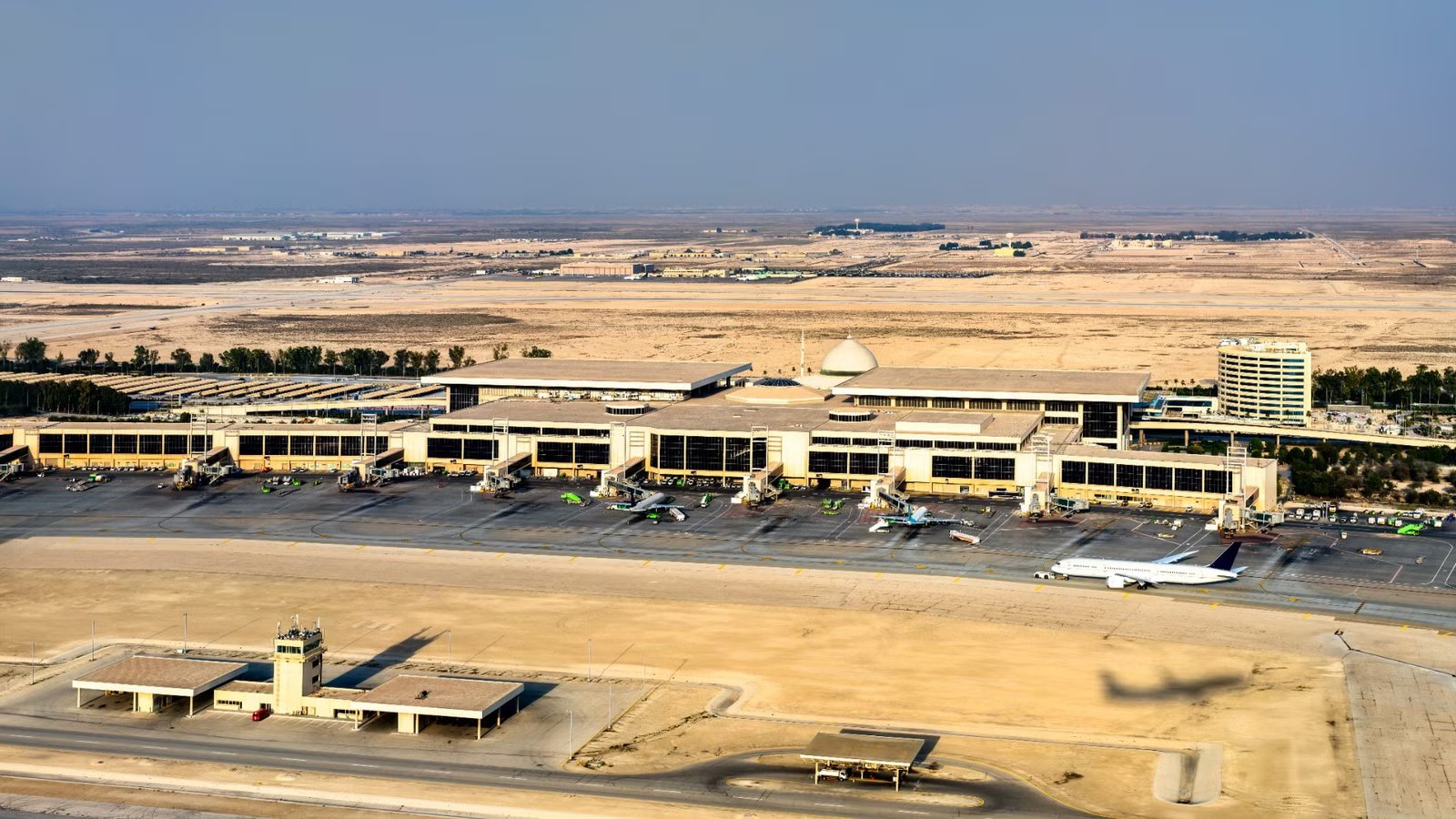
Saudi Arabia‘s aviation network is facing mounting security concerns after an attack struck King Fahd International Airport (DMM) in Dammam on Sunday, October 11, 2026, as the death toll from a deadly attack on Riyadh‘s King Khalid International Airport (RUH) rose to 13. Yemen’s Houthi movement claimed responsibility for the earlier Riyadh strike, while it had also targeted Dammam, escalating a campaign against Saudi infrastructure amid intensifying regional hostilities. Saudi authorities are assessing the damage, while reports of intercepted missiles and drones have added to concerns about the security of the kingdom’s airports. Reuters’ report on the attacks provides further details.
The developments threaten to disrupt air travel in a country that serves as a major connecting point for international passengers, business travelers, and energy-sector traffic. Riyadh’s main airport remained closed following Saturday’s deadly incident, while the latest reports from Dammam Airport indicated delays and cancellations. The situation could have wider implications for regional flight schedules if the attacks continue.
Dammam Airport Targeted As Attacks Spread

The attack on Dammam Airport marks a significant escalation because the violence has now reached another major Saudi aviation hub. According to Reuters, Saudi Arabia’s civil aviation authority confirmed the incident late on Sunday and said damage assessments and safety inspections were underway. An eyewitness told the news agency that a projectile struck the tarmac near several parked aircraft at approximately 8:30 p.m. local time, starting a fire. The aircraft the witness was traveling on returned to its gate, and passengers were instructed to disembark and leave the airport.
The available reports have not yet established the full extent of the damage at Dammam. Simple Flying reached out to the airport authority but hadn’t received a response by the time the article was published. Nevertheless, flight-tracking data showed multiple delays and cancellations affecting arrivals and departures that evening, suggesting an immediate impact on airport operations. Dammam is particularly important because it serves Saudi Arabia’s Eastern Province, a major oil-producing region, and is the kingdom’s third-largest airport. Any prolonged interruption could affect both domestic connections and international services serving the region’s business and energy industries.
The Houthis claimed responsibility for the Dammam attack, along with strikes against Saudi Aramco facilities. Saudi authorities had also reported the interception of a drone in the Eastern Province, although the available information does not establish that this was the same projectile involved in the airport incident. Investigators continue to assess the events and determine precisely what happened at each location.
Riyadh Airport’s Death Toll Rises To 13

The latest incident follows a devastating attack on King Khalid International Airport in Riyadh on Saturday, October 10. According to Reuters, 13 people were killed and more than 300 injured in the strike, making it one of the deadliest attacks on Saudi Arabia in recent years. India’s embassy in Riyadh confirmed that one of its citizens who had been injured in the incident subsequently died, increasing the initial death toll from 12. The airport remained closed on Sunday as authorities dealt with the aftermath.
The Riyadh Airport attack was not an isolated incident. Reuters also reported that it was the third attack targeting the facility within a week, following two earlier incidents that killed four people in total. One earlier attack also destroyed a Saudia Airbus A320 parked on the tarmac. Sunday’s strike on Terminal 4 reportedly caused a fire and injured an unspecified number of people, further complicating the airport’s recovery.
The repeated incidents have raised questions about Saudi Arabia’s ability to protect civilian aviation infrastructure from incoming missiles and drones. In its analysis of the attacks, Al Jazeera noted that the Houthis have used different types of weapons, including ballistic missiles, cruise missiles, and drones. Combining different weapons can complicate interception efforts, even when a country operates sophisticated air defense systems.
Middle East Conflict Threatens Flight Operations

The attacks are unfolding against a broader escalation of hostilities involving Saudi Arabia and the Houthis in Yemen. Riyadh has increased its military involvement in the conflict, launching strikes against Houthi positions and supporting a Yemeni government counteroffensive. The Houthis, in turn, have threatened further retaliation if Saudi military operations continue. The situation has also become entangled with the wider regional war involving Iran, Israel, and the United States.
The consequences for aviation extend beyond the immediate damage to airport facilities. Following Saturday’s attack, Saudi authorities suspended operations at Riyadh’s King Khalid International Airport and diverted flights, according to Al Jazeera. The closure also complicated travel for visitors, including German Economy Minister Katherina Reiche, whose planned return to Berlin was thrown into doubt. Meanwhile, a major international energy conference continued in Riyadh despite the disruption.
For airlines, the immediate challenge is determining whether airports can operate safely and reliably while the threat persists. Diversions, cancellations, longer journeys, and disrupted connections can affect passengers well beyond the cities directly targeted. Although the precise longer-term impact on Saudi flight schedules remains uncertain, the attacks on Riyadh and Dammam demonstrate how quickly regional conflict can disrupt civilian aviation. Further safety assessments and official operational updates will determine when affected services can return to normal.