dailynewsnblog
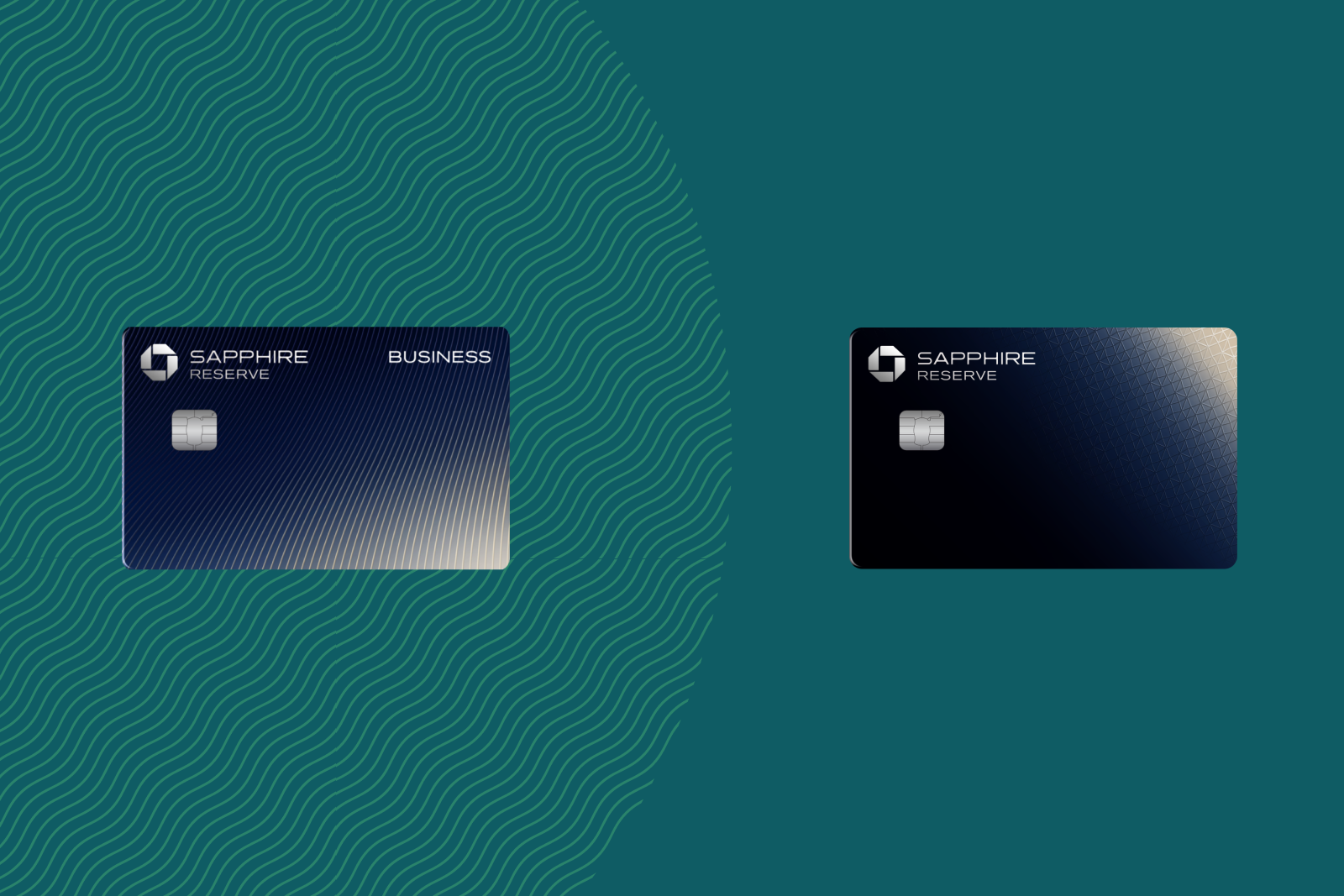
Chase offers two flagship premium cards: one personal and one business.
Both the Chase Sapphire Reserve for Business℠ (see rates and fees) and the Chase Sapphire Reserve® (see rates and fees) carry a $795 annual fee and have various premium travel perks, useful statement credits and airport lounge access.
Let’s compare these two cards and see which is right for you.
Comparison of the Sapphire Reserve vs. Sapphire Reserve for Business
| Card | Sapphire Reserve | Sapphire Reserve for Business |
|---|---|---|
Earn 100,000 bonus points after spending $6,000 on purchases in the first three months from account opening. | Earn 200,000 bonus points after spending $30,000 on purchases in the first six months from account opening. | |
$795 | $795 | |
|
| |
|
|
Sapphire Reserve vs. Reserve for Business welcome offer
With both cards having $795 annual fees, the first thing you might look at is their welcome offers. Both cards have industry-leading welcome offers that can provide thousands of dollars in value when redeemed for travel.
New applicants for the Sapphire Reserve can earn 100,000 bonus points after spending $6,000 on purchases in the first three months from account opening. Based on TPG’s August 2026 valuation of Chase Ultimate Rewards points at 2.05 cents each, this offer is worth $2,050.
On the other hand, new Sapphire Reserve for Business applicants can earn 200,000 bonus points after spending $30,000 on purchases in the first six months from account opening. Based on TPG’s valuations, this offer is worth $4,100.
The welcome offer on the Sapphire Reserve is much more attainable, as the minimum spending requirement is much lower at $6,000 over three months. However, the Sapphire Reserve for Business offers a much higher-value welcome offer.
Remember that both cards are subject to Chase’s 5/24 rule and other application rules.
Winner: Sapphire Reserve for Business, if you can comfortably meet the much higher spending requirement. Its 200,000-point offer is twice as large, but you’ll need to spend five times as much to earn it.

Reward your inbox with the TPG Daily newsletter
Join over 700,000 readers for breaking news, in-depth guides and exclusive deals from TPG’s experts
Related: The best credit card welcome bonuses of the month
Sapphire Reserve vs. Reserve for Business benefits
Both cards offer numerous benefits, including statement credits, lounge access and travel protections.
Here’s an overview of the benefits offered on both cards:
| Benefit | Sapphire Reserve | Sapphire Reserve for Business |
|---|---|---|
Notable statement credits and benefits |
|
|
| ||
| ||
| ||
After spending $75,000 or more in a year, you unlock:
| After spending $120,000 or more in a year, you unlock:
|
Most of the cards’ benefits, like the airport lounge access, the annual $300 travel credit and the travel protections if your travels go awry, overlap.
There are a few differences between the benefits the cards offer. The Sapphire Reserve has more lifestyle-focused benefits like dining, entertainment and streaming credits. In contrast, the Sapphire Reserve for Business credits are more tailored to business owners, with credits focused on hiring and productivity.
Additionally, you can unlock almost the same bonus benefits on the Sapphire Reserve with $45,000 less in spending.
Winner: Sapphire Reserve for most consumers. Its dining, entertainment and streaming benefits are likely to have broader appeal, while the Business card’s ZipRecruiter and Google Workspace credits can be highly valuable for businesses that already use those services.
Related: The best premium credit cards: A side-by-side comparison
Earning points on the Sapphire Reserve vs. Sapphire Reserve for Business
Both cards earn ultra-valuable Chase Ultimate Rewards points in a variety of bonus categories.
With the Sapphire Reserve, you’ll earn:
- 10 points per dollar spent on Peloton equipment and accessory purchases of $150 or more (through Dec. 31, 2027), with a maximum of 50,000 points
- 8 points per dollar spent on purchases made through Chase Travel, including The Edit (minimum two-night stay required for The Edit bookings)
- 5 points per dollar spent on Lyft rides (through Sept. 30, 2027)
- 4 points per dollar spent on flights and hotels booked directly
- 3 points per dollar spent on dining worldwide
- 1 point per dollar spent on all other purchases

Meanwhile, the Sapphire Reserve for Business earns:
- 8 points per dollar spent on Chase Travel purchases
- 5 points per dollar spent on eligible Lyft rides through Sept. 30, 2027
- 4 points per dollar spent on flights and hotels booked directly
- 3 points per dollar spent on advertising purchases made with social media sites and search engines
- 1 point per dollar spent on all other purchases
It’s important to note that there is no spending cap on the 3 points per dollar spent on advertising, unlike other Chase business cards like the Ink Business Preferred® Credit Card (see rates and fees), which has a $150,000 spending cap.
Both cards have the same earning rates on Chase Travel purchases, as well as on flights and hotels booked directly. The Sapphire Reserve offers bonus points on dining and Peloton purchases.
However, business owners who spend heavily on online advertising will appreciate the unlimited bonus earnings available with the Sapphire Reserve for Business.
Winner: Tie. The Sapphire Reserve is stronger for dining, while the Business version is more rewarding for businesses with significant social media and search-engine advertising spend.
Related: Is the Chase Sapphire Reserve worth the annual fee?
Redeeming points on the Sapphire Reserve vs. Sapphire Reserve for Business
Both cards offer multiple ways to redeem your points, but the best value redemption is to transfer to one of Chase’s transfer partners.
You can redeem your points for cash back, gift cards, dining and experiences through the Ultimate Rewards portal. You can also take advantage of Chase’s Pay Yourself Back feature, where you can get higher value from your points to cover eligible purchases.

Additionally, Chase’s Points Boost feature allows cardholders to book travel directly through Chase Travel at a value of up to 2 cents per point, depending on the card and the specific redemption (see your rewards program agreement for full details). Certain hotels booked via Chase Travel with the Sapphire Reserve may be eligible for up to 2.5 cents per point in value.
All Chase Travel purchases that are not Points Boost eligible can be redeemed at a rate of 1 cent per point.
Winner: Tie. Both cards offer the same redemption options and access to Chase’s Points Boost perk.
Transferring points on the Sapphire Reserve vs. Sapphire Reserve for Business
You can transfer Ultimate Rewards points to Chase’s extensive roster of 14 airline and hotel partners. Transferring points lets you get maximum value from them, and you can often exceed TPG’s valuation of 2.05 cents per point. These transfer partners are the same for both Sapphire Reserve cards.
Some popular partners include Air Canada Aeroplan, Air France-KLM Flying Blue, United MileagePlus and World of Hyatt.

TPG credit cards editor Olivia Mittak transferred 87,500 Chase Ultimate Rewards points to World of Hyatt to book 10 nights in Germany last year. Thanks to this decision, she paid nothing out of pocket for her hotel stays on this trip.
Winner: Tie. Both cards share the same transfer partners and rates.
Related: Chase Ultimate Rewards points: How to redeem for maximum value
Should I get the Sapphire Reserve or the Sapphire Reserve for Business?
If you aren’t a business owner and prefer earning bonus points on everyday spending categories like dining, you should opt for the Sapphire Reserve. Meanwhile, if you’re a business owner looking for premium benefits and bonus points on advertising, you should opt for the Sapphire Reserve for Business.
However, if you’re a business owner and torn between which card to get, you could get both cards and receive both welcome bonuses. If you decide to do this, ensure you time your applications so you have enough time to earn both bonuses.
Bottom line
For most consumers, the Sapphire Reserve is the better fit. Its dining, entertainment and streaming benefits complement its premium travel perks, while its bonus categories reward common expenses such as dining.
Meanwhile, the Sapphire Reserve for Business makes more sense for business owners who can take advantage of its unlimited 3-points-per-dollar-spent earning on eligible social media and search-engine advertising and business-focused statement credits.
There’s plenty of overlap, but it’s worth comparing the two to see which is the best fit for your wallet.
To learn more, check out our full reviews of the Sapphire Reserve and the Sapphire Reserve for Business.
Apply here: Chase Sapphire Reserve
Apply here: Chase Sapphire Reserve for Business