dailynewsnblog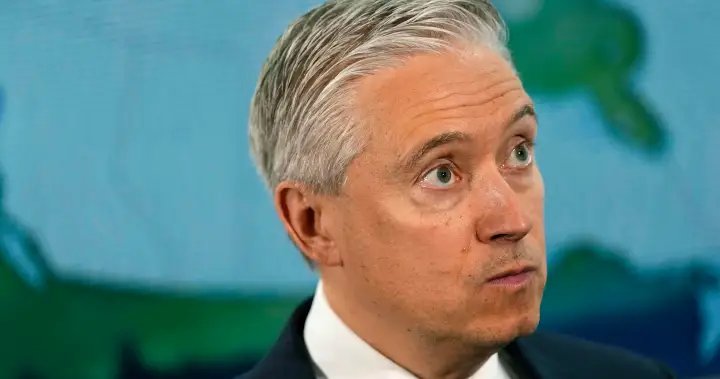
The finance minister will not say why his department is refusing to release the total amount the federal government plans to spend on defence annually, but promises more details are coming.

“There will be more details, obviously, as we go forward,” Finance Minister Francois-Philippe Champagne said. “I think we have provided, you know, the direction of that (in Budget 2025), and as programs and as acquisitions are coming forward, we’ll provide more detail on this.”
Champagne provided no timeline as to when that information will be shared.
His comments come days after Global News reported the finance minister’s office has been refusing to provide proof to back up Prime Minister Mark Carney’s recent claim that Canada will substantially accelerate its defence spending to meet NATO commitments.
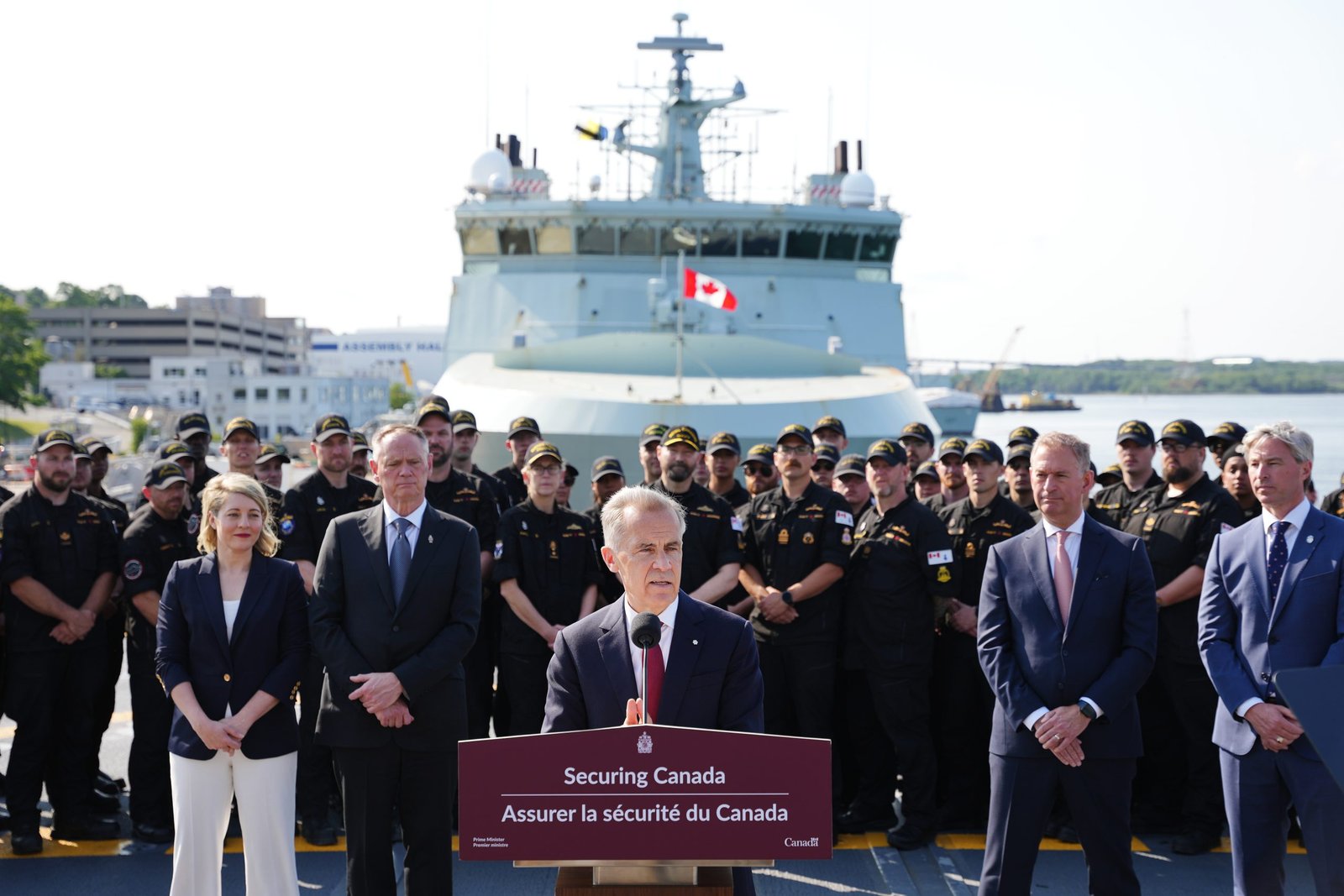
“Our fiscal framework has already provisioned to achieve four per cent of GDP in total defence spending by the end of this decade, ahead of NATO’s timetable,” Carney told the CANSEC defence conference in Ottawa in May, a claim he later repeated at a press conference in June.
After those comments, Global News asked Champagne’s office for any data from Budget 2025 or the Spring Economic Statement to support the prime minister’s statements, but the office refused to do so saying they were “not in a position to scoop forthcoming announcements.”
Global News first asked the Prime Minister’s Office, finance minister’s office, and Department of Finance officials after the Spring Economic Statement was tabled in April to provide details on future defence spending plans, but none were given.

Get breaking National news
Get breaking Canada news delivered to your inbox as it happens so you won’t miss a trending story.
A Global News analysis of the Spring Economic Statement estimates Canada will need to spend a total of $163 billion on an annual basis to meet Carney’s commitment of four per cent of GDP by 2030 – an additional $34.9 billion annually on core defence spending compared to the 2025 budget.

The Parliamentary Budget Officer has also asked the Department of Defence for additional details about defence spending, including on NATO targets, but has yet to receive a response.
The finance minister confirmed that he has seen those requests from the PBO, but did not commit to giving any information, saying Budget 2025 already provides a “fair amount of detail.”
“We’ve always been very transparent with Canadians,” Champagne said. “I would say very transparent from the get-go to say what is the objective, where Canada’s gonna be contributing, what kind of system the Armed Forces are gonna be needing to protect and defend Canada, and how we’re gonna be financing that.”

The PBO estimated in February that increasing core defence spending from two per cent of GDP to 3.5 per cent would require approximately $33.5 billion per year in additional cash expenditures over the next 10 years. The report said the additional spending will increase the budgetary deficit by $63 billion by the 2035-36 fiscal year.
Champagne says the details of how the federal government will pay for this new level of defence spending will be a part of the budget consultations which kicked off in Ottawa on Monday.
“Obviously when we’re going to present Budget 2026 … we’ll be looking at measures to make the Canadian economy strong and make sure that, you know, the systems and the procurement we’re doing meet the NATO requirement, but at the same time that the Canadian economy can finance these investments.”
Defence spending will be in the spotlight as Carney travels to Ankara, Turkey, on Monday for the annual NATO leaders’ conference before heading to Saudi Arabia to meet with Crown Prince Mohammed bin Salman.
© 2026 Global News, a division of Corus Entertainment Inc.