dailynewsnblog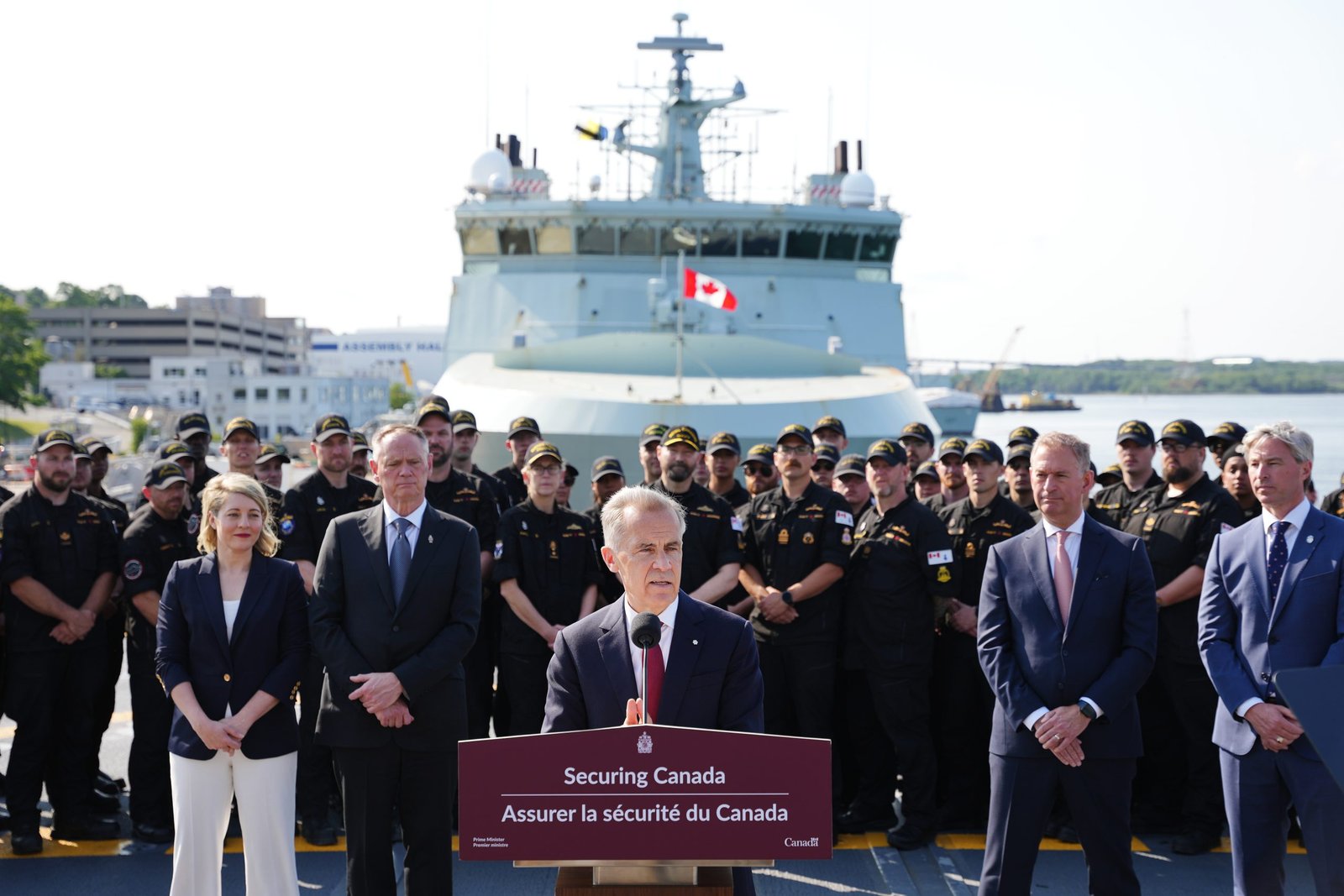
The prime minister says it was a close race and a difficult decision to make between TKMS and its rival bidder Hanwha, a South Korean defence conglomerate.
The federal government has picked German-Norwegian consortium TKMS as Canada’s preferred supplier to patrol submarines.
Prime Minister Mark Carney confirmed the news at a Canadian Armed Forces base in Halifax today, stopping on his way to the annual NATO summit in Turkey.
The prime minister says it was a close race and a difficult decision to make between TKMS and its rival bidder Hanwha, a South Korean defence conglomerate.
“This procurement will be the largest in Canadian history,” he said, stating that it would have the greatest economic impact of any defence investment.
Hanwha signed more than 80 industrial and government partnerships, most of which took the form of memorandums of understanding — handshake agreements to collaborate.
The Hanwha agreements that have received the most attention are proposed partnerships to offer a lifeline to tariff-hit industries — Algoma Steel in northern Ontario and auto-parts makers in southern Ontario.
READ MORE: Short race for submarine fleet contract nears its end
TKMS, meanwhile, signed more than 18 partnerships with Canadian companies — far fewer than Hanwha.
TKMS has said it is focused on the quality of the partnerships — and even pointed out it refused many such offers that would not be good fits. It also said several key partnerships that formed part of its confidential bid have not yet been made public.
The federal government is unwilling to talk about the total price tag or exactly how many boats it will buy — those details will be part of negotiations between Canada and TKMS.
Carney says Ottawa is booking the estimated cost for up to 12 submarines into the federal budget, a purchase that will allow Canada to spend the equivalent of four per cent of its GDP on defence by the year 2030.
Carney’s government has vowed to meet NATO’s new defence spending target, which is pegged at 5 per cent of member nations’ GDP. Canada reached the alliance’s previous two per cent benchmark earlier this year.
The last time Canada acquired submarines was between 2000 and 2004, when the government purchased four upholder-class submarines second hand from the UK.
Experts say this purchase is set up in a fairly different way this time.
“We’re going to see some of the benefits of that by pitting two very different countries, different manufacturers and asking them very deliberately, ‘how can you sweeten the deal for Canada,” Dan Kerry, defence lead at Deloitte Canada, said.

Kerry said it’s important to think about the structure of procurement submarines. He broke down the cost saying that 30 per cent of it would go into buying the actual fleet, but 70 per cent will ultimately go into operating and maintaining it.
He says this time around, Canada is not buying an asset, instead it’s buying an “enterprise” that will look to a “generational change.”
Kerry explained that the deal has been structured to ensure Canada “gets something back.”
“It is highly likely to be able to set up additional economic and trade opportunities as a result of that respective country,” he said.
The last time the Canadian government acquired submarines was between 2000 and 2004, when the government purchased four upholder-class submarines second hand from the U.K.
“It’s going to impact many lives within federal and provincial and it’s going to create that environment – it’s going to be a good use,” Kerry said.
The Canadian government is pursuing these new submarines as a better way to better protect and operate in the Arctic, which will soon become one of the most trafficked sea routes on earth due to melting summer ice.
With files from the Canadian Press