dailynewsnblog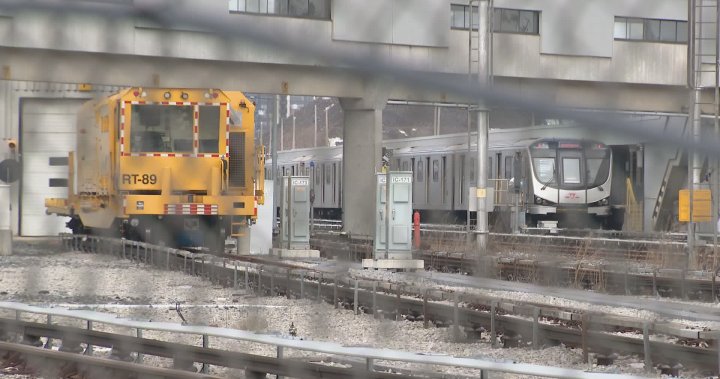
Round-the-clock maintenance crews and protective liners wouldn’t have been enough to ease subway delays caused by two hydraulic leaks last week, according to a consultant hired by the Toronto Transit Commission (TTC) to review problems which continue to persist despite a 2024 review into the same matter.

The TTC’s monthly meeting followed a week where three morning commutes were interrupted by major service disruptions. Two of them were caused by spills on tracks from maintenance vehicles conducting overnight work on Line 2 tracks.
The leaks create safety issues by making tracks too slick for subways to slow down as they enter stations. In the past, drivers have reported overshooting platforms.
Mayor Olivia Chow said she’s confident that TTC CEO Mandeep Lali will be able to resolve the issue, but it may not be so easy.
In 2024, the TTC undertook a review with outside consultants after it reported eight spills, one of which took Line 2 out of service for an entire workday. But since then, a TTC report said there have 13 other spills, not including last week’s incidents.
Hatch, the same consulting firm hired in 2024, is looking into the latest situation and early findings are pointing the finger at faulty valves which appear to have been improperly installed.

Get breaking National news
Get breaking Canada news delivered to your inbox as it happens so you won’t miss a trending story.
Speaking before the board, Sulaiman Janjua said one of the leaks last week saw the highly pressurized liquid spray out so quickly that he classified it as “catastrophic.” Even if there had been a protective “diaper” wrapped around it, he said, the damage still would have been done.
Following Friday’s repeat spill, Lali took all of the vehicles out of service until he said the TTC could get a resolution as to what occurred, why it happened, and how it will act going forward. Lali said the investigation could take between four to six weeks, and as a result, some planned work could be affected.
In the short term, the TTC CEO said maintenance vehicles would be tested for a full hour in the future, in order to ensure equipment was operating well under pressure. On top of that, Hatch is sending some of the suspected equipment to an outside lab for testing.
TTC officials, city councillors and transit advocates have all found consensus that a solution to the problem needs to be found in order to give transit users reliable service. The beginning of the FIFA World Cup in a few short months is ratcheting up pressure for a solution.

© 2026 Global News, a division of Corus Entertainment Inc.