dailynewsnblog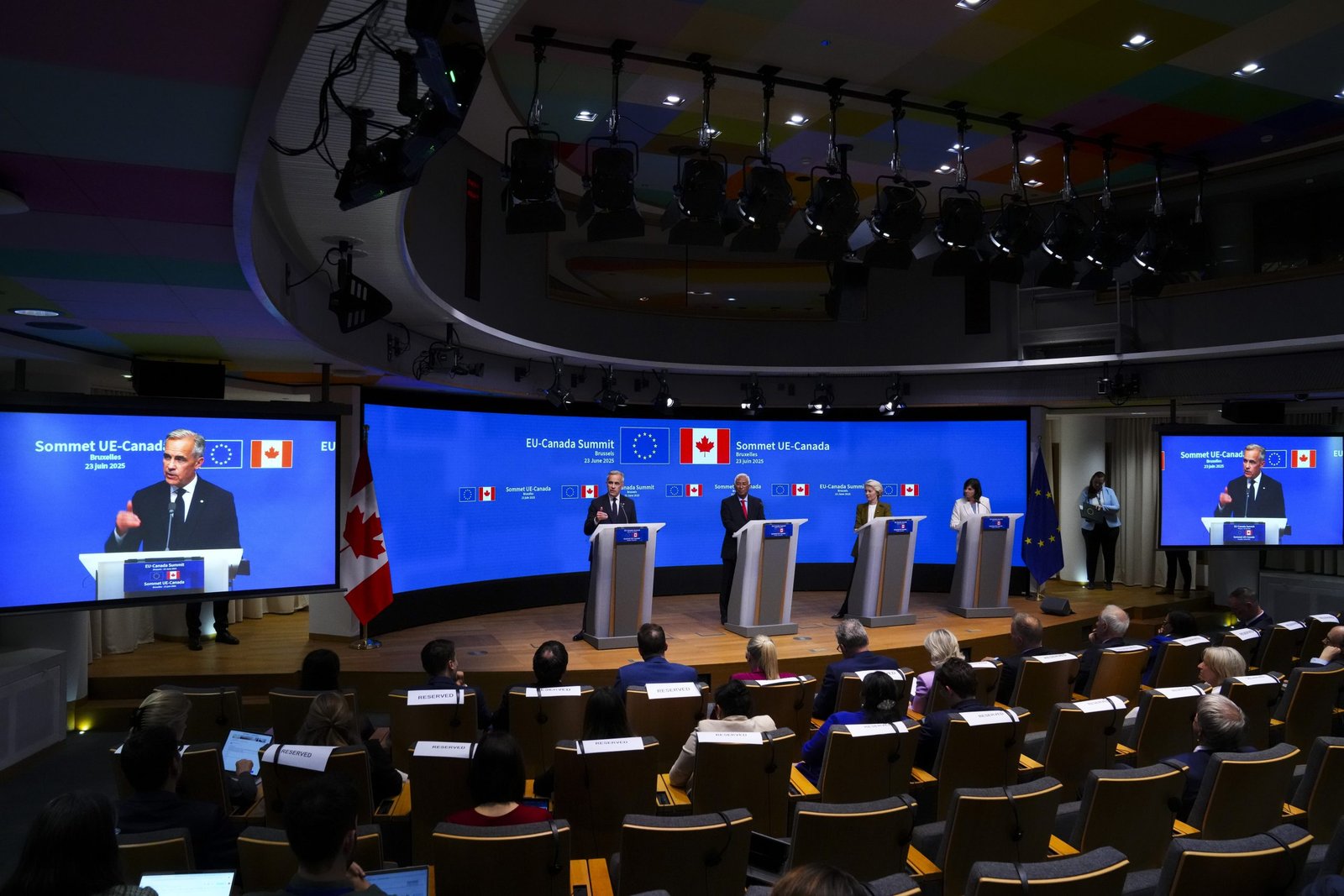
Alas, Carney and his government might genuinely believe that the EU holds much promise for Canada. If so, then they might be in for a rude awakening. One wonders whether the oxygen could have been spent on developing a different strategy more grounded in Canada’s geographical reality.
Canada’s aspirations for tighter relations with the European Union intensified this month — but is it realistic?
Prime Minister Mark Carney says that he wants Canada to have a “unique alliance” with the European Union. President of the European Commission Ursula von der Leyen declared that Canada should become an “associate member” of the EU.
At first blush, deepening Canadian-European relations holds much appeal. Earlier this year at Davos, Carney warned that the notion of a rules-based international order is a spurious one because underneath it lay a preponderance of American military and economic capabilities that now, more nakedly, serve traditional power politics. In his call for fellow leaders to “face reality,” he suggested that Canada and like-minded partners must work collaboratively. Amid a fractious and expanding political dispute with Washington, he has aimed to diversify Canada’s trade by seeking new economic and security agreements abroad. Europe has become the primary focus, with new security and political arrangements under consideration alongside efforts to expand commercial ties.
Yet, despite its apparent realism, the strategy smacks of an undue idealism about what the EU can offer Canada.
The basic problem is the EU itself. It is a fractious, slow-moving supranational organization that often requires the unanimous agreement, if not significant support, from its twenty-seven members to achieve anything meaningful. For example, the Comprehensive Economic and Trade Agreement remains unratified in ten EU member states despite its provisional application in 2017. This sluggishness reflects local politics, which are often even more parochial and splintered across the union than our own. EU membership can only happen following a revision of the Lisbon Treaty, which is effectively a political impossibility.
Joining the European Free Trade Area like Norway is no simple matter either. Members of the EFTA must also be unanimous about Canada’s participation. That countries such as France, Italy, and Poland are among those that have not yet ratified the CETA is indicative of how its prospects are effectively non-existent. Developing a commonly accepted definition of “associate member” will be a legal innovation that will take years to develop, if ever at all.
If there is any agreement that Canada could realistically forge in the near future with the EU, its importance would be slight. Security Action for Europe (SAFE) is ironically a good example. Canada has celebrated its inclusion in the new EU-backed financial instrument to spur defence investment. However, since joining it this past May, only one project involving a Canadian defence firm has so far been announced, with a paltry value of C$10 million. This feeble result should surprise nobody: fragmentation and protectionism characterize much of the European defence industrial landscape.
The window may yet be closing fast on even the slightest of agreements. The far-right Rassemblement National could win the French presidency next year. The growing electoral popularity of its German counterpart, Alternative für Deutschland, has become such a problem that German Chancellor Friedrich Merz had to rush back home from New York earlier this month. Historically, Franco-German co-operation has been the engine behind European integration. That engine will sputter if the two biggest economies of the EU, stymied as they are by stagnant wages and limited growth, are led by insular nationalists. If Emmanuel Macron’s France cannot ratify the CETA, then what can Canada expect from Marine Le Pen’s France?
Carney probably knows all this. The cynical interpretation is that he suspects that the Trump administration will eventually relent on its campaign of economic pressure because it will become too untenable in view of persistent inflation, raised interest rates, and possibly a divided government this winter. Talking about Europe with vague notions of “unique alliance” and “associate member” allows him to appear that he is not just waiting out Trump — even though he is really just waiting out Trump.
Yet the opportunity costs may be serious. The Carney government has invested significant time and focus early in its mandate cultivating this policy. One can ask, would the time be better spent working on reinforcing the bilateral relationship with the United States, especially with those authorities who have influence but are not directly associated with the administration? Texas, for example, accounts for double the value of bilateral trade with Canada as Germany. Its governor, Greg Abbott, would have comparatively more influence on the direction of bilateral US trade with Canada than Merz does with the EU.
Alas, Carney and his government might genuinely believe that the EU holds much promise for Canada. If so, then they might be in for a rude awakening. One wonders whether the oxygen could have been spent on developing a different strategy more grounded in Canada’s geographical reality.
Alexander Lanoszka, Richard Shimooka, and Balkan Devlen are senior fellows at the Macdonald-Laurier Institute specializing in foreign affairs, defence, and security.
The views, opinions and positions expressed by all iPolitics columnists and contributors are the author’s alone. They do not inherently or expressly reflect the views, opinions and/or positions of iPolitics.