dailynewsnblog
Canadian businesses and industry leaders are bracing for the full effects of fresh 50 per cent U.S. tariffs, crossing their fingers that domestic support will come quickly.
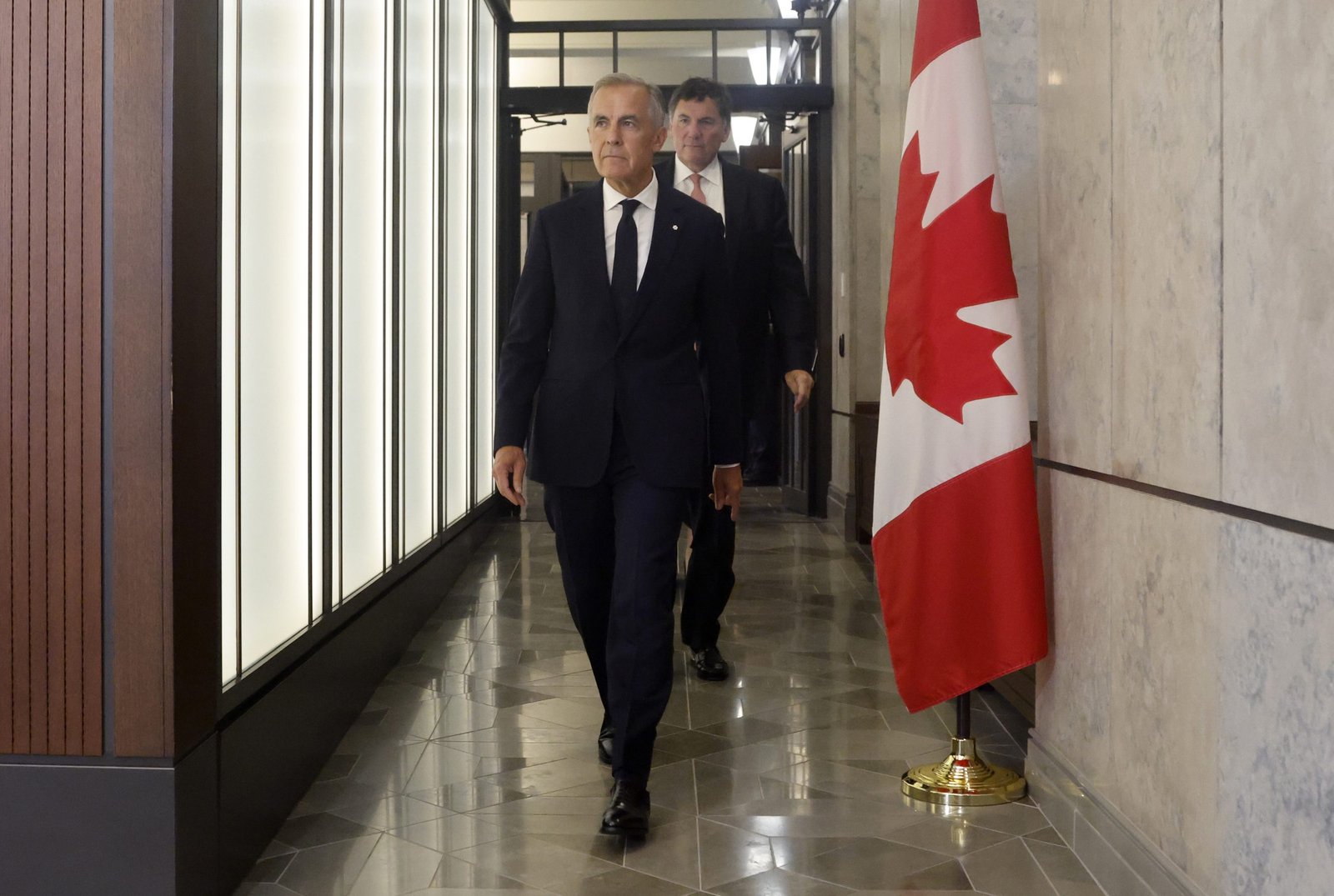
Prime Minister Mark Carney called his negotiating team back to Ottawa on Friday night after trade talks fell apart in the 11th hour because of what he said were “unreasonable” requests from the U.S.
Negotiators are no longer at the bargaining table, so U.S. President Donald Trump’s threatened 50 per cent tariffs are in force, covering a range of Canadian products, from wood furniture and cement to plywood and wine.
Ron Kubek, owner of Lightning Rock Winery in B.C., was able to ship an order worth $20,000 to Washington state this week, getting there before the tariffs came into effect just after midnight Saturday.
Kubek, who has been trying to grow his business in the U.S., said that shipment will be his last one south of the border for the time being because of the new tariffs.
“That cheque when it clears will be the last one I get from the USA right now.”

For Kathleen Chapman, president of aVenco, which makes parchment baking paper in Canada and sells across North America, the hit to her Bowmanville, Ont.-based business will be big since 30 to 40 per cent of her product are sent to the U.S.
Beyond the immediate revenue losses she’s expecting, Chapman said the back-and-forth trade war has created a “freeze reaction” among her American customers, hurting her business’s ability to plan for the future.
“There’s so much uncertainty that no one is really confident to move forward with discussions or sign long-term contracts,” Chapman said.
Who will feel tariffs most?
The new sweeping tariff slate covers some $28 billion worth of Canadian exports, or about five per cent of products sent south of the border.
While the estimated impact on the broader economy might be relatively small, the hit won’t be felt evenly across Canada and certain sectors will feel it more.
A recent estimate from Oxford Economics found that manufacturers, especially ones making items like plastic, chemicals, cement and concrete — businesses that are concentrated in Quebec and Ontario — would feel the pain most.
With negotiators no longer at the table, Dennis Darby, president of Canadian Manufacturers and Exporters (CME), said manufacturers now face the “worst of all worlds.”

Amid the aftermath of last-minute trade talks breaking down, Unifor national president Lana Payne says the Trump administration is purposely targeting Canada’s manufacturing sector.
Many CME members have been struggling under sectoral tariffs on steel, aluminum, lumber and autos for more than a year, and he said the new 50 per cent duties will hit more of them.
“Not only is there a threat of job losses and lost business, but … even without these new tariffs, we’ve seen a drop of about 15 per cent in our exports to the U.S. over the past year and tens of thousands of layoffs,” Darby told CBC News Network.
Half of the business owners Darby has spoken with in recent days have said they’re putting investments into areas like new facilities and hiring on hold.
“That’s not good for our competitiveness,” he said.
University of Calgary economist Trevor Tombe estimates some 87,000 jobs could be lost across the country as a result of the new duties.
Job losses would be concentrated in industries including agriculture, textile, electronics, furniture and plastics manufacturing. But Tombe’s analysis shows that indirect losses in sectors like warehousing and trucking could also be massive, which could change the geographic impact.

After Canada-U.S. trade talks broke down, U.S. President Donald Trump hits Canada with 50 per cent tariffs. CBC’s David Common says this could result in the loss of thousands of Canadian jobs.
Alberta, for example, exports a small portion of the products impacted by the new tariffs, according to Tombe, but could face some 9,000 job losses because it’s home to industries that support exporters.
Past supports ‘largely useless’ for small firms
Aside from the loss of U.S. business, Kubek worries that Canada’s retaliatory counter-tariffs — which Carney promised to impose “dollar for dollar” on the U.S. starting after Labour Day — could worsen an already tough situation.
Unless Ottawa’s got something really, really good lined up right away … just the short-term effects are going to be significant.– Dan Kelly, Canadian Federation of Independent Business
Some of the glass, screwtops and cardboard packaging that Kubek uses at the winery come from the U.S., so he worries that tariffs imposed by Canada could drive up input costs.
“If you buy any of those sorts of products, and they do put the dollar-for-dollar tariff on, it’s going to make winemaking in Canada even more expensive.”
But given promises to support businesses like his, Kubek hopes the government will focus on removing interprovincial trade barriers for alcohol.

Prime Minister Mark Carney says Canada will retaliate ‘dollar for dollar’ after the Trump administration imposed crushing 50 per cent tariffs on billions of dollars worth of Canadian goods just after midnight on Saturday.
Last month, nine premiers committed to introducing direct-to-consumer alcohol sales that would make it easier for brewers, distillers and wineries to sell outside their home provinces.
Kubek said that’s a step in the right direction and he’d turn his attention to selling direct to Ontario consumers in the coming days to compensate for lost U.S. business.
But rule changes that would allow him easier access to liquor store shelves in other provinces would do far more to support his business, he said, with hopes the premiers might now spur that change.
“If I could sell into Ontario or Quebec … I wouldn’t need the U.S.”
For other small and medium-sized businesses, Dan Kelly, president of the Canadian Federation of Independent Business (CFIB), said he hopes new support programs will succeed where others have failed.
Kelly said the criteria of past relief programs effectively left out small businesses, making them “largely useless” to the business owners he represents.
With 50 per cent tariffs posing such a huge blow to those business leaders — some of whom said their companies would be effectively “done” at that rate — he hopes the government will pull through this time, and quickly.
“Unless Ottawa’s got something really, really good lined up right away … just the short-term effects are going to be significant.”