dailynewsnblog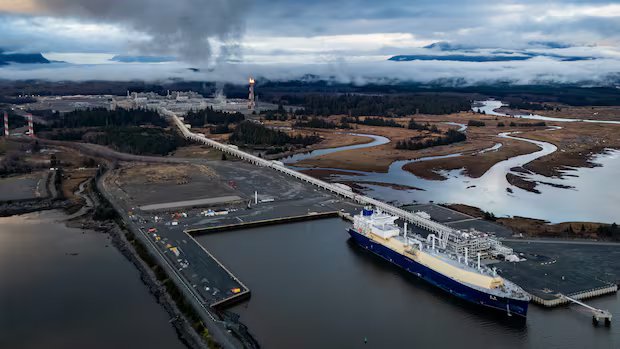
Canadian LNG would likely be ‘swapped’ instead of travelling to Europe
Rather than sending Canadian LNG from Ksi Lisims all the way to Germany, natural gas would likely be “swapped” instead.
That’s a common practice in the shipping industry, which switches the destination of tankers to shorten how long and how much it costs tankers to reach their destination, according to Jeremy McCrea, managing director of energy research at BMO Capital Markets.
Let’s say Japan ordered LNG from a Gulf Coast producer and Germany, under this new deal, ordered it from B.C. Rather than sending a tanker from the Gulf to Japan and B.C. to Germany, they’d swap to send the Canadian gas to Japan and Gulf gas to Germany.
“You can save, you know, four or five days [of] shipping here just by doing these transportation swaps which is pretty meaningful,” McCrea said.
And unlike oil — where there are different kinds of the fuel that require different refineries to make into a final product — McCrea says all natural gas is basically the same, which makes swapping simple.
In other words, it doesn’t matter if an exact tanker from B.C. arrives in Germany, just that one with the LNG they need shows up.
“As long as there’s more boats on the water, that’s all that matters here,” said McCrea.
Hodgson also mentioned this method as a way Canadian LNG could get to Europe.
“That makes production off of B.C even more valuable,” Hodgson said, given it reduces a barrier for getting LNG to Europe.