dailynewsnblog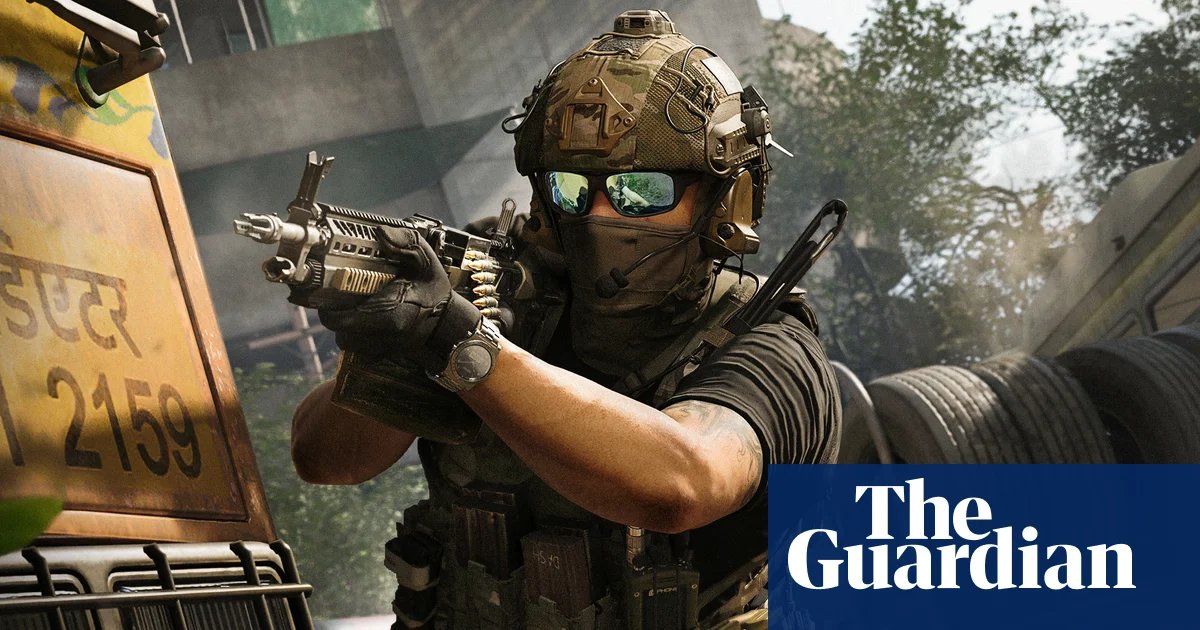
There was a time when Call of Duty (CoD) regularly courted controversy. In 2009, Modern Warfare 2’s infamous “No Russian” mission saw players (optionally) shooting screaming civilians in a Moscow airport. In 2022’s entry, a drone strike mission that drew chilling parallels to the real-world US assassination of Iranian general Qassem Suleimani two years earlier was featured. The series has not always been straightforwardly palatable.
In recent years, however, the world’s most popular shooter game has largely swapped grit for melodrama, following the misadventures of a troop of larger than life elite soldiers. For 2026’s Modern Warfare 4, however, Activision’s shooter series and its developer Infinity Ward are back in tabloid-baiting territory.
Swapping super soldiers for relatable everymen, Modern Warfare 4 puts players in the military fatigues of four young South Korean conscripts on the first day of their mandatory service. Yet as the squad of 18-25-year-olds pop into a 7-Eleven during a routine patrol, South Korea suddenly finds itself thrust into all-out war, after being invaded by North Korea under the orders of a new (fictional) supreme leader, and this full-scale invasion quickly threatens to become a global conflict. It’s a surprisingly political premise, in an era where game publishers seem increasingly afraid of upsetting anyone.
“I think it’s a part of Modern Warfare’s DNA, right? We can’t shy away from the fact that we are representing the [real] world and using real locations,” says Infinity Ward co-studio head, Jack O’Hara. “Even though we do take some creative licence.”
The biggest shooter in 2025, EA’s Battlefield 6, did shy away from geopolitics, inventing a fictional private military company called Pax Armata to stand in as the story’s villains. This apolitical premise ensured the game could be sold in markets historically portrayed as CoD’s virtual villains, such as China, Russia and the Middle East. Modern Warfare 4, however, has taken the opposite approach. While its campaign will take players on a globetrotting journey – featuring levels set in Paris, Russia, New York and Mumbai – the vast majority of the story will be divided across virtual recreations of both North and South Korea.
South Korean journalist Hyeonju Song believes depicting an escalation of a continuing real conflict will prove controversial in Korea. “Since the Korean war is a conflict that has not yet ended, I personally believe that creating fiction based on it is bound to cause pain to someone,” she says. “North and South Korea are still in a state of armistice, separated families who were torn apart by the war are still alive, and all South Korean men are required to perform mandatory military service. The war continues to directly impact our lives in Korea.”
Where hit Korean shows such as Netflix’s Crash Landing on You tell stories about romances blooming across the divide, Korean TV and films are careful to avoid depicting modern day confrontation between the two nations. “I suspect that such attempts are rare precisely because adding imagination to this unresolved history is viewed with caution,” says Song. “Recently, there was a major controversy involving a drama that distorted historical facts, leading the actors and director to issue public apologies. I believe that even if the game gains popularity initially, controversies regarding historical accuracy and the appropriateness of its subject matter will eventually arise. In particular, I think it could be perceived as a sensitive issue by the families of Korean war veterans, as well as employees of government agencies and related organisations.”
O’Hara tells me that Infinity Ward took great pains to portray the region as respectfully as possible, particularly given that life in North Korea has been shrouded in secrecy for decades. “Our crew and our team try to get as close to the source material as we can,” says O’Hara. “We talk to, advisers, people whose parents came over across the border, military folks that have served in that area, and people from shadowy governmental organisations that might have some information as well. We take all that information and then try to digest it into the best story and entertainment product.”
The setting isn’t the only significant change. After the huge success of Helldivers 2, Arc Raiders and Marathon, Modern Warfare 4 comes complete with Call of Duty’s take on the extraction shooter – a mode called DMZ. Aiming to deliver a dynamic, narrative-led take on the genre, in contrast to the emergent player-led stories of its rivals, this separate mode’s story will take place after Modern Warfare’s campaign. This will also be the first entry in the series to skip the PS4 and Xbox One, releasing only on current generation hardware (including the Nintendo Switch 2). “Consoles are staying alive for longer and longer, and the PS4 has run for a very long time,” says O’Hara. “But eventually you run out of runway … and you end up spending more time optimising than developing new features. So for us it’s important to be able to cut that off and move towards the highest specs that come with the other platforms.”
Change is coming for Modern Warfare 4’s core multiplayer modes, too – one clip I’m shown sees the player clambering up drainpipes, sliding under rooftops and hurtling up the side of buildings. The industry-standard tech used to determine accuracy for hip-fired weapons has been completely replaced, and O’Hara promises that shooting without aiming down a gun’s sights will no longer feel frustratingly inaccurate. The Hollywood bombast of CoD’s campaign will also bleed into multiplayer matches, promises Infinity Ward: potted plants will shatter, fire hydrants will gush water and explosions that would previously kill you may now dramatically knock you down.
Unlike last year’s Battlefield, or indeed the last couple of Call of Duty: Black Ops games (made by a different Activision studio, Treyarch), you can’t accuse Modern Warfare 4 of playing it safe. Both the potentially controversial setting and the changes to Call of Duty’s bread-and-butter multiplayer modes suggest an appetite for change – and perhaps acceptance of change, too. This will be the first CoD game released since the tragic loss of Infinity Ward’s co-founder and Call of Duty co-creator, Vince Zampella, who was killed in a car accident in December. “The legacy that [he] left with Call of Duty, and with Medal of Honor … [means] Jack and I are able to stand on the shoulders of giants,” says Infinity Ward’s other studio head, Mark Grigsby. “To continue to bring Call of Duty to millions of people across the world is an honour.”