dailynewsnblog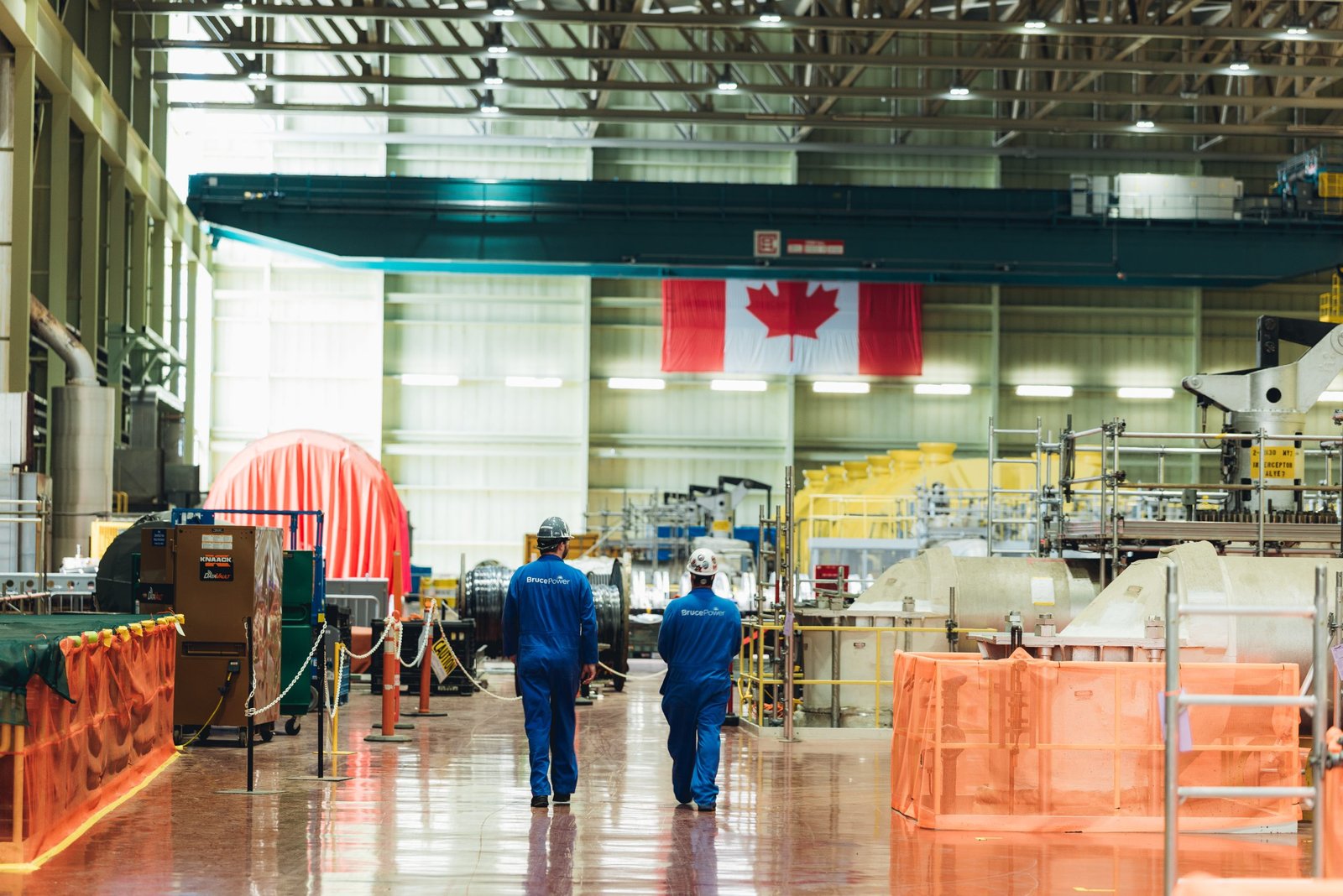
It should not be easier to do business across an international border than across a provincial one. Eliminating interprovincial trade barriers would strengthen Canada’s economy, improve productivity and create new opportunities for businesses and workers across the country.
The failure of Canada-U.S. trade negotiations, following 18 months of violations of the continental trade agreement, has taken us far from the sentiment expressed by former U.S. president Ronald Reagan in 1988: “It’s difficult to imagine any better friends than our neighbours, the Canadians…
The path to economic growth, job creation and security is through negotiation and cooperation, not protectionism.”
The question of whether the U.S. can return to Reagan’s vision must wait for another day. For now, the more urgent question is how we address the current situation, which threatens both short-term affordability and long-term prosperity for people on both sides of the border.
This is a moment for Team Canada. Our council supports the position taken by Prime Minister Mark Carney and Ontario Premier Doug Ford: Canada rose above the threats and the violations and sought a constructive path forward with the Trump administration, but our good faith was neither returned nor rewarded.
Now, Canadian leaders must put Canada’s long-term economic interests first. In moments like these, leadership requires not only diplomacy, but also resolve.
Our immediate responsibility is to support the businesses and workers most exposed to Trump’s most recent CUSMA violations, and we welcome our governments’ commitment to swift action. But our strategy cannot end there.
The best response to North American uncertainty is not simply finding new customers abroad; it is building greater economic strength at home.
Protecting and strengthening our industrial base must be at the centre of that effort.
That begins by building more.
Ontario is home to some of the largest infrastructure and industrial investments in North America, including nuclear energy projects, electricity expansion, critical mineral development, advanced manufacturing facilities, transportation infrastructure and agri-food growth. These projects should be viewed not as isolated investments, but as foundations of a modern Canadian industrial strategy.
Major projects create opportunities far beyond the construction site. They generate demand for Canadian manufacturing, steel, engineering, technology and skilled trades. They strengthen domestic supply chains, support homegrown businesses and build expertise that can be exported around the world. Most important, they create jobs, investments and economic opportunity that sustain working families and communities across Ontario and Canada.
Ontario’s nuclear sector demonstrates what is possible. Decades of sustained investment have helped create a world-class domestic supply chain that supports good jobs, drives innovation and competes internationally. We see similar opportunities in critical minerals, agriculture and food processing, technology, life sciences, advanced manufacturing, transportation, professional services and other sectors.
Ontario’s industrial base matters because it is the core of Canada’s competitiveness. The factories, processing facilities, energy systems, infrastructure projects and supply chains that make up our industrial economy support hundreds of thousands of well-paying jobs and provide economic security for working families in communities large and small.
When we build major projects in Canada, we are not simply constructing infrastructure. We are building the foundation for the next generation of Canadian prosperity. Every energy project, critical minerals development, manufacturing investment and transportation corridor creates opportunities for workers, local businesses and communities, while ensuring more economic value created by Canadian resources and ingenuity stays here at home.
We have enormous advantages: abundant natural resources, reliable energy, a highly skilled workforce, leading research institutions, world-class agricultural production and access to global markets, supported by our reputation as a country that can be trusted. We should leverage those strengths more deliberately and more strategically.
But a successful trading nation must also possess the capacity to build.
We should process more of our resources here at home. We should use major infrastructure projects to develop Canadian companies and Canadian expertise. We should create the conditions that encourage investment in Canadian innovation, manufacturing and production.
At the same time, we must remove the barriers that hold us back from within.
It should not be easier to do business across an international border than across a provincial one. Eliminating interprovincial trade barriers would strengthen Canada’s economy, improve productivity and create new opportunities for businesses and workers across the country.
We must also keep diversifying our trading relationships around the world. The more markets Canadian businesses can reach, the more resilient our economy becomes.
Canadian businesses had hoped we could get a fair deal from the U.S. – one that respects our signed agreements and the interdependence of the integrated North American economy. But disappointment cannot become paralysis.
We support the Prime Minister and Premier Ford as they defend Canada’s interests. We also believe this moment should serve as a catalyst for a more ambitious economic agenda.
One built on stronger supply chains.
One built on nation-building projects.
One built on greater Canadian competitiveness.
Our answer to trade uncertainty should not be to retreat.
It should be to build more, make more, trade more, and buy more from ourselves.
For more information on the OCC Trade & Competitiveness Council visit: https://occ.ca/events/
Daniel Tisch is the president and CEO of the Ontario Chamber of Commerce, while James Scongack and Chris Conway are co-chairs of the Ontario Trade & Competitiveness Policy Council. Scongack is the COO of Bruce Power and Conway serves as CEO of Food and Beverage Ontario.
The views, opinions and positions expressed by all iPolitics columnists and contributors are the author’s alone. They do not inherently or expressly reflect the views, opinions and/or positions of iPolitics.