dailynewsnblog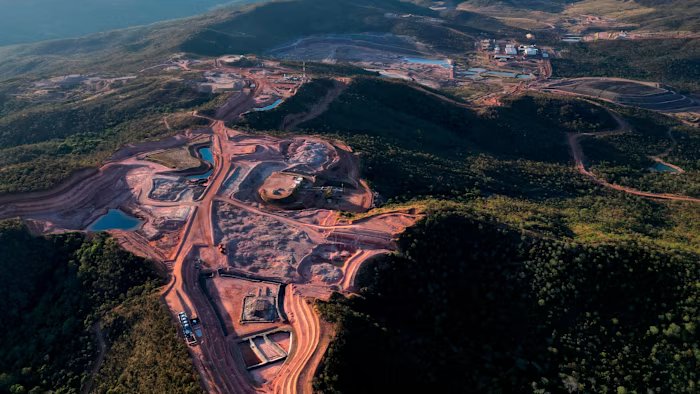
Brazil’s abundant but largely untapped rare earth deposits are drawing interest from the US, with Brasília eyeing the minerals as a potential bargaining chip as it repairs diplomatic ties with Washington.
The South American country holds the world’s second-largest reserves of the elements, which are vital for cutting-edge technologies from electric cars and drones to laser-guided missiles, but whose mining and processing are dominated by China.
Washington has been seeking alternative sources after Beijing restricted exports in reaction to President Donald Trump’s trade tariffs, and sees Brazil as a potential partner, said several people with knowledge of the situation.
Following a tentative rapprochement between Trump and his Brazilian counterpart, leftwinger Luiz Inácio Lula da Silva, diplomats and lobbyists see a chance for a rare earths accord.
“There’s nothing but opportunity here,” said one official. “Brazil’s government is open to a deal on critical minerals.”

Last year, the US intensified efforts to secure supplies of varying critical minerals — including rare earths — from outside China, striking deals with countries including Australia and the Democratic Republic of Congo.
The Trump administration’s thirst for South American natural resources was dramatically displayed by its military swoop this month to remove the leader of oil-rich Venezuela.
But it faces competition in Brazil: in Rio de Janeiro last week, European Commission President Ursula von der Leyen said Brussels was in talks with Brasília for an agreement on critical raw materials, with a view to joint investments in lithium, nickel and rare earths.
Rare earths are a group of 17 metallic elements that are complex to mine and refine. Some, including neodymium and praseodymium, are used in permanent magnets within products from smartphones to wind turbines and MRI scanners. China especially dominates production of so-called “heavy” rare earths, which are difficult to source elsewhere.
However, the development of these resources in Latin America’s biggest economy has been held back by a lack of local funding and bureaucratic hurdles.
Political analysts see a favourable moment for co-operation with the US. A diplomatic crisis erupted last year after the White House imposed heavy trade tariffs on Brasília and sanctioned officials in a bid to get a criminal case dropped against ex-president Jair Bolsonaro, a rightwing ally of Trump.
But Lula stood firm, and Bolsonaro was convicted of plotting a coup. A détente then began, with meetings and calls between Trump and Lula, as bilateral trade negotiations got under way.
The US has since reversed some tariffs on Brazilian foodstuffs and cancelled sanctions on the supreme court justice who oversaw Bolsonaro’s prosecution.

Talks on rare earths were at an initial stage by late 2025, said people with knowledge of the situation, with the US signalling its interest in private.
America’s top diplomat in the country, chargé d’affaires Gabriel Escobar, has spoken about rare earths with Brazil’s mining industry association, Ibram, and companies exploring prospects there in recent months.
The US Department of Commerce and Brazilian trade ministry have also discussed critical minerals, said a person familiar with the matter.
An event in Washington about critical minerals in December, with rare earths as a central focus, brought together representatives from both governments, financial institutions, industry and investors.
A Brazilian congressman preparing a bill on the subject, Arnaldo Jardim, attended and met with commerce department officials, said a person with knowledge of the matter. Jardim declined to comment.
“There were people from the departments of commerce, state, defence and energy, two or three representatives from each,” said one attendee. “They were very interested and said they are making agreements with other Latin American countries regarding rare earths.”

The US-Brazil thaw may be tested by tensions between the two, such as Brasilia’s condemnation of the attack on Caracas and Lula’s veto of legislation reducing Bolsonaro’s sentence.
Christopher Garman, of political risk consultancy Eurasia, said he expected a US-Brazil agreement on critical minerals soon. “We’ve got like a 75 per cent odds of some kind of a deal occurring by Q1.”
For the US, “there’s a massive priority on tackling critical minerals and rare earths because that’s the biggest miscalculation that Trump’s administration had over the entire mandate, the relationship with China, and he wants a deal”, he said.
For both countries “it’s a win-win”, he added. “The timing of a deal may be delayed due to diplomatic tensions on Venezuela, but won’t derail it.”
The US is prepared to channel funding for rare earths ventures in Brazil via public lenders the International Development Finance Corporation (DFC) and Export-Import Bank, as well as support through government departments, said people briefed on the matter.
Washington is already backing some. The DFC approved a $465mn loan in August for Serra Verde, Brazil’s only operational rare earths mine, in Goias state. Much of its output was initially sold upfront to China, but that contract is due to expire this year.
China controls about 60 per cent of global rare earths extraction but has more than 90 per cent of processing capacity. Brazil holds 23 per cent of world reserves, according to the US Geological Survey.
Constantine Karayannopoulos, an industry veteran and adviser, said this “extraordinary endowment” could make it a “rare earth superpower”. “If the White House wants to play its cards right they’ll take a more pragmatic and rational approach, rather than forcing [Brazil] into doing things,” he added.

A US-Australia framework on critical minerals and rare earths agreed in October, outlining $3bn of investments over six months, offers a template for any pact between Washington and Brasília.
The DFC has also provided $5mn to fund a feasibility study for another heavy rare earths project under development in Goias by Aclara Resources. Chief executive Ramón Barúa said it hopes to begin production by mid-2028, aiming to sell to western rather than Chinese customers.
“The reception has been amazing,” Barúa said of its engagement with various US government departments. “They are clearly interested.”
Only 30 per cent of Brazil’s territory has been properly mapped for mineralogy, said Valdir Silveira, a director at the Geological Survey of Brazil, so its rare earths deposits could be larger than thought. Yet projects in the country face long waits for permits. The Serra Verde mine took 15 years to enter production.
Brazil’s trade ministry said: “Debate on co-operation in the area of rare earths is part of the economic dialogue between Brazil and the US.”
The White House did not respond to a request for comment.
Additional reporting by Aime Williams in Washington
Data visualisation and cartography by Steven Bernard