dailynewsnblog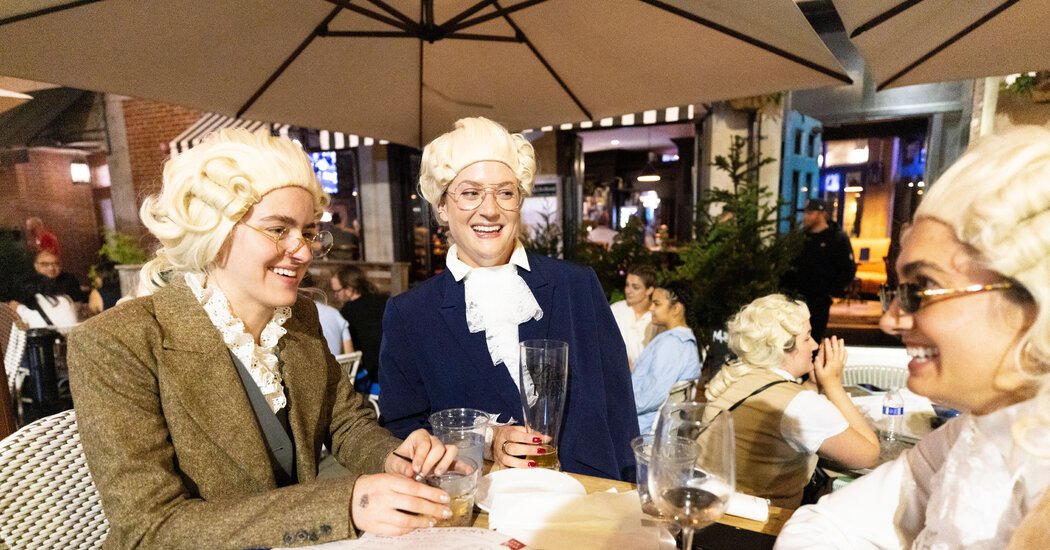
When Syd Williams, a bar manager in Boston, and Brooke Barbier, a historian, set out to recreate colonial-era cocktails for America’s 250th anniversary, making them appeal to a modern palate was a daunting prospect.
But that was not the problem they fretted about the most while poring over recipes for grog and cherry bounce.
“Our top priority was making them legal,” Ms. Williams said as she stood behind the bar one recent evening at Bell in Hand, the oldest continuously operating tavern in the United States according to its owners. “We can’t serve 16 ounces of alcohol in a glass.”
Hundreds of thousands of visitors are expected this summer in Boston, where the American Revolution began, to celebrate the nation’s 250th. The annual Independence Day concert on the Esplanade will take place on Saturday, followed by a parade of tall ships through Boston Harbor next week. Six World Cup soccer matches held nearby have drawn raucous crowds to the city, with one more match to come. Public safety officials are already knee-deep in a season of excessive drinking.
To those who disdain such revelry as unbecoming of a momentous national milestone, Ms. Barbier offers this consolation: However tipsy the tourists get, the founding fathers probably had them beat.
“They were drinking far more than we do today,” she said.
Historians have tended to underplay the role of alcohol in the country’s origins, Ms. Barbier said, most likely from a well-intentioned impulse to protect the founders’ reputations. It is not an impulse that she shares. A self-described public historian who runs tavern tours for Boston tourists, Ms. Barbier sees drinking as a portal connecting past and present, a way to humanize Americans who can seem as distant and untouchable as statues.
Benjamin Franklin, after all, compiled some 200 terms for drunkenness in his “Drinker’s Dictionary,” including rattled, boiled and “dizzy as a duck,” she pointed out. Thomas Jefferson drank plenty in times of average stress, Ms. Barbier said, and he drank even more over the last two weeks of June 1776 — while writing the Declaration of Independence.
“That was his peak,” said Ms. Barbier, whose new book on the subject is entitled “Cocked and Boozy: An Intoxicating History of the American Revolution.”
Boston may soon see a peak of its own. Last month, thousands of Scottish soccer fans descended on the city for two World Cup matches; they giddily drank some taverns dry. In a rare departure, even the state of Massachusetts has enabled intemperance, temporarily loosening its strict alcohol laws. The reprieve allows bars to serve until 3 a.m. through the end of July, and permits some outdoor drinking districts.
As the festivities multiply, Ms. Barbier sees educational potential. She advised the Boston-based Dorchester Brewing Company as it crafted a limited-edition 1776 ale, ensuring its historical authenticity. At Bell in Hand tavern — steps away from Faneuil Hall, where the Sons of Liberty rallied against British oppression — Ms. Barbier recently led an 18th-century cocktail tasting.
As guests sampled four lightly modernized cocktails that will remain on the menu all summer, and toasted the occasion with boisterous shouts of “Huzzah!” (a favorite colonial term signaling enthusiasm and approval), Ms. Barbier tossed out assorted historical fun facts.
Drinking was so entwined in daily life in early America, she said, that women drank routinely at their sewing circles — and during the traditional “lying in” period after childbirth. Boston once had two dozen rum distilleries clustered within two miles. And toasting was so integral to colonial social relations, the refusal of a toast was considered an act of aggression.
Among those soaking up the lessons were Megan King, 28, a paralegal in Boston, and her friend Tori Bales, 29, a nurse. The two women had been surprised to find the Revolution-era cocktails deliciously drinkable, especially the sangaree, a preferred refreshment of Jefferson’s and an ancestor of sangria made at Bell in Hand from ruby port, orange juice and tonic water.
They were equally pleased with Ms. Barbier’s teachings on the founding fathers and their proclivities.
“They’re just like us,” Ms. King said happily. “But way drunker.”
Still, Ms. Bales added, “I think they would be proud of us.”
As the buzz in the room grew louder, a bartender deftly executed the recipe for grog, mixing white rum, simple syrup, soda water and fresh lime juice (a scurvy preventive). Two inventions not yet dreamed of in Jefferson’s day — ice cubes and carbonation — were central to the tasty revival of the antique recipes, Ms. Williams explained.
As she braced for a summer likely to test the limits of the city’s hospitality, Ms. Williams said she was excited, but hoped that rowdy crowds would strike a balance.
“Drink like it’s 1776,” she said. “But a little more responsibly.”