dailynewsnblog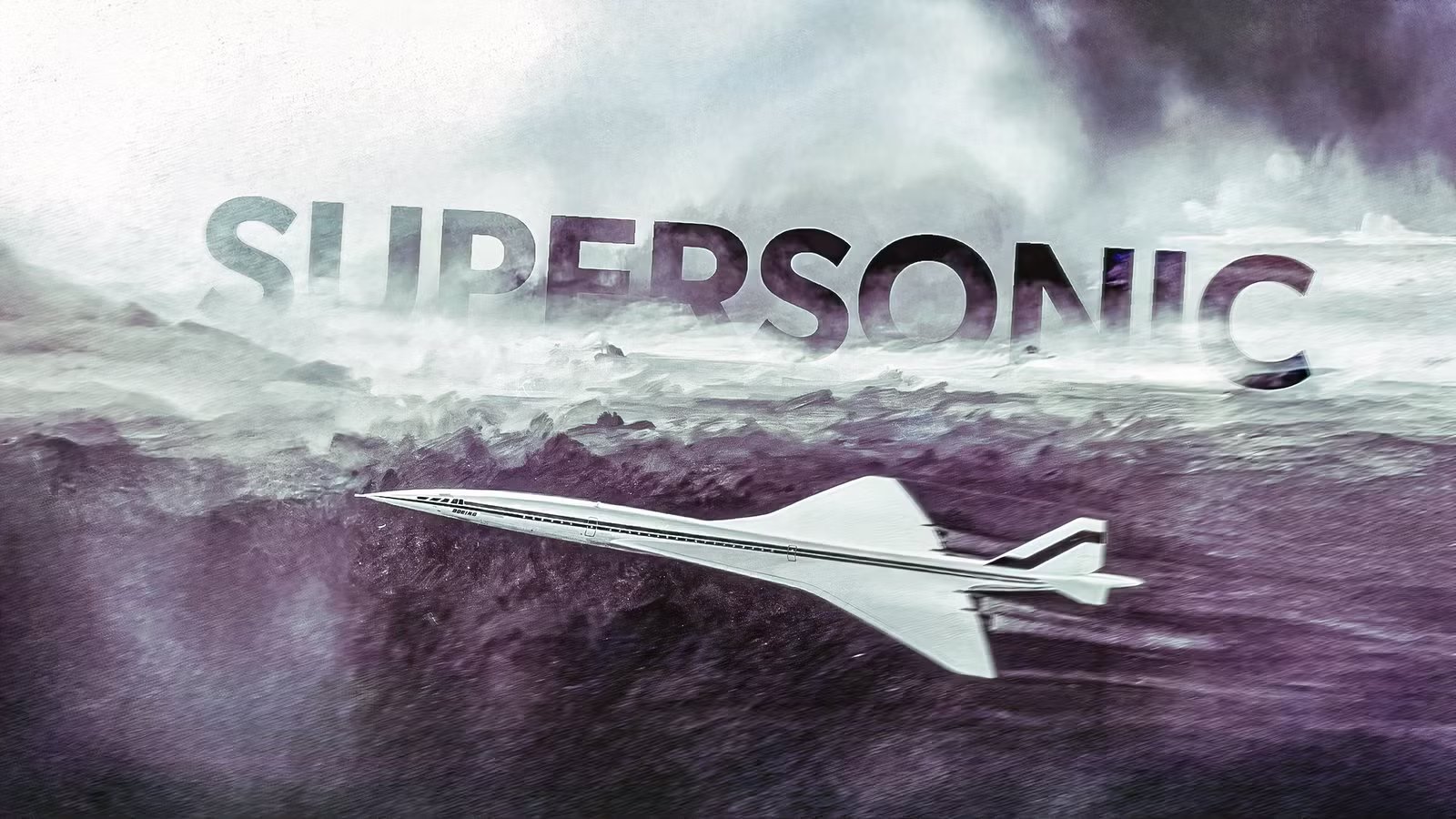
Concorde began roaring through the skies around the world, traveling at an unfathomably fast speed, in the late 1960s. Yet, it wasn’t the only supersonic passenger aircraft designed in this era, long before the advent of modern-day hyperefficient twin jet aircraft.  Boeing launched the Boeing 2707 in the 1960s, hoping to build an airliner that could compete with Concorde by being larger and faster. $1 billion was spent on the project, but it was canceled in 1971 due to high noise and emissions.
In this article, discover the program’s history and why Congress canceled it before the aircraft could ever take to the skies. It finishes by covering the aircraft that the Soviet Union hoped could win the battle for supersonic commercial aviation.
Boeing 2707 Design Overview

Boeing first designed and proposed the Boeing 2707, then called the Model 733, as an entrant to the National Supersonic Transport competition. The design was eventually selected as the winner in January 1967, helping Boeing to secure the finances necessary to develop the program. The proposed design had a sleek swing-wing design and a blended wing route across almost the entire cabin. Its bulk would be lifted into the sky by high-lift devices on the wing’s leading and trailing edges. However, Boeing then backed down to a more conventional wing design. The jet would be powered by four General Electric GE4 turbojets. Combined, they would give the aircraft the 63,000 lbf (280 kN) needed to take off and reach Mach 2.7
The table below shows the specifications that Boeing hoped to achieve with the Boeing 2707. As the aircraft never flew, it is impossible to know if this ambition was ever possible:
|
Capacity |
234 passengers |
|---|---|
|
Length |
306 feet (93.3 m) |
|
Height |
38 feet (11.6 m) |
|
Wingspan |
141 feet (43 m) |
|
MTOW |
750,000 pounds (340,000 kg) |
|
Cruise speed |
Mach 2.7 |
|
Range |
3,900 nautical miles (7,223 km) |
This aircraft would have been larger than Concorde, capable of carrying an impressive 234 passengers. The standard configuration would have been 2-3-2. Passengers would have been entertained by early forms of in-flight entertainment and six-inch (15-cm) windows. The views would have been stunning for those lucky enough to get the window seat, given the incredibly high altitude at which supersonic commercial aircraft fly.

Concorde: Inside The Fastest Passenger Jet Ever Built
What was it like to ride the fastest commercial airliner? We take a look at the interior of Concorde.
The Senate Cuts Funding

Much of the project’s success was secured by the backing of President Richard Nixon, who helped secure the finances needed to keep it alive. However, he could not pull the American political class behind the Boeing 2707. In March 1971, the U.S. Senate cut all further dollars. Public groups responded with efforts to keep the project going. The National Committee for an American SST urged supporters to send a dollar each. Meanwhile, letters of support contained $1 million in donations.
It wasn’t only avgeeks that were concerned. Labor unions feared that, given the winding down of the Vietnam War and the Apollo missions, there would be a sudden loss of jobs in the aerospace sector. American Federation of Labor and Congress of Industrial Organizations (AFL-CIO) President George Meany argued that, while the US was behind Britain and France for the first generation of supersonic commercial aviation, it should “enter the competition for the second generation—the SSTs of the 1980s and 1990s.”
The final nail in the Boeing 2707’s coffin came on May 20, 1971. Republican leader Gerald Ford’s argument, “If you vote for the SST, you are ensuring 13,000 jobs today plus 50,000 jobs in the second tier and 150,000 jobs each year over the next ten years,” fell on deaf ears. The House of Representatives gave its backing to the Senate’s plans to cut funding. With both houses of Congress opposing the necessary funding, the project collapsed. All that would ever be sold from it were models. A total of 60,000 jobs were lost, albeit due to a number of factors beyond the loss of the Boeing 2707 program. Many started to know the SST as “the airplane that almost ate Seattle.”
Environmental Concerns Drove The Boeing 2707 Collapse

Congress’s decision to cut funding from the Boeing 2707 did not only emerge from financial concerns. The project had long attracted the ire of environmentalists. Concerns centered on the enormous amount of noise generated, particularly around airports and due to sonic booms, and on the impact of high-altitude flying on the ozone layer, which protects us from harmful radiation. Scientists were concerned about the impact of releasing a vast amount of water vapor into the stratosphere. Russel Train, an environmental advisor to the president, warned that a fleet of 500 supersonic airliners would increase the stratospheric water content by 50% to 100%, which could prevent ozone from forming properly. A predicted rise in nitrogen oxides would have had a similar effect, and that harm was confirmed by MIT. The combination of water vapor and nitrogen oxides would have led to a global drop in ozone by one to two percent.
Meanwhile, concern over noise pollution grew after the 1964 Oklahoma City sonic boom tests. It involved aircraft like the Convair B-58 (pictured). In the aftermath, there were 9,594 complaints of building damage and 4,629 formal damage claims. That showed supersonic flight near population centers was not practical.
With the environmental harm caused by ozone depletion and sound pollution now confirmed by leading scientists, lobby groups began to express their opposition to supersonic flight. The Sierra Club, the National Wildlife Federation, and the Wilderness Society combined to ban supersonic flight over land in the US, while several states added additional restrictions.

Coast-To-Coast In 3 Hours: How The New Supersonic Bill Could Slash US Flight Times
Supersonic jets could revolutionary coast-to-coast travel in the US.
A Soviet Supersonic Airliner

While Concorde and the Boeing 2707 were duking it out in the democratic world, a challenge emerged behind the Iron Curtain. The Tupolev Tu-144 was the world’s first supersonic airliner, taking its maiden flight from Zhukovsky Airport in December 1968, two months before Concorde. The jet first went supersonic in June 1969, four months before Concorde, and exceeded Mach 2 in May 1970. The jet’s operational ceiling was around 52,000 ft (16,000 m)
The jet entered service on 26 December 1975. It began flying mail and freight between Moscow and Alma-Ata to prepare for passenger services. These began in November 1977. Yet this jet made only 102 revenue flights, 55 of which carried passengers. Across these flights, amounting to just 181 hours of flight time, there were 226 failures, 80 during flight, and 80 that were severe enough to cause delays to the flight schedule. Such maintenance issues made it almost impossible to maintain proper commercial operations.
It was retired in 1978, owing to operating costs, fuel prices, and environmental concerns. Its exit from service was catalyzed by the 1973 Paris Air Show crash. While performing extreme maneuvers during a display, the jet stalled at low altitude and entered a dive. The pilot attempted to recover, but under the extreme forces, the jet broke up in the skies. Six crew members and eight people on the ground died, and the development project was halted soon after. After retirement, the jet was taken into service with the Soviet space program, training pilots for the Buran spacecraft. NASA also used it for its supersonic research.
Could Supersonic Aviation Return To The USA?

Legislation passed at the federal and state levels meant there would be no swift return to supersonic aviation in America. However, things could be changing, with the House of Representatives recently passing legislation to lift a half-century-old ban on supersonic flying in America. It comes off the back of new noise-mitigation technologies that would enable such flying without the earsplitting and damaging sonic booms experienced by the people of Oklahoma City during the 1960s testing. The bill will require the Federal Aviation Administration (FAA) to revise its regulations within a year. Therefore, we need to wait longer to understand whether supersonic aviation will be practical again.
Congressman Troy E. Nehls (R-TX) said, “For decades, FAA regulations have held back American innovation and supersonic flight. My legislation, the Supersonic Aviation Modernization Act, puts a stop to that and safely unleashes the next era of aerospace innovation.” Boom Supersonic, a North Carolina-based firm, will likely be at the forefront of the innovation envisioned by Nehls.
Yet regulation is only one of many reasons that supersonic commercial flying collapsed worldwide. Even if noise pollution ceases to be an issue, manufacturers will still need to address the high level of air pollution historically generated by supersonic flight. This pollution is usually even more troublesome when released at higher altitudes. Moreover, supersonic aviation comes with far higher operating costs. The price of oil and aviation fuel will need to drop significantly before supersonic flights are commercially viable. Even then, it would likely be limited to those who can afford to pay top dollar for a shorter flight. One such lucrative market could be business executives flying coast-to-coast.