dailynewsnblog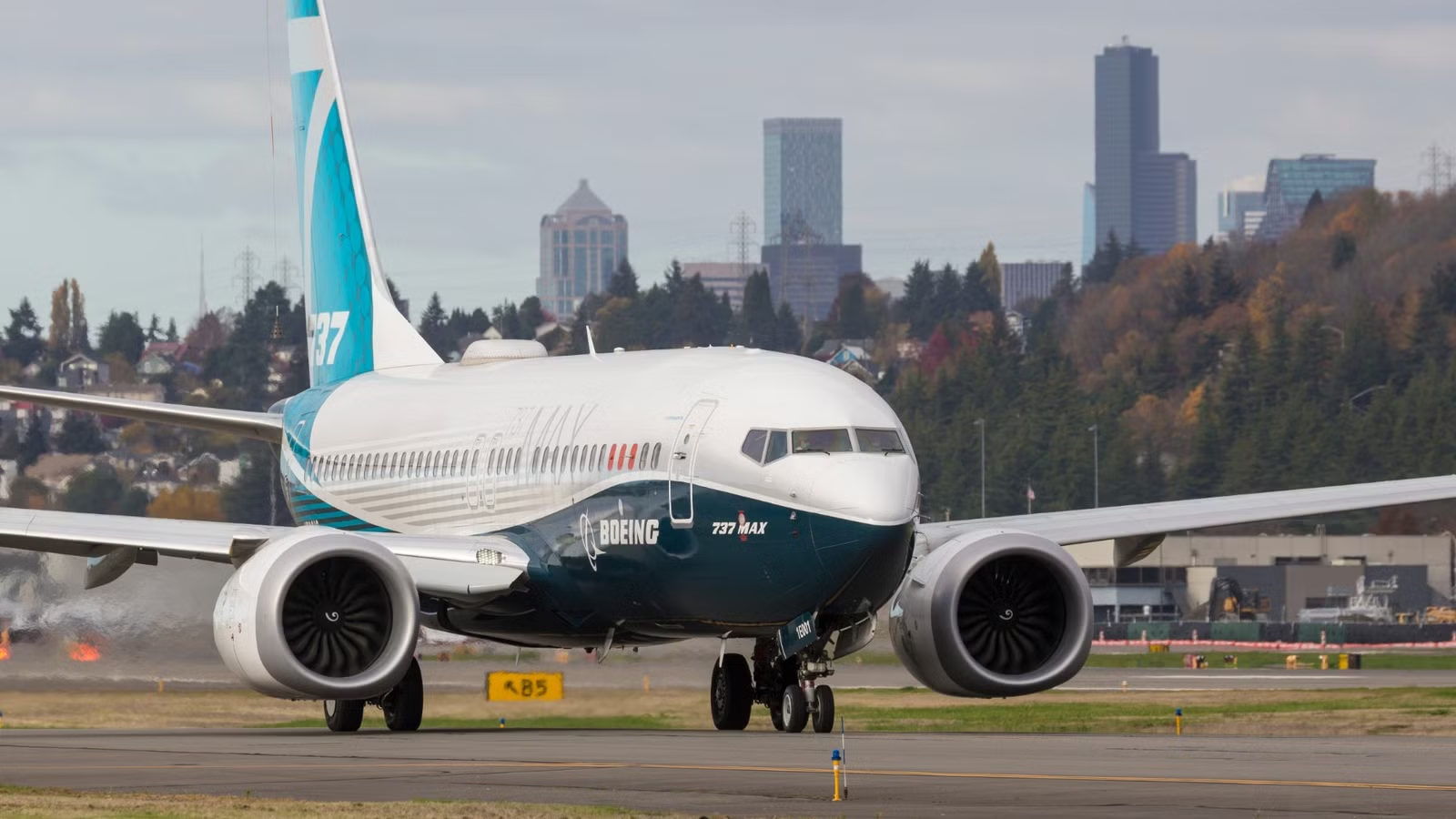
 Boeing has completed certification flight testing for its long-delayed Boeing 737 MAX 7 and Boeing 737 MAX 10, marking a major milestone toward Federal Aviation Administration (FAA) certification and the first customer deliveries in 2027. The update, disclosed in the company’s second quarter 2026 earnings report, signals that both aircraft have now finished the flight test campaign required before the FAA completes its certification review, although regulatory approval is still pending.
The announcement represents meaningful progress for Boeing’s narrowbody family, whose two remaining MAX variants have experienced years of certification delays. The manufacturer continues to expect FAA certification for both aircraft in 2026, with initial deliveries scheduled to begin the following year, assuming the remaining regulatory process proceeds as planned. Boeing also confirmed continued progress on the Boeing 777X program, which recently received FAA authorization to begin another phase of certification flight testing.
Certification Campaign Reaches A Key Milestone

According to Boeing, certification flight testing on both the MAX 7 and MAX 10 concluded in July, completing one of the most significant technical phases of the certification program. Just two weeks earlier, the company had reported that testing was nearing completion but had not yet finished, making the latest update an important step forward. While completing flight testing does not automatically result in certification, it allows the FAA to continue evaluating the extensive data gathered throughout the campaign. Regulators must review aircraft performance, systems, handling characteristics, and compliance with certification standards before issuing final type certification.
The MAX 7 and MAX 10 are the last two members of the 737 MAX family awaiting certification, with the Boeing 737 MAX 8, Boeing 737 MAX 8200, and Boeing 737 MAX 9 variants already in service. The smaller MAX 7 is designed to replace the Boeing 737-700 and primarily targets airlines operating shorter routes with lower passenger demand. The larger MAX 10 competes directly in the high-capacity single-aisle market and has attracted significant interest from airlines seeking greater seating capacity while maintaining commonality with existing 737 fleets.
Boeing Maintains 2026 Certification Target

Despite completing flight testing, Boeing emphasized that certification remains subject to FAA approval. The certification timeline reflects the FAA’s enhanced oversight of Boeing’s certification programs in recent years. Since the two 737 MAX accidents and subsequent grounding, regulators have taken a more rigorous approach to aircraft certification, requiring additional scrutiny of testing data and compliance documentation before approving new aircraft variants.
At the same time, Boeing reported broader progress across its commercial airplane business. The company began transitioning 737 production toward a rate of 47 aircraft per month during the second quarter and activated low-rate initial production on the new 737 North Line in July. Those manufacturing increases are intended to support future deliveries as certification milestones are achieved.
Progress Extends Beyond The 737 MAX Family

The quarterly update also included positive news for Boeing’s widebody portfolio. The company announced that the 777X program received FAA approval under Type Inspection Authorization 4B, allowing certification flight testing to move into another critical phase. Boeing continues to expect the first 777X deliveries in 2027. For airline customers awaiting the MAX 7 and MAX 10, the completion of certification flight testing removes one of the largest remaining technical hurdles. However, several important regulatory steps still remain before either aircraft enters commercial service.
If Boeing meets its projected timeline, 2026 will focus on securing FAA certification while airlines prepare crews, maintenance programs, and operational approvals for the new variants. The first customer deliveries in 2027 would finally complete the certification of the entire 737 MAX family, ending a development process that has stretched well beyond its original schedule as Boeing worked through extensive regulatory requirements and increased FAA oversight.

![Breeze Airways Has Dropped Flights To These 6 Airports [Full List]](https://dailynewsnblog.com/wp-content/uploads/2026/06/1626296_1716082958.jpg)