dailynewsnblog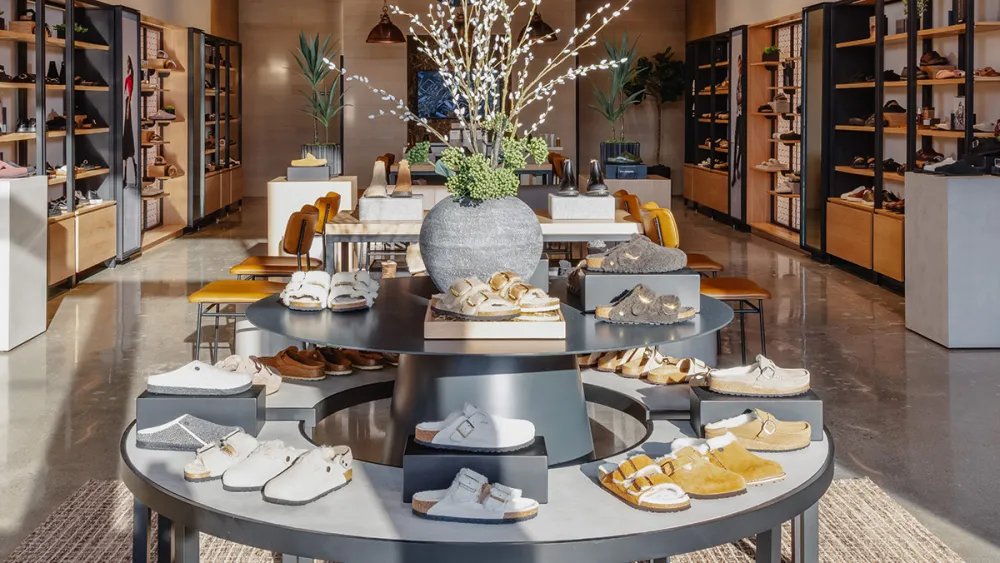
Birkenstock‘s chief executive officer Oliver Reichert is not worried, despite a changing geopolitical backdrop.
The German footwear company posted second-quarter results on Wednesday that showed net income falling 22.1 percent to 81.9 million euros on a revenue gain of 7.7 percent to 618.3 million euros, for the quarter ended March 31.
And Reichert pointed out to analysts on a conference call that, since the quarter’s end, conflict in the Middle East has disrupted global supply chains and led to higher energy costs.
“These cost pressures are fueling inflation, clearly causing pressure on consumer wallets,” he said, adding that the annual inflation rate in the U.S. jumped to 3.3 percent in March and Eurozone inflation reached 3 percent in April. Moreover, the brand’s growth in Europe, Middle East and Africa was impacted by muted consumer sentiment in Europe due to both higher energy costs and inflation and because the conflict impacted the brand’s ability to ship into the Middle East.
“While it is difficult to foresee how long the impacts will last, we have taken measures to mitigate some of the direct impact,” he said. “We have secured alternative delivery routes and we can also steer products originally intended for the Middle East through other regions, especially [the Asia-Pacific region], where demand remains very strong.”
As for tariffs, the CEO said the U.S. Supreme Court’s ruling striking down IEEPA tariffs resulted in a temporary increase in Birkenstock’s tariff exposure. “We estimate our refund claims will be about 30 million euros, but timing is still uncertain,” he said.
But the brand is still ramping up production “as planned to reach our target of 10 percent annual growth in pairs sold,” he said.
“We manage our distribution with discipline to maintain scarcity, properly segment the market, and manage channel growth,” Reichert said. “The ultimate truth for brand health and momentum is sell-through at full price, which remains very strong at over 90 percent.”
Birkenstock’s footwear addresses a wide range of price points from $50 to its 1774 collaborations at up to $2,000. In addition to its core clog business, the brand’s closed-toe line continues to expand. Birkenstock opened five company-owned stores in the quarter, bringing the total globally to 111. The company is on track to meet its target of 140 doors by the end of fiscal 2026.
Reichert said sales are “not seeing any slowdown in the second half of fiscal 2026. From everything we see that we can control, of course, demand remains strong and resilient despite the headwinds from the different conflicts, inflation, [foreign exchange] and tariffs.”
William Blair analyst Sharon Zackfia said while Birkenstock’s second quarter was pressured by EMEA headwinds, its long-term growth algorithm remains intact.
Earlier this year, Birkenstock and Danielle Frankel collaborated on a bridal footwear collection. Birkenstock followed up with a new tie-up with Etro, with the duo updating the German footwear brand’s signature Boston clog.
Even though the company confirmed earlier guidance of 13 to 15 percent revenue growth on a constant currency basis, investors weren’t happy about the company’s warnings of higher costs from the Middle East conflict and tariffs, as well as foreign exchange concerns. Shares of Birkenstock closed down 12.9 percent to $33.06 on Wednesday.