dailynewsnblog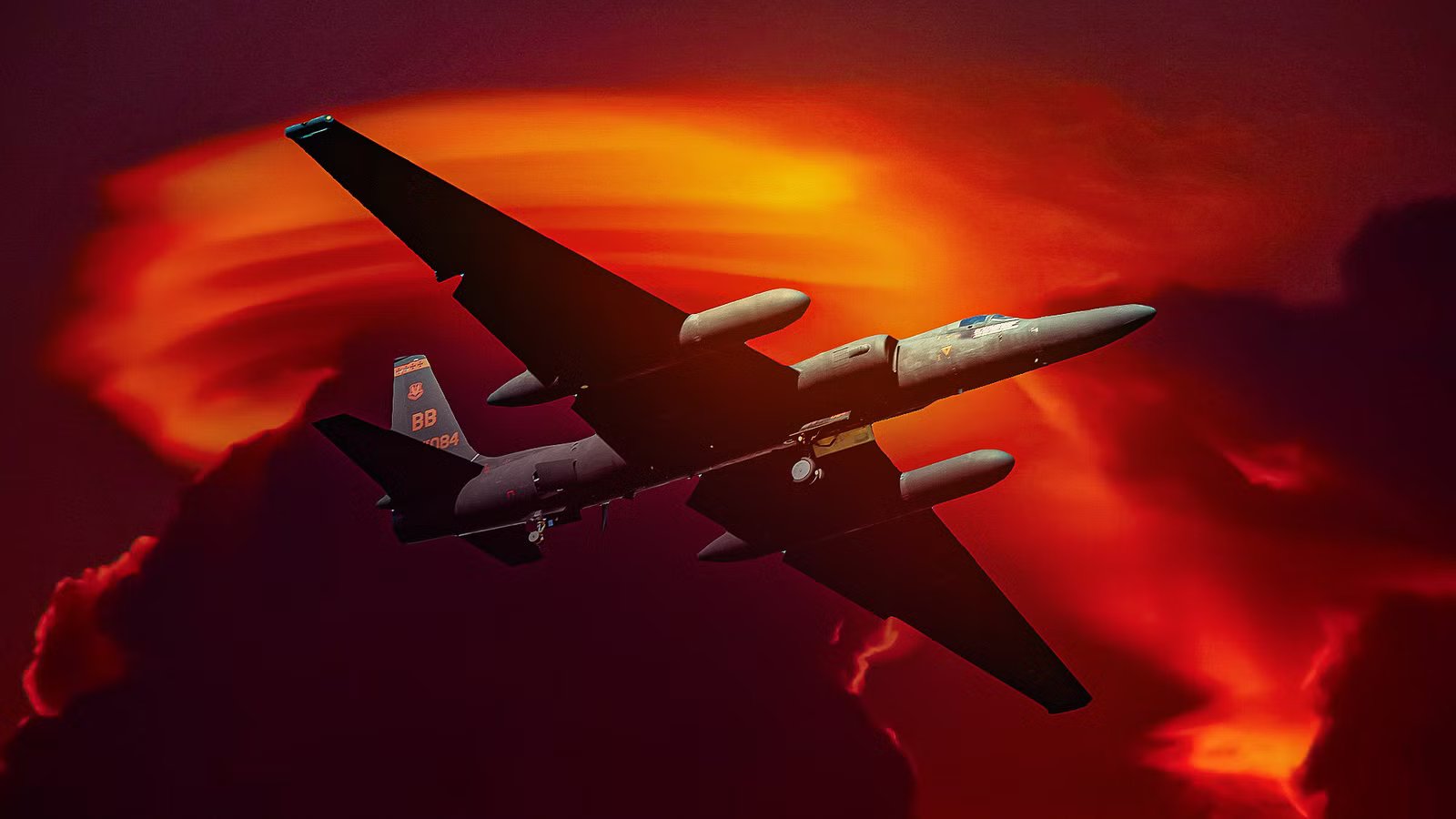
The Lockheed U-2 ‘Dragon Lady’ began as one of the most secret projects of the early Cold War and was built specifically for it. This was a time when deep US and USSR rivalry was settling in and starting to shape the world order, and yet the US had no way to monitor what was happening deep within the USSR. Satellites didn’t exist, and foreign journalists were banned from the country.
Some 70 years later, the Lockheed U-2 continues to fly high, spying for the United States Air Force around the world. While its days are numbered, its success remains unquestioned. Surprisingly, the maximum altitude the Lockheed U-2 remains a guarded secret. The commonly cited 70,000-foot ceiling is merely the unclassified altitude. Last year, the Dragon Lady may or may not have set a new altitude record, but if it did, the Air Force is keeping that detail classified.
Why The US Needed The Lockheed U-2

The iconic Cold War Lockheed U-2 Dragon Lady first flew in 1955, around 70 years ago. It was developed as part of a black box project through Lockheed’s secretive Skunk Works. By the beginning of the Cold War, the memory of Pearl Harbor was still comparatively fresh, and the United States wanted to ensure it had the reconnaissance aircraft to monitor Soviet movements and developments.
Before the Lockheed U-2, often the best intelligence the US had on facilities deep in the USSR was Second World War-era photos taken by the German Luftwaffe. In the 1950s, it was determined that a spy aircraft able to fly over the USSR and collect intelligence would need to be long-endurance and have good optics. This was the 1950s, so aircraft would have to land, and their films would then be developed, unlike the live digital feeds familiar today.
While true stealth aircraft were still decades away, the U-2 was also designed with features that reduced its radar cross-section, making it less vulnerable to enemy detection. However, it was also deemed to need to be able to fly at 70,000 feet, more on that below.
Why The U-2 Had To Fly High

Flying at 70,000 feet came with many advantages. At that altitude, air resistance is less, allowing the U-2 to cover a larger geographical range and increasing its endurance. The high altitude also allowed it to improve the effectiveness of its cameras and sensors. At these heights, atmospheric distortion and interference are minimized. This allowed the Dragon Lady to take clear images of the territory below. Flying high was thought to make it harder to detect.
However, perhaps most importantly, in the early 1950s, planners thought 70,000 feet would place it out of harm’s way. In the early 1950s, early fighter jets were unable to reach such altitudes, and even if they did, having the speed and control to effectively attack would be difficult. It was also out of range of traditional flak fire and AAA batteries, which had wreaked havoc on low-flying bomber sorties during the Second World War.
Lockheed U-2 Dragon Lady Specs (per Sandboxx) | |
|---|---|
Unclassified service ceiling | 70,000 feet (21,336 meters) |
Highest reported altitude | 74,500 feet (22,707 meters) |
Rumored maximum altitude | 80,000 feet (24,384 meters) |
This was somewhat similar to the logic that drove the development of the North American XB-70 Valkyrie supersonic bomber. While the Valkyrie first flew in 1964, its development started in the mid-1950s. With a service ceiling of over 77,000 feet and a maximum dash speed of Mach 3.1, the Valkyrie was to fly higher and faster than its threats. The U-2 wasn’t designed to outrun the threats, but it was designed to outfly them in altitude.
How Many U-2 Spy Planes Were Built?
Around a third remain in operation today with the USAF and NASA.
Surface-to-air Missiles: The Critical Flaw

But while this may have been a good idea in the early 1950s, by the 1960s it was obsolete. The U-2 entered service in 1956, and in 1960 Gary Powers flew a Lockheed U-2 over Russia and was shot down with a surface-to-air missile. Powers managed to parachute out but was then captured by the Soviets, resulting in an embarrassing diplomatic incident. The Soviets also captured parts of the U-2 and its photographs of the Soviet Union.
If this wasn’t enough, Soviet forces in Cuba drove the point home again in 1962 when another Lockheed U-2 was shot down. The pilot, Rudolf Anderson, was the only US fatality of the Cuban Missile Crisis. These incidents shocked planners at the Pentagon. The U-2 was far from being impervious to enemy air defense. Almost from the get-go, the aircraft was vulnerable to emerging Soviet surface-to-air defenses. This is a story that continues to massively impact thinking today.
The emergence of robust Soviet SAMs also spelled the end of the XB-70, although the development of intercontinental ballistic missiles also made it much less necessary. The XB-70 was shown as being neither able to out-fly in altitude or out dash missiles. As such, the Air Force later turned to the low-flying B-1A and then redesigned the B-1B Lancer before eventually settling on stealth with the B-2 Spirit and incoming B-21 Raider.
Vulnerability Is Not The Full Story

While the Lockheed U-2 was not as impervious as had been planned, there is much more to the story. For example, it was the Lockheed U-2 that managed to capture the initial photos of the Soviet missiles in Cuba in the first place and alert Washington to the new threat. The Pentagon also went on to develop other forms of spy platforms like the famous SR-71 Blackbird, satellites, and eventually today’s stealthy long-range spy drones (e.g., the RQ-170).
A huge amount of surveillance work is not done over hostile contested airspace. This is why some countries (like India) are still purchasing the vulnerable MQ-9 Reaper drone that has been downed in large numbers by Houthis over Yemen. Much of the spy work is needed over militant areas with little or no air defense (like the Sahel region of Africa), over maritime regions, and over the US’s southern border.
In these areas, the US doesn’t need to worry about the U-2’s vulnerability, although it means the aircraft would be hopeless in a peer-on-peer conflict with China. The relative low-cost of operating the U-2s, the improved onboard cameras, and the endurance have made them valuable. This has meant they have survived their erstwhile expensive SR-71 successors and may even continue in service beyond the retirement of the RQ-4 Global Hawk spy drone.
Top 5 US Military Surveillance Aircraft That Made History
The legacy of the US military developing some of the world’s most iconic and successful surveillance aircraft looks set to continue into the future.
A New Lockheed U-2 Record

The Lockheed U-2 is now in its twilight years. Some of the Air Force’s remaining inventory of these aircraft are expected to retire in FY 2026, with the remaining potentially retiring in FY 2027. With that being said, it is possible their services may yet be extended once again. However, the old airplane has insisted on setting new records before its looming retirement. In August 2025, the Air Force flew a rare TU-2S trainer variant to set new records as a way to commemorate its 70-year anniversary.
The aircraft set a new endurance record for over 14 hours and a range of over 6,000 nautical miles. This was the longest single mission in the Dragon Lady’s history. It is unclear what altitude the aircraft flew at: the Air Force confirmed it set an endurance and distance record, but not an altitude record.
With that being said, Sandboxx News reported that “toward the end of the flight, when the aircraft was at its lightest due to spent fuel, the two-man crew took the aircraft up for a new altitude record for the platform, though the altitudes of the previous record that they broke and the new record that they set have not been publicly disclosed.”
Actual Lockheed U-2 Altitude Specs Are Classified

It may seem strange that the true performance of a 70-year-old airplane remains classified, but in truth, it is not publicly known how high the U-2 can fly. Its officially publicly disclosed service ceiling is 70,000 feet, but it is known that it can fly higher. Publicly disclosed capabilities are often understated. For example, the B-2 Spirit officially has a payload capacity of 40,000 lbs, but it can carry 2x 30,000 lbs GBU-57 bunker-busting bombs.
Sandboxx News notes that “we do know that the U-2 has an unclassified service ceiling of 70,000 feet, and CIA records show the aircraft would routinely fly as high as 74,500 feet. Unconfirmed but credible claims suggest the U-2 could even exceed 80,000 feet.” The publication also points out that the aircraft’s transponders are reported to be configured to show an altitude of 60,000 feet on flight trackers, regardless of how much higher they may actually be flying.
Finally, it should be noted that while the U-2 Dragon Lady type is one of the oldest in the USAF, the specific airframes flying are not so old. All the U-2S aircraft in service were built in the 1980s, making them 40-50 years old, not 70 years old. Some of the oldest airframes still in operational USAF use are the oldest KC-135s (starting from 1957) and B-52s (remaining airframes from around 1960).

![Emirates Unveils 1st-Ever Flights To This Massive Long-Haul Destination [Map]](https://dailynewsnblog.com/wp-content/uploads/2026/08/emirates-777-300er-landing.jpg)