dailynewsnblog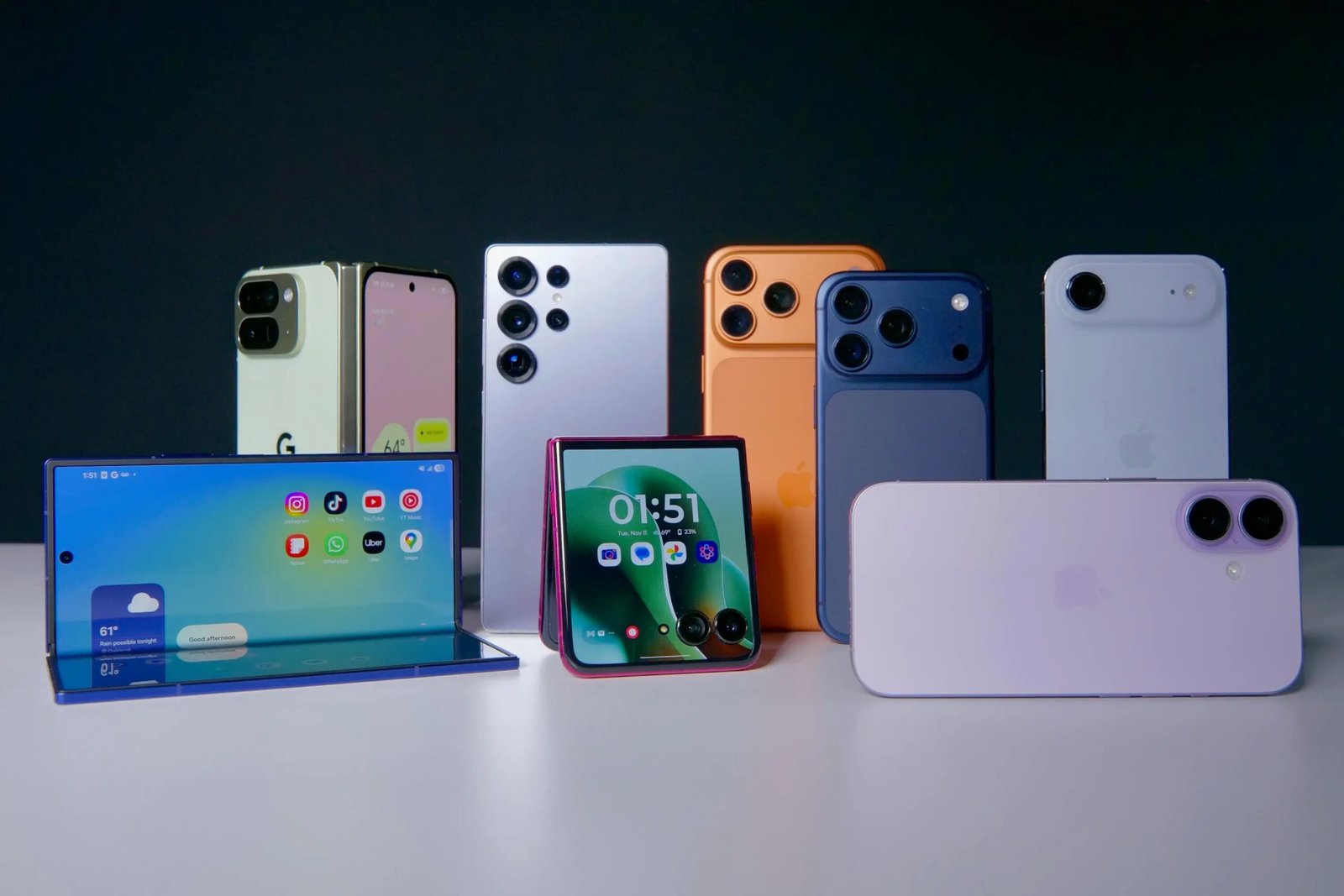
We test dozens of phones each year, but only a few come out on top. From Apple’s iPhone 17 family to Samsung’s Galaxy S26 series to the latest foldable phones, there’s a range of options for different needs and budgets. The best phones on this list have outstanding battery life, cameras that take stunning photos and vibrant displays. Here are our top phone picks for iOS and Android.
Our Picks

Bottom Line
With the iPhone 17, Apple has significantly narrowed the chasm separating its baseline model from its Pro counterparts. The $829 iPhone 17 (or…
Pros & Cons
-
Upgraded 1-120Hz display -
New camera features -
Longer battery life -
Faster charging
-
Minimal design updates to last year -
Apple Intelligence can still feel like a work in progress

Bottom Line
The $900 Samsung Galaxy S26 is a leading flagship with a price hike, and while it’s extremely likely that Samsung is just the first phonemaker…
Pros & Cons
-
Good cameras -
Clean, modern phone design -
Fun, even useful AI perks
-
$100 price hike not worth extra storage -
25W wired charging is comparatively slow -
Nearly all upgrades are to software, not hardware

Bottom Line
CNET Labs Award for Fastest Wired Charging, May 2026
The Samsung Galaxy S26 Ultra isn’t a radical upgrade from the S25 Ultra, but there are i…
Pros & Cons
-
Innovative Privacy Display -
Long-lasting battery -
Intuitive AI features -
Consistently great cameras
-
Some inconsistent AI features -
No magnetic wireless charging -
Many of the same specs as the S25 Ultra

Bottom Line
The Galaxy Z Fold 8 is a refreshing spin on Samsung’s existing book-style foldable design, with a squat, passport-sized build and a 4:3 aspect…
Pros & Cons
-
Unique, versatile design -
Minimized crease on main display -
Longer battery life than Z Fold 7 -
Solid camera quality
-
No telephoto lens -
No built-in magnets for Qi2 charging -
High $1,900 starting price -
AI capabilities can be spotty

Bottom Line
CNET Labs Award for Fastest Wireless Charging (iPhone 17 Pro), May 2026
From the first moment I picked up the new $1,199 iPhone 17 Pro Max an…
Pros & Cons
-
The 17 Pro Max’s incredible battery life -
The brighter screen looks fantastic -
Center Stage camera with the ability to take landscape selfies vertically is sweet
-
Wished Dual Capture had a 50/50 split -
Live Translation’s Siri voice can overlap with speakers -
iPhone 17 Pro battery life is on par with the iPhone 16 Pro -
Expensive

Bottom Line
The Pixel 11 Pro Fold is Google’s sleekest foldable phone yet. Measuring 5mm thick when open and 10.1mm thick when closed, it feels remarkably…
Pros & Cons
-
Durable build -
Thinner design over last year -
Slimmer bezels and slightly larger cover screen -
Plenty of handy AI and software updates
-
Cameras and battery are a step down from other Pixel 11 Pro models -
$100 pricier than last year’s foldable -
No anti-reflective display makes crease more prominent

Bottom Line
Google’s $899 Pixel 11 refines and improves its base phone to include many of the Pro-level features you may be looking for — including a thi…

Bottom Line
Editor’s note: Samsung released the Galaxy Z Flip 8, a follow-up to last year’s Galaxy Z Flip 7. If you’re looking for a Z Flip 7, make sure y…
Pros & Cons
-
The 6.9-inch screen is immersive, with lovely colors and contrast -
The 4.1-inch screen looks incredible -
It’s durable and survived a drop onto concrete -
One UI 8 (Android 16) runs wonderfully -
$1,100 is still a lot, but Samsung gives the phone more value than the Flip 6
-
Gets warm when recording videos and playing games -
Battery life is the same as the Flip 6 despite a bigger battery -
Cover screen software has room to grow

Bottom Line
Google’s Pixel 10A remains one of the best value options at $499, pairing consistent Android software updates with an excellent camera. While …
Pros & Cons
-
iPhone-convert friendly -
Simple, clean phone design -
Good at photography
-
Missing several Pixel 10 features -
Similar to the Pixel 9A
What is the best phone for most people?
Though we expect new iPhones soon, the best phone for most people right now is the iPhone 17. It shares many features with Apple’s pricier 17 Pro models, but at a lower $829 starting price (or $799 if you activate through a carrier). It supports the newest camera capabilities, such as Dual Capture and Center Stage selfies, and has a 1-120Hz variable refresh rate for smoother scrolling and support for its always-on display.
While the iPhone 17 shares a striking resemblance to the previous year’s iPhone 16, some key updates help it stand out. Apart from the upgraded refresh rate, the iPhone 17 also delivers a peak brightness of 3,000 nits, along with an anti-reflective display that makes it easier to see the screen outdoors. A Ceramic Shield 2 display offers three times better scratch resistance, according to Apple, so if you’re susceptible to etching into your screen, it has a little more protection now. The iPhone 17 starts with a higher 256GB storage option, as opposed to the 128GB starting point on the iPhone 16, meaning you get more bang for your buck.
The ultrawide camera goes from 12 megapixels on the iPhone 16 to 48 megapixels on the iPhone 17, and Apple says the iPhone 17 has up to eight hours more of video playback. Indeed, in CNET’s three-hour streaming test, the iPhone 17’s battery dropped from 100% to 89%, while the iPhone 16 hit 86%. The iPhone 17 was also one of the top performers in CNET’s battery lab testing.
The iPhone 17 also has all the new iOS 26 capabilities, such as Live Translation, Call Screening and the new Liquid Glass interface. Unlike previous iPhone generations, the iPhone 17 and 17 Pro models share almost all the same hardware features, apart from the telephoto lens and bigger battery on the latter. While Apple tends to introduce features like the Dynamic Island and Action button on Pro models first, the two ends of the iPhone spectrum now pack all those same hardware functions.
Recent updates
In August 2026, we added the Pixel 11, Pixel 11 Pro Fold and the Galaxy Z Fold 8.
Best phones of 2026
Abrar Al-Heeti/Zooey Liao/CNET
Best iPhone
Apple iPhone 17
-
Upgraded 1-120Hz display -
New camera features -
Longer battery life -
Faster charging
-
Minimal design updates to last year -
Apple Intelligence can still feel like a work in progress
With the iPhone 17, Apple has significantly narrowed the chasm separating its baseline model from its Pro counterparts. The $829 iPhone 17 (or $799 if you activate with a carrier) shares many of the same camera features with the iPhone 17 Pro and Pro Max, like Dual Capture and Center Stage. It also finally gets a display with a 1-120Hz variable refresh rate, so you can enjoy smoother scrolling and enable the always-on display and see your notifications at a glance. And support for iOS 26 across the full iPhone 17 lineup means you can access Apple’s most talked-about new software features like live translation, call screening and the Liquid Glass redesign. All that without spending upward of $1,100 for a Pro model, albeit with slightly scaled-back battery life and cameras.
Why we like it
The iPhone 17 is a baseline phone that shares many hardware and software features with the iPhone 17 Pro models, making it feel like a worthy, money-saving contender to those pricier devices. Generous battery life, faster charging and camera upgrades help it stand apart from last year’s iPhone 16, even if it looks almost identical.
Who it’s best for
The iPhone 17 is a great choice for the average phone user who wants good cameras, solid battery life and a quality display. It’s also a good size for anyone who doesn’t like larger phones.
Who shouldn’t get it
If you’re a photography enthusiast and a particularly heavy phone user, the 17 Pros might be the way to go, because you’ll get a telephoto lens on the back, as well as longer battery life. On the other hand, if you’re a lighter phone user, you can save more money by choosing the slightly more budget-friendly $599 iPhone 16E.
- Screen size
- 6.3 inches
- Processor
- Apple A19
- Cameras
- 48-megapixel (wide), 48-megapixel (ultrawide), 18-megapixel (selfie)
- Colors
- Lavender, sage, mist blue, black, white
The Samsung phone for most people
Samsung Galaxy S26
-
Good cameras -
Clean, modern phone design -
Fun, even useful AI perks
-
$100 price hike not worth extra storage -
25W wired charging is comparatively slow -
Nearly all upgrades are to software, not hardware
The $900 Samsung Galaxy S26 is a leading flagship with a price hike, and while it’s extremely likely that Samsung is just the first phonemaker in 2026 to give its phone a price hike, it still stings to have to pay $100 above last year’s Galaxy S25. Still, there are some notable software and AI upgrades, including the impressive Horizontal Lock feature that super-stabilizes recorded footage, no matter how you twist the phone around while shooting video.
Why we like it
The Galaxy S26 is a leading smartphone, a jack-of-all-trades that is blisteringly fast, takes good photos, shoots great videos, runs games well and has a decent battery. It’s not the absolute best at any of these among today’s top phones, but makes the podium for most of them, so it’s an easy all-around choice. The new AI features are fun if situational, and aside from Horizontal Lock, there aren’t any standouts. If one has to pay more for the phone, at least it starts at 256GB of storage.
Who it’s best for
The Galaxy S26 is a reliable pick for anyone who just wants a great phone that can do anything. While it won’t win any battery longevity awards (especially compared to the OnePlus 15), its cameras remain stellar, and its Snapdragon 8 Elite Gen 5 chip with 12GB of RAM result in smooth operations. It still gets seven years of software and security updates, so buyers will be able to keep it around for years and expect some AI features from newer Galaxy phones to trickle down, too.
Who shouldn’t get it
The Galaxy S26 doesn’t quite excel in anything — not battery life (OnePlus 15), photo AI features (Google Pixel 10 Pro) or display tech (its Galaxy S26 Ultra sibling). And the $100 price hike is more a reflection of the state of the industry than a result of upgrades, so if you’re looking for a cheaper but still powerful option, look for the Galaxy S25 or other Android phones from last year.
- Screen size
- 6.3 inches
- Processor
- Snapdragon 8 Elite Gen 5
- Cameras
- 50-megapixel (wide), 13-megapixel (ultrawide), 10-megapixel (3x telephoto), 12-megapixel (selfie)
- Colors
- Black, white, cobalt violet, sky blue
Get a Samsung Galaxy S26 Ultra free with a new line
Samsung Galaxy S26 Ultra
-
Innovative Privacy Display -
Long-lasting battery -
Intuitive AI features -
Consistently great cameras
-
Some inconsistent AI features -
No magnetic wireless charging -
Many of the same specs as the S25 Ultra
- CNET Labs Award for Fastest Wired Charging, May 2026
The Samsung Galaxy S26 Ultra isn’t a radical upgrade from the S25 Ultra, but there are improvements where it counts. It’s the thinnest and lightest Ultra, at 7.9mm thick and 214 grams — an admittedly minor slim-down that’s still noticeable.
The hardware advancement that steals the spotlight is the Privacy Display, which prevents others from seeing what’s on your screen. Unlike a $10 screen protector you can buy from Amazon, you can toggle Privacy Display on for certain apps, like a banking app or your email, as well as your lock screen, so no one sees your password or PIN. You can also enable it just for incoming notifications, so only part of your screen gets blacked out.
The S26 Ultra carries over the same camera specs as last year, but it consistently delivers high-quality images. Plus, a neat new Horizontal Lock feature when recording videos keeps the horizon level even as you rotate your phone 360 degrees, leading to astonishingly stable footage.
Why we like it
The S26 Ultra prioritizes both hardware and software. Along with a thinner design and the Privacy Display, there’s also a handful of new intuitive AI features. For instance, Now Nudge surfaces real-time suggestions based on what’s on your screen, so if someone asks for photos from your trip, it’ll automatically point you toward those images in your Gallery so you don’t have to dig for them. And Document Scan will automatically appear when you’re snapping a photo of a document to remove shadows and creases, then let you export the final product as a PDF. Plus, the S26 Ultra’s battery can last well over a day and a half, and it supports 60-watt wired charging, a major perk.
Who’s it best for
If you’re a power user who likes having a larger display, a bigger battery and top-notch cameras — as well as the signature S Pen — the S26 Ultra is the way to go. It’s a great choice for anyone who doesn’t want to worry about charging their phone at the end of each day, since the battery can last well over a day and a half.
Who shouldn’t get it
The S26 Ultra keeps its $1,300 price, even amid a RAM shortage that threatens to raise phone prices. But that’s still not pocket change. If you don’t need the most high-end cameras and prefer a smaller device, the baseline S26 shares many of the Ultra’s features, including the Snapdragon 8 Elite Gen 5 processor and all those AI features.
- Screen size
- 6.9 inches
- Processor
- Snapdragon 8 Elite Gen 5
- Cameras
- 200-megapixel (wide), 50-megapixel (ultrawide), 10-megapixel (3x telephoto), 50-megapixel (5x telephoto), 12-megapixel (selfie)
- Colors
- Cobalt violet, sky blue, black, white
Best phone for consuming content
Samsung Galaxy Z Fold 8
-
Unique, versatile design -
Minimized crease on main display -
Longer battery life than Z Fold 7 -
Solid camera quality
-
No telephoto lens -
No built-in magnets for Qi2 charging -
High $1,900 starting price -
AI capabilities can be spotty
The Galaxy Z Fold 8 is a refreshing spin on Samsung’s existing book-style foldable design, with a squat, passport-sized build and a 4:3 aspect ratio when open, making it feel more like a tablet.
With a spacious 7.6-inch inside display, it’s ideal for watching horizontal videos and multitasking in landscape orientation, and is well-suited for vertical content on platforms like Instagram and TikTok when turned to portrait. The 5.5-inch cover screen is just big enough to handle everyday tasks like sending a text, responding to an email or snapping a photo. Overall, it’s an incredibly versatile yet compact device that’s made for those of us who can’t stop scrolling or binge-watching.
Why we like it
The Galaxy Z Fold 8 is not only adorable and satisfying to hold, but it’s also quite practical if you spend a lot of time consuming content on social media or streaming platforms. It also doubles as a great platform for reading documents and ebooks when held in a portrait orientation. Because of its adaptability, it’s well-suited for practically any type of media you want to consume.
Who it’s best for
This phone is for anyone who spends a lot of time scrolling through social media, watching videos or reading digital documents or ebooks.
Who shouldn’t get it
If you want pro-level photography or a better canvas for multitasking, the more traditionally designed Galaxy Z Fold 8 Ultra might be a better fit for you.
- Screen size
- Cover: 5.5-inches; Main: 7.6 inches
- Processor
- Snapdragon 8 Elite Gen 5
- Camera
- 50-megapixel (wide), 50-megapixel (ultrawide), 10 megapixel selfie (inner screen) 10-megapixel selfie (outer screen)
- Colors
- Lavender, graphite, cream, pistachio (Samsung online exclusive)
While the cosmic orange color gets all the attention, the iPhone 17 Pro looks dapper in dark blue. Curiously, there isn’t a black or space grey version of the Pro. / Celso Bulgatti/CNET
Best premium iPhone
iPhone 17 Pro and 17 Pro Max
-
The 17 Pro Max’s incredible battery life -
The brighter screen looks fantastic -
Center Stage camera with the ability to take landscape selfies vertically is sweet
-
Wished Dual Capture had a 50/50 split -
Live Translation’s Siri voice can overlap with speakers -
iPhone 17 Pro battery life is on par with the iPhone 16 Pro -
Expensive
- CNET Labs Award for Fastest Wireless Charging (iPhone 17 Pro), May 2026
From the first moment I picked up the new $1,199 iPhone 17 Pro Max and $1,099 17 Pro, I was beguiled by their bold, bright redesign. It’s a complete turnaround from the years of Apple’s subdued titanium motif. The square camera bump of previous Pro models is now a body-wide bar that Apple calls the “camera plateau.” The 17 Pro and Pro Max now come in actual colors — you won’t find one in black or space gray. This phone, especially in cosmic orange, wants you to look at it.
As I tested the new Pro phones, I was consistently impressed: Even after a full day of heavy use, the Pro Max’s battery still had 22% or more left. The iPhone 17 Pro Max has the best battery life of any phone that CNET has ever tested.
The 17 Pro and 17 Pro Max have the exact same rear cameras, all with 48-megapixel sensors. You can choose between the trio of lenses (wide-angle, ultrawide and telephoto) to capture photos at 12-, 24- or 48-megapixel resolutions. The telephoto camera has gone from the 16 Pro’s 12-megapixel sensor with a 5x lens to a 48-megapixel sensor that’s 56% larger with a new 4x telephoto lens. You read that right: The new Pro has a shorter optical zoom than its predecessor. But I find the short 4x zoom better for portraits, and the increase in detail and dynamic range in 4x photos is a big improvement over 5x snaps from the 16 Pro.
There’s a new selfie camera on both Pro phones that Apple calls Center Stage. It not only takes 18-megapixel selfies, up from 12 megapixels on the 16 Pro, but you can hold the 17 Pro vertically and take a horizontal selfie thanks to a new square image sensor.
I can’t help but contrast the iPhone 17 Pro models to Apple’s newest phone. The iPhone Air is thin, light, quiet and graceful — with a single rear camera, shorter battery life and $100 cheaper starting price. The 17 Pro and Pro Max are bold, loud, aggressive and powerful, and their daring design appeals to me. But features such as its amazing battery life, brighter screen, new selfie camera and iOS 26 are the real reasons to get either.
Why we like it
I appreciate that Apple gave the iPhone 17 Pro and 17 Pro Max personality. Gone is the minimal design for the sake of simplicity. We have a phone that is more durable, has a longer battery life and, when running iOS 26, comes with a number of significant “quality of life” improvements, like live translations for calls, texts and FaceTime.
Who it’s best for
The iPhone 17 Pro and 17 Pro Max would be an excellent upgrade for someone coming from an iPhone 14 Pro or older. You get a bigger battery, a better screen, faster charging, newer cameras and a speedier processor that can handle graphics-intensive games and Apple Intelligence.
Who shouldn’t get it
If you have an iPhone 15 Pro or Pro Max, you don’t need these new phones unless battery capacity on your current phone is low — and even then, it’d be cheaper to simply have your battery swapped out. And unless you have a generous disposable income, iPhone 16 Pro and Pro Max owners can sit this one out.
Read our iPhone 17 Pro and 17 Pro Max review.
- Screen size
- 6.3 or 6.9 inches
- Processor
- Apple A19 Pro
- Cameras
- 48-megapixel (wide), 48-megapixel (ultrawide), 48-megapixel (4x, 8x telephoto), 18-megapixel (selfie)
- Colors
- Silver, dark blue, cosmic orange
The Pixel 11 Pro Fold’s spotlight feature is its durability. / Abrar Al-Heeti/CNET
Most durable foldable phone
Pixel 11 Pro Fold
-
Durable build -
Thinner design over last year -
Slimmer bezels and slightly larger cover screen -
Plenty of handy AI and software updates
-
Cameras and battery are a step down from other Pixel 11 Pro models -
$100 pricier than last year’s foldable -
No anti-reflective display makes crease more prominent
The Pixel 11 Pro Fold is Google’s sleekest foldable phone yet. Measuring 5mm thick when open and 10.1mm thick when closed, it feels remarkably like a slab phone when you use the expansive 6.5-inch cover screen. The 8-inch inside screen is ideal for watching videos and multitasking.
Impressively, the Pixel 11 Pro Fold keeps durability at the forefront. A sturdy aluminum frame allows the phone to be relatively lightweight, and an IP68 rating protects it against both dust and water — a rarity in the world of foldables.
Why we like it
Foldables are pricey, with the Pixel 11 Pro Fold starting at $1,899. Having a durable device offers some peace of mind. That’s the Pixel 11 Pro Fold’s strong suit — quite literally. Along with an IP68 rating and scratch- and crack-resistant glass, Google’s latest foldable still maintains a sleek profile, allowing it to feel relatively slim and light.
Who it’s best for
If you tend to work or watch movies on your phone, a foldable with an expansive inner screen like the Pixel 11 Pro Fold can be a good fit. It also has the advantage of being durable, with a dust-resistant and waterproof design that means you can hopefully take the Pixel 11 Pro Fold to the beach without worrying about sand destroying it.
Who shouldn’t get it
The Pixel 11 Pro Fold’s expansive 6.5-inch cover screen is something of a double-edged sword. It’s spacious enough to comfortably type, scroll and watch movies, but that also means I tend to forget there’s a larger 8-inch screen inside, and so I typically stick to the cover screen.
That can defeat the purpose of a foldable phone, but I like cracking open the Pixel Fold for multitasking and a more immersive viewing experience. If you don’t have much use for a larger phone screen, you can save yourself hundreds of dollars by sticking with a premium slab phone like the Pixel 11 Pro or 11 Pro XL.
- Screen size
- Cover: 6.5 inches; Main: 8 inches
- Processor
- Google Tensor G6
- Cameras
- 48-megapixel (wide), 10.5-megapixel (ultrawide), 10.8-megapixel (telephoto), 10 megapixel selfie (inner screen) 10-megapixel selfie (outer screen)
- Colors
- Obsidian, olive
The back of the Pixel 11. / Joseph Maldonado/CNET
Best bridge from iPhone to Android
Pixel 11
Google’s $899 Pixel 11 refines and improves its base phone to include many of the Pro-level features you may be looking for — including a third telephoto camera with 5x optical zoom. The phone’s one of the more iPhone-friendly Android phones out there, with an improved method for transferring data over from iOS, PixelSnap magnets that work with Apple’s MagSafe accessories and AirDrop support via Android’s Quick Share.
Why we like it
While the Pixel 11 isn’t Google’s most powerful phone, it includes nearly all of the company’s latest software and AI features. That includes Live Translate to automatically dub videos into other languages, Rambler voice dictation to remove filler words and omit any errors as you speak, and access to all of Google’s Gemini assistant features. The phone’s base price increase over the Pixel 10 is understandable, since its $899 price for 256GB matches last year’s storage equivalent.
Who it’s best for
This phone is an ideal upgrade for anyone coming from a Pixel 8 or older. It can also be a good fit for those looking to switch from an iPhone; if you’re using an iPhone 14 or older, you’ll see the most benefit from the Pixel 11’s upgraded features.
Who shouldn’t get it
If you want a phone that’s better for gaming, Samsung’s Galaxy S26 and Apple’s iPhone 17 series have processors that are better suited for graphically intensive multiplayer games. If you want the absolute best cameras and don’t mind paying $200 more, the Pixel 11 Pro supports faster low-light photography and a 120x Pro Zoom that uses generative AI to sharpen details.
- Screen size
- 6.3 inches
- Processor
- Google Tensor G6
- Cameras
- 48-megapixel (wide), 13-megapixel (ultrawide), 10.8-megapixel (5x telephoto), 10.5-megapixel (selfie)
- Colors
- Frost, hibiscus, pistachio, obsidian
Best Samsung flip phone
Samsung Galaxy Z Flip 7
-
The 6.9-inch screen is immersive, with lovely colors and contrast -
The 4.1-inch screen looks incredible -
It’s durable and survived a drop onto concrete -
One UI 8 (Android 16) runs wonderfully -
$1,100 is still a lot, but Samsung gives the phone more value than the Flip 6
-
Gets warm when recording videos and playing games -
Battery life is the same as the Flip 6 despite a bigger battery -
Cover screen software has room to grow
Editor’s note: Samsung released the Galaxy Z Flip 8, a follow-up to last year’s Galaxy Z Flip 7. If you’re looking for a Z Flip 7, make sure you’re getting a good discount, especially since the newer Z Flip 8 has several launch deals.
When I first got my hands on Samsung’s new Galaxy Z Flip 7, I was delighted to discover that it has a smaller crease, larger cover screen, thinner design and bigger battery compared to last year’s Galaxy Z Flip 6. But as I tested the new clamshell phone, I became enthralled by its inner screen. At 6.9 inches, this is the biggest screen on any Samsung phone aside from the Galaxy Z Fold 7, which has an 8-inch foldable display.
The Z Flip 7’s large screen size makes content feel more immersive and colors look lovely and vivid. This led to epic TikTok and Instagram sessions, watching widescreen films such as A Working Man and Back to the Future, as well as jumping between two apps stacked vertically on the screen thanks to One UI 8’s 90:10 split tool.
Every time I open the Flip 7, I’m consistently dumbfounded by how such a large display can unfurl from something about the size of a makeup compact. And when it’s closed, there’s a 4.1-inch cover screen that’s fantastic in its own ways, with new clever animations for when you’re recording a video, charging the phone or taking a selfie, all efficiently using the extra display real estate. In terms of functionality, though, the cover screen’s software is about the same as the 3.4-inch one on the Flip 6.
The Flip 7 impressed me in nearly every way but one: its battery life. It has a larger battery than the Flip 6, but it doesn’t last any longer in daily use. It did consistently get me through a day on a single charge, often having 15% to 20% left, but there were also a few days where it needed an early evening top-off.
Why we like it
The Galaxy Z Flip 7 is the most fully realized version of Samsung’s ideal of a flip phone since the launch of the original Galaxy Z Flip in 2020. The Flip 7’s appeal is simple: It’s a thin phone with a big, bold screen that folds in half into a coaster-sized square. The larger cover screen and inner screen make content more immersive. It’s design is thin (for a clamshell foldable) and comfortable to hold. Plus you get twice the storage this year compared to last.
Who is it best for
If you’ve been tempted by a clamshell-style foldable, you should definitely consider the Flip 7. If you have a Galaxy Z Flip 4 or older, the Flip 7 will be an upgrade in every way. It’s harder to make that same recommendation for Flip 5 owners unless your phone is showing its age. And if you have a Galaxy Z Flip 6, you can sit this one out unless you really want those larger screens.
Who shouldn’t get it
If you spend a ton of time around dirt or sand, this phone isn’t for you.
- Screen size
- 6.9 inches and 4.1 inches (cover)
- Processor
- Samsung Exynos 2500
- Cameras
- 50-megapixel (wide), 12-megapixel (ultrawide), 10-megapixel (selfie)
- Colors
- Blue shadow, jetblack, coralred, mint
Best cheap phone
Google Pixel 10A
-
iPhone-convert friendly -
Simple, clean phone design -
Good at photography
-
Missing several Pixel 10 features -
Similar to the Pixel 9A
Google’s Pixel 10A remains one of the best value options at $499, pairing consistent Android software updates with an excellent camera. While it won’t steal away anyone enamored by the more expensive Pixel 10, it’s still an easy recommendation when you just need a phone.
Why we like it
The Pixel 10A’s ability to send photos and files over AirDrop via Android’s QuickShare makes this phone a lower-cost way to switch from an iPhone SE to Android without losing that helpful feature. Even those that don’t care about AirDrop can appreciate the Pixel 10A’s camera, which remains one of the best available among phones under $500.
Who it’s best for
Someone who wants a nice phone, but isn’t interested in poring through technical details. It’s also a nice gateway phone for people switching from an iPhone to Android, thanks to its AirDrop support.
Who shouldn’t get it
Google’s prior A-series phones had been almost better versions of their pricier siblings with a lot of the same hardware, but the Pixel 10A doesn’t follow this tradition thanks to its slower processor and lack of a telephoto camera, which the $799 Pixel 10 has. It’s also not ideal if you absolutely need iMessage or FaceTime access.
- Screen size
- 6.3 inches
- Processor
- Google Tensor G4
- Camera
- 48-megapixel wide, 13-megapixel ultrawide, 12-megapixel selfie
- Colors
- Lavender, berry, obsidian, fog
Factors to consider when buying a new phone
Pick the most important feature: Is it screen size? Camera quality? Battery life? This will help narrow down your choices. Phones like the iPhone 17 Pro Max or Galaxy S26 Ultra cost well over $1,000, for example, but pack large batteries that will last most people a day and a half to two days on a single charge.
Don’t dismiss $500 to $800 phones: You can get a great phone that does almost everything that a more expensive flagship model can do for a fraction of the price. Google’s Pixel 10 (which starts at $799) packs a great camera, a bright screen and unique AI features, but the $499 Pixel 10A has most of the same key specs and comes at a lower price.
Shop Cyber Monday: Look for sales and deals close to holidays, especially Amazon’s Prime Day and Cyber Monday.
Consider last year’s models: When a new phone launches, stores and carriers discount their older phones to clear existing stock.
See the phone in person: It’s worth going to a store and trying out a potential phone. You may love or hate the way it looks and feels.
Decide on Android or iPhone: Do you have a lot of iPhone apps and Apple subscriptions? Stick with an iPhone. If you’ve invested in loads of Android apps, you may want to stay on that side of the fence. Otherwise, it’s simple enough to switch platforms.
Budget for a case and screen protector: Phones sold today are more durable than phones from even a few years ago, but it still might be a good idea to protect your phone with a case to keep it in tip-top shape.
How we test phones
We test every phone in real-world scenarios, focusing on its features, design, performance, cameras, battery life and overall value. We document our findings in an initial review that is periodically updated when there are software updates, or to compare it against new phones from competitors such as Apple, Samsung, Google and OnePlus.
Throughout our testing, we’re able to evaluate factors such as how long a phone lasts on a single charge, how the camera handles various lighting conditions, how durable the phone is in day-to-day use and whether performance and design align with the price. We share those insights to give prospective buyers a sense of what to expect when making such a huge purchase.

Samsung’s foldable options can be a good choice if you’re looking for a fresh phone design.
Zooey Liao/Numi Prasarn/CNET
Photography
Photography is a major focus for most phones these days, so we take pictures and videos of various subjects in a variety of settings and lighting scenarios. We try out any new camera modes, such as Center Stage that debuted with the iPhone 17 series, or the new Camera Coach photo tool that launched with the Google Pixel 10 series.
Battery life
Battery testing is conducted in a variety of ways. We assess how long a phone lasts during a typical day of use and note how it performs during more focused sessions of video calls, media streaming and gaming. We also conduct a video playback test, as a simple, replicable measure of pure battery life, which isn’t always included in the initial review but sometimes added later in an update.
We use benchmarking apps to measure each phone’s performance, alongside our own anecdotal experiences using the phone for our review. Most noteworthy is how graphics and animations look. Are they smooth? Do they lag or stutter? We also look at how quickly the phone switches between horizontal and vertical orientations, and how fast the camera app opens and is ready to take a photo.
We perform processor-heavy tasks like editing photos, exporting videos and playing games. We evaluate whether a newer version of a particular phone includes enough features to make it worth upgrading from older models.

We also test every phone we review for the basics like making a phone call.
Kevin Heinz/CNET
Read more: How We Test Phones
Other phones we tested


The iPhone 16 Pro is still a solid pick.
Celso Bulgatti/CNET
While Apple doesn’t sell the iPhone 16 Pro anymore, you can still find it at carriers and third-party retailers. The 16 Pro has a 6.3-inch adaptive-refresh rate screen that adjusts between 1-120Hz depending on what’s on the screen. It has excellent cameras, a fast processor, an always-on display, supports iOS 26 and safety features like Crash Detection and Emergency SOS via Satellite. Driving all these upgrades is Apple’s A18 Pro chip, which feels peppy. Check out our iPhone 16 Pro review.
Phone FAQs
What is the best time to buy a phone?
Typically, the best time to buy a phone is just after it’s been announced. Some companies offer really great deals for pre-orders and bundle the phone with accessories at no extra cost. Phone makers usually offer high trade-in values for the first month on old phones that can bring a new phone’s price down by hundreds of dollars — if not cover the cost entirely.
How long should a phone battery last?
Most smartphones — even those at the top end — should be able to deliver a full day of mixed use out of a single charge. That means you should have a bit of juice left at the end of your day, but you should expect to give it a full charge when you plug it in next to your bed at night.
How much storage should I get on a phone?
Most phones tend to come with a minimum of 128GB of storage, which is a decent amount for apps, games and locally stored music. But look for a phone with at least 256GB. As phones can take higher-resolution photos and videos, it’s important to think about what your phone’s storage might look like in two or three years. It’s also important to think about what you’ll be doing with your phone: If you want to download and play a lot of games, then consider opting for a higher-capacity version. So if you can afford to get a phone with 256GB of storage, your future self will thank you.
What are the best phone brands currently?
In 2026, some of the best phone makers include Apple, Samsung, Google and Motorola.
What to look forward to
Apple is expected to unveil its long-awaited foldable iPhone, which could help to bolster the entire foldables category. While companies like Samsung, Google and Motorola have released innovative clamshell and book-style devices in recent years, foldables firmly remain a niche category. But Apple’s entry could bring more attention to the space — and more enticing options for people who want a device that feels radically different to a slab phone.

See full bio

See full bio

See full bio

See full bio

See full bio