dailynewsnblog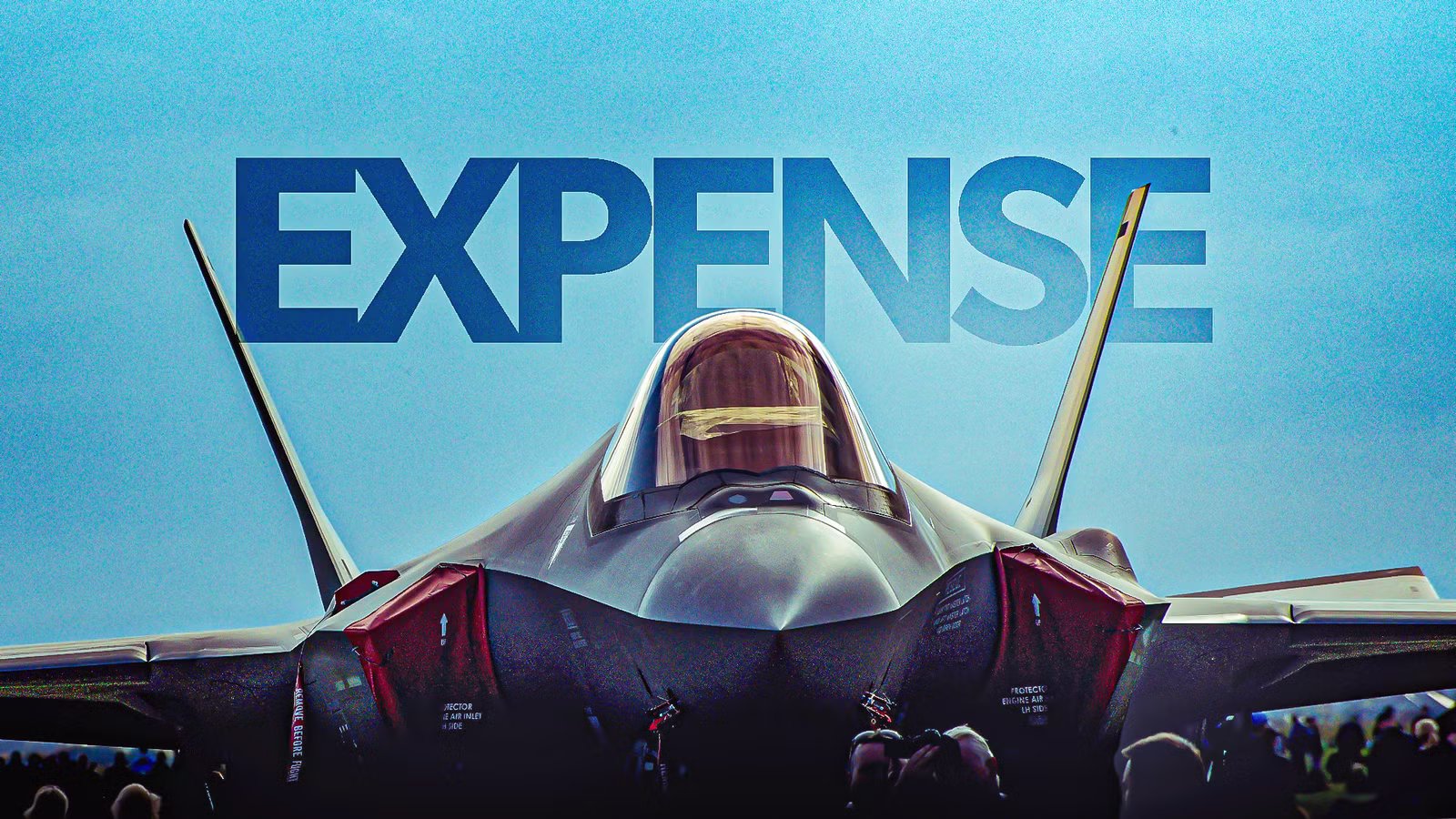
One of the hottest topics in defense procurement this January is the ongoing tug-of-war between Canada and the United States over Canada’s purchase (or hesitance to buy) of the F-35A Lightning II fighter jet. What started as a simple military acquisition has come to a flashpoint in bilateral relations, reshaping Canada’s defense priorities, testing the limits of NORAD cooperation, and bringing in international competitors like Sweden’s Saab Gripen into a debate that covers geopolitics, military capability, and industrial strategy. It can also be seen as a symbolic moment where a major Western democracy is reevaluating its dependence on American defense equipment. This is the story of how a fighter jet procurement has turned into a geopolitical pivot point, and why Washington is watching Ottawa’s next move with a mix of impatience and concern.
In brief, Canada is revisiting its commitment to purchase the Lockheed Martin F-35A Lightning II, a stealthy, fifth-generation fighter jet that has become the backbone of US and allied air forces worldwide. Ottawa originally agreed to purchase 88 aircraft to replace its aging CF-18 Hornets, and as of early 2026, it has committed to funding 16 of those jets, which are already in production. However, a combination of soaring costs, delayed deliveries, domestic political pressure, and strained relations with the US under President Donald Trump’s administration has prompted Prime Minister Mark Carney’s government to review the contract and explore alternatives.
Meanwhile, Washington has responded with unusually public warnings that Canada’s reconsideration could impact the North American Aerospace Defense Command (NORAD) — the joint air defence system that underpins continental security cooperation. For allies that have flown side-by-side for decades, the subtext of that warning is more loaded than usual: the future of Canada’s fighter fleet now intersects with diplomacy, alliance commitments, and national pride.
From CF-18s to F-35s: Why Canada Wanted New Fighters

Canada’s journey toward a new fighter fleet began decades ago, driven by the need to modernize an air force that had relied on the aging CF-18 Hornet, introduced in the 1980s. These jets, while reliable, no longer matched the advanced capabilities of contemporary threats in contested airspace, especially over the Arctic approaches, where long distances and extreme weather place additional demands on interceptors.
The Royal Canadian Air Force (RCAF) launched the Future Fighter Capability Project (FFCP) to identify an aircraft capable of performing NORAD intercept missions, NATO obligations, and sovereign air defense. After a competitive evaluation, the F-35A Lightning II emerged as the preferred choice. Its stealth features, advanced sensor fusion, and interoperability with neighboring US forces made it attractive to Canadian defense planners.
By 2022, Ottawa announced plans to buy 88 F-35As from US defense contractor Lockheed Martin. This deal was initially valued at C$19 billion, according to The Independent. But the relationship between capability and cost was complicated from the start: an auditor general later found that total expenditure, including infrastructure upgrades, lifecycle sustainment, and other ancillary costs, could reach C$27.7 billion, with delivery timelines slipping and facilities running behind schedule.
In simple terms, Canada chose a plane by committing to a transformational program that now appears far more expensive, more complicated, and more contested than initially envisioned, prompting a review of the entire program.
Washington’s Warning: What The US Fears About A Backtrack

As Ottawa began reviewing the F-35 deal, one voice stood out: US Ambassador to Canada Pete Hoekstra. In his CBC interviews, Hoekstra has warned that reducing or canceling Canada’s planned F-35 purchase would have deep implications for NORAD.
At its core, NORAD is a binational aerospace defense agreement formed in 1957 between Canada and the United States to monitor and defend North American airspace against the Soviet threat. It relies on shared radar, command structures, satellites, and rapid response aircraft to detect and intercept threats.
In mid-January 2026, Hoekstra told CBC News that if Canada did not proceed with the full F-35 purchase, NORAD would need to be “altered” because the United States would need to increase its fighter presence to address any capability gaps. He warned that this could mean more US jets flying into Canadian airspace more frequently, and possibly a need for Washington to buy additional F-35s for its own forces.
“If Canada is no longer going to provide that capability, then we have to fill those gaps,”
Hoekstra said, framing a reduced Canadian F-35 fleet as a potential shift in responsibility for continental security.
NORAD & Canada’s Air Defense: Key Facts Explained With A Chart
|
Concept |
Canada’s Position |
US Position |
|
Fighter Fleet Commitment |
Review of full F-35 purchase; 16 out of 88 funded |
Strong push to keep full order for interoperability |
|
NORAD Integration |
Ottawa affirms continued commitment to NORAD |
Warns that capability gaps could affect NORAD operations |
|
Alternatives Considered |
Sweden’s Saab Gripen & mixed fleet possibilities |
Gripen seen as less interoperable than F-35 |
|
US Military Presence |
Canada emphasizes sovereignty |
The US suggests more American jets could patrol Canadian airspace |
The ambassador also suggested that choosing a platform seen as “inferior” or “less interoperable” with US systems, often interpreted as a reference to alternatives such as Sweden’s Saab Gripen, could complicate defense planning.
This unusually blunt diplomatic language has sparked controversy in Ottawa and the Canadian Military, with critics saying Washington is blending military reasoning with political pressure. Both sides publicly stress that NORAD remains a core pillar of their defense partnership, yet the debate over fighter jets hints at a more complex negotiation over sovereignty and shared security burdens.
![6822773-16x9 - F-35A flies for the 2021 Toronto Air Show [Image 3 of 17]](https://static0.simpleflyingimages.com/wordpress/wp-content/uploads/2025/02/6822773-16x9.jpg?q=49&fit=crop&w=140&h=98&dpr=2)
Trump’s Tariffs Raise Questions For Canada’s Participation In F-35 Program
Are currently paused US tariffs a threat to the Royal Canadian Air Force’s F-35 buy?
Saab’s Gripen: A European Challenger In A Traditionally American Market

Here enters Sweden’s Saab JAS 39 Gripen E, a fighter jet that might not be as advanced as the F-35’s fifth-generation stealth design, but which offers a different value proposition. Canada’s government has signaled that it is exploring mixed-fleet options, in which Gripens could supplement or partially replace a full F-35 order.
At the core of Saab’s pitch is the industrial and economic benefits tied to producing aircraft locally. Saab has offered a package that includes 72 Gripen fighters, six GlobalEye airborne surveillance aircraft already developed together with Canadian Bombardier, and deeper partnerships with other Canadian firms, which could create up to 12,600 jobs domestically.
This blitz of industrial incentives gives Ottawa a tangible reason beyond pure fighter performance to consider alternatives. For a country keen to build sovereign capacity and reduce reliance on foreign suppliers, particularly amid rising trade tensions with the US, that message resonates.
However, the Gripen’s critics highlight limitations. Canadian military evaluations reportedly showed the F-35 outperforming the Gripen in most operational and technical categories by a significant margin, with the F-35 scoring roughly 95 percent to the Gripen’s 33 percent in a head-to-head comparison, according to CBC.
That gap reflects the difference between a fifth-generation stealth fighter and a high-end fourth-generation platform. In missions requiring stealth penetration, sensor fusion, and deep integration with allied forces, proponents argue that only the F-35 fills the gap.
Nevertheless, Saab’s offer continues to gain political traction in Ottawa, especially as it trades on jobs, industrial partnerships, and a narrative of defense diversification. For critics of US defense dominance, a European option represents a rare chance to rebalance Canada’s strategic dependencies.
Domestic Politics, Public Opinion, And Defense Sovereignty

Canada’s F-35 debate goes beyond defense ministries and ambassadors. Public opinion and political dynamics at home also shape the conversation. As reported by EkosPolitics, polls and discussions among Canadians suggest significant interest in alternative aircraft such as the Gripen, with some surveys indicating stronger public support for Swedish jets than for continued F-35 purchases.
Political leaders have seized on those sentiments to craft platforms that emphasize sovereignty, domestic industry, and diversified alliances, especially amid turbulent trade relations with the US, which have included tariff threats and other disputes unrelated to defense.
Some Canadian analysts also express concern about Canada’s reliance on US control over F-35 software and spare parts — a feature of the joint program that means the Pentagon retains a degree of authority over upgrades and sustainment even for Canadian-owned jets.
This technical reality has become a political touchpoint, fueling debates about whether buying American jets leaves Canada excessively dependent on a neighbor whose policies can shift dramatically with domestic politics.

Canada & Portugal Rethink Plans To Buy F-35s Due To Trump
Two key NATO allies are reconsidering plans to buy F-35s as a result of Trump Administration communications.
What’s Next? Choices, Consequences, And Continental Security

So where does this debate leave Canada — and its relationship with the United States? Ottawa is still far from a final decision. A defense review ordered by Prime Minister Carney in 2025 has been ongoing, with Canadian officials repeatedly emphasizing that the country remains committed to NORAD and to acquiring what it needs to defend its airspace.
For its part, Washington has doubled down on the idea that interoperability and shared capabilities are vital to continental defense—though it has also stressed in official statements that NORAD remains resilient and that the ambassador’s comments should not be taken as an abandonment of the partnership.
Canada’s options range from:
- Proceeding with the full F-35 fleet as originally planned, reinforcing seamless integration with US forces.
- Reducing the F-35 order and supplementing it with the Saab Gripen or other aircraft, balancing capability with industrial benefits and political autonomy.
- Adopting a mixed fleet, spreading risk, and depending on diverse suppliers.
Each option, of course, has trade-offs. A full F-35 fleet provides the most advanced fighter capability, but would keep Canada closely tied to US control and procurement schedules. A mixed fleet or European alternative offers jobs and greater independence, but complicates logistics and could reduce interoperability with US and NATO forces.
The Long View: Defense, Diplomacy, And The Future Of NORAD

Beyond the immediate procurement debate lies a broader question: what kind of strategic partner does Canada want to be in a rapidly changing security environment?
The tension over the F-35 purchase reflects a deeper recalibration of Canada’s military posture. Some strategists argue that diversifying defense partners strengthens resilience and reduces overdependence on a single supplier. Others warn that multi-platform fleets strain limited resources and weaken collective defense.
At the same time, NORAD is evolving, with both countries participating in modernization efforts to address new threats such as hypersonic missiles, unmanned systems, and cyber-enabled warfare, in addition to traditional fighter intercepts.
Whatever decision Ottawa makes, it will reverberate through decades of North American defense cooperation. One thing is clear: the quiet (and sometimes not-so-quiet) dispute over fighter jets has become a defining issue at the intersection of defense capability, international diplomacy, and national sovereignty.