dailynewsnblog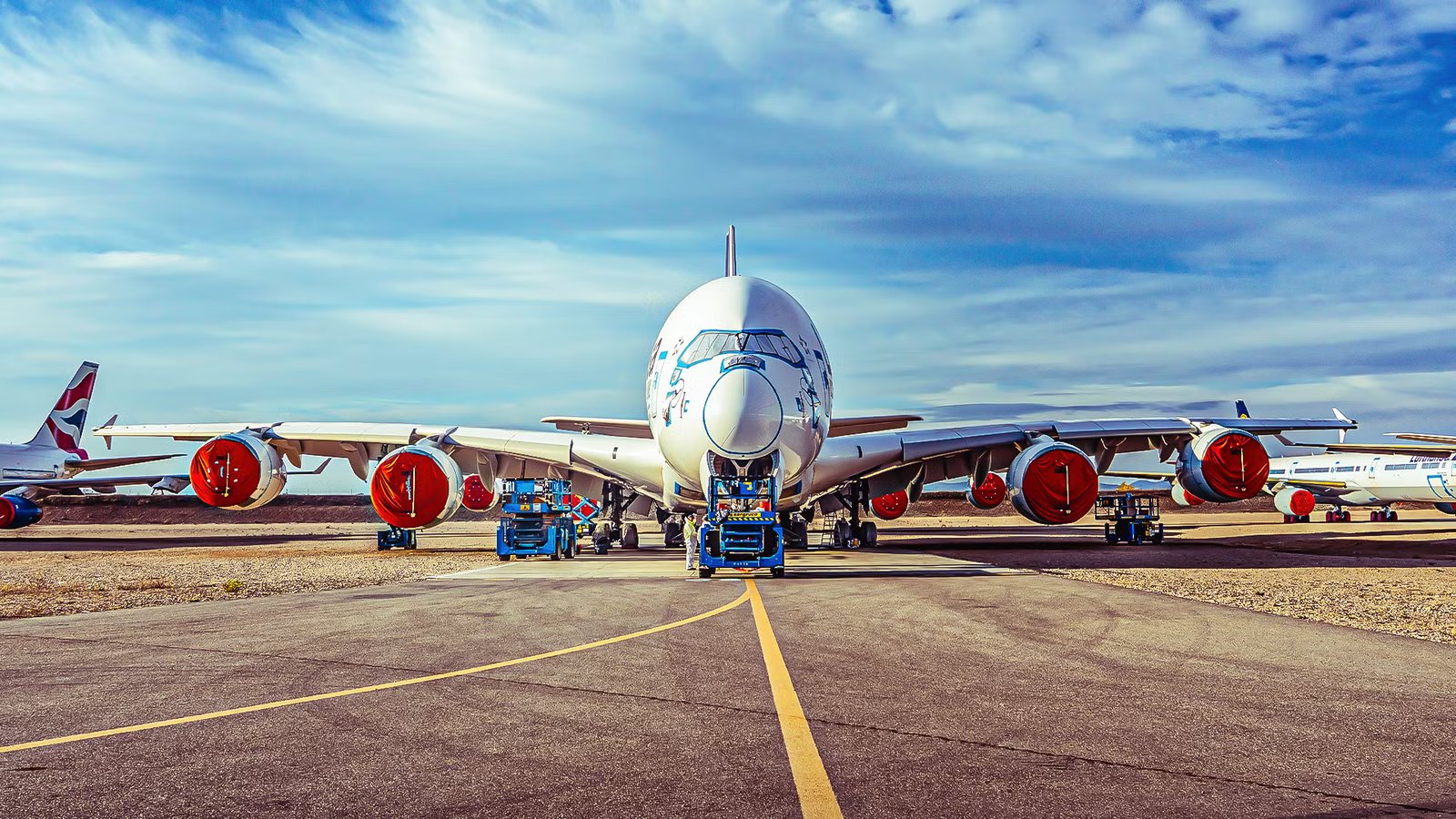
The Airbus A380 is a unique aircraft in many ways, and is one of commercial aviation’s greatest success stories, beloved by passengers worldwide. At the same time, it is also one of the largest commercial failures in modern aviation, especially for its manufacturer Airbus. Over the course of the aircraft’s production, 251 units were delivered to airlines, before the program was discontinued in 2021 after less than two decades due to a lack of commercial interest. For Airbus, the program never reached the break-even point, resulting in an estimated sunken cost of up to 25 billion dollars, making the A380 one of the most unprofitable aircraft in aviation history.
The Story Of The Iconic Superjumbo

The Airbus A380 is undoubtedly one of the most iconic aircraft ever built, and is the only full-length double-decker aircraft in operations. On the 27th of April 2026, it has been 21 years since the Airbus A380 departed on its first-ever flight. Since the aircraft’s first commercial flight in 2007 with  Singapore Airlines, the type has flown over 800,000 flights carrying more than 300 million passengers. At the time of the aircraft’s first flight, few would have believed that less than two decades later, in December 2021, Airbus would deliver the last A380 ever built to Emirates.
After the aircraft successfully entered commercial service in 2007, production peaked in 2012, with 30 new aircraft being constructed. However, by 2021, in the midst of the COVID-19 pandemic, Airbus made the decision to discontinue production of the aircraft after less than two decades, as the A380 did not succeed in the modern aviation market on a large enough scale. Unsurprisingly, this short production period was not enough to recover the massive development costs of the aircraft.
An important factor resulting in airlines’ lack of interest for the A380 was that Airbus introduced the aircraft too late, and the market had already evolved. While Airbus had already started studies to develop the aircraft back in 1988, the market was already shifting away from the “hubs-and-spokes” model the aircraft was designed for by the time it was first delivered in 2007. Airlines were already increasingly opting for smaller and more efficient twin-jet aircraft such as the Airbus’ own A350 and Boeing 787. These aircraft fitted better in this shifting commercial aviation market, and allowed airlines to operate more direct long-haul routes with thinner demand.
For Airbus, the final setback to the A380 program came when the type’s largest customer, Emirates, decided to cancel and switch a large part of their outstanding order in favor of the smaller A350 and Boeing 777X. This made the already troubled program completely unviable for Airbus, ultimately resulting in the final blow ending the aircraft production. For Emirates, an important reason to switch to smaller, more versatile aircraft came as Airbus could not deliver on a more fuel-efficient version of the A380, a potential “A380neo”. Despite this, Emirates still values the aircraft and expects to operate it into the next decade.

How Many A380s Did Airbus Produce Annually?
Production peaked in the early 2010s before orders dropped off.
Why The A380 Is Still A Valuable Asset For Airlines

Despite production ending in 2021, the aircraft remains a valuable asset for some airlines. These airlines often use the aircraft on high-demand hub routes with consistent demand to fill the large number of seats on the aircraft. These large hub airports are often heavily capacity-constrained, limiting growth possibilities in the number of flights and forcing airlines to increase aircraft size instead. Doing so allows airlines to maximize passengers per slot and capture more revenue on limited frequencies. In addition, most airlines have, for at least a large part, paid off their A380s or leased them at lower rates, decreasing ownership costs. This can make the aircraft an even more attractive asset, provided an airline’s route network has enough high-demand “trunk” routes.
Furthermore, the A380 still has a leading passenger experience due to its spacious cabin, stable flight, and low noise levels. For airlines, the spacious cabin is particularly interesting as it allows for the installation of premium heavy cabins and to design industry-leading, flagship premium products, such as first-class suites, as well as onboard showers and bars. Something that is especially attractive for airlines with premium-heavy revenue models.
Underscoring the strategic value of the aircraft for some airlines became clear at the 2023 Dubai Air Show, when Emirates announced a 1.5 billion dollar investment plan to make its A380 ready for the next decade. At the time of the announcement, Sir Tim Clark, President of Emirates Airlines, said the following:
“The A380 has been and will continue to be very much part of the Emirates story. Its size and capacity has allowed Emirates to unlock growth at some of the world’s busiest airports, opened new opportunities for travelers, and substantially raised standards for passenger comfort.”

The Real Reason Why The Airbus A380 Production Ended
What do you think is the real reason Airbus discontinued the A380?
These Airlines Still Operate The A380 In 2026

Around the world, there are ten airlines operating around 190 Airbus A380 aircraft. The most famous and largest operator of the aircraft type is Emirates. In fact, Emirates’ A380 fleet is so large that it accounts for more than half of the total A380 fleet worldwide, with 116 aircraft. The next largest operators of the A380 are British Airways and the type’s launch customer Singapore Airlines, which both operate 12 A380s. Other operators in the top five include Australian flag carrier Qantas with 10 aircraft, and Abu Dhabi-based Etihad Airways, which currently operates nine aircraft, after having recently reactivated two additional aircraft of the type that had previously been stored.
Other notable operators of the aircraft include Lufthansa (8), Qatar Airways (8), Korean Air (6) and sister-airline Asiana (6). The last airline to welcome the A380 to its fleet was Japanese carrier All Nippon Airlines (ANA), which added the aircraft to its fleet back in 2019, a decision the airline probably regrets as the massive capacity of the A380 quickly became a hurdle when market conditions changed. As of writing, ANA operates three A380s, which exclusively serve the Japan to Hawaii market. Another honorable mention is the ambitious and ambiguous Global Airlines, which used to lease an A380 from Malta-based charter airline Hi Fly Malta. However, this aircraft was sold by Hi Fly back in September 2025.
|
Airline |
Entry Year |
Last Delivery |
Current |
Retired |
|---|---|---|---|---|
|
Emirates |
2008 |
2021 |
116 |
7 |
|
Singapore Airlines |
2007 |
2017 |
12 |
12 |
|
British Airways |
2013 |
2016 |
12 |
|
|
Qantas |
2008 |
2011 |
10 |
2 |
|
Etihad Airways |
2014 |
2018 |
9 |
1 |
|
Source: planespotters.net |
||||
The airlines that opted to retain the A380 in their fleets have clearly done so with conviction and are investing heavily in the aircraft. This illustrates clearly that airlines are not operating the aircraft out of convenience or as a cash cow, but rather see it as a long-term strategic asset. In December 2025, for example, Qantas welcomed back its tenth and final A380 to Sydney after having been in storage for almost six years. To get the aircraft back into service, more than 100,000 hours of work were done by engineering and maintenance teams along with a full cabin retrofit, marking the largest maintenance check in the airline’s history.
And it is not only Qantas investing in the aircraft. As mentioned earlier, Emirates is investing over a billion dollars into retrofitting the aircraft, future-proofing it for the next decade. And also, German flag carrier Lufthansa is investing heavily in its A380 fleet, retrofitting the aircraft’s cabin as the airline decided to operate the A380 into the 2030s since a true replacement for the aircraft is not available and deliveries of new twinjets are facing delays.

Why Airlines Don’t Want Their Airbus A380s Anymore
A look at the challenges of operating a fleet of Airbus A380s today, and the future outlook on the type.
These Airlines Have Already Said Farewell To The A380

For airlines, one of the biggest problems with large aircraft, such as the A380, is the simple fact that high load factors are a requirement to be efficient. When a 500-seat aircraft flies half empty, its fuel burn per seat rises quickly, whereas smaller aircraft can match demand better and avoid overcapacity. Since only a few routes have sufficient demand to consistently fill the aircraft, airlines are limited in terms of viable routes they can deploy the aircraft on. Besides the economics, the aircraft also comes with a number of operational inefficiencies for airlines. These include infrastructure requirements at airports, increased turnaround times, and perhaps most notably, the increased maintenance cost due to the aircraft’s four engines.
While a number of airlines worldwide clearly view the A380 as a valuable asset, beneficial enough to be worthwhile, several others retired the aircraft years ago. These include  Air France (10), which was the first airline to fully retire the aircraft, as well as China Southern Airways (5), Thai Airways (6), and Malaysia Airlines (6). For most of these airlines, the aircraft were already planned to be retired due to the high operating costs, with the pandemic accelerating the retirement in most cases.
Besides these airlines that have completely retired their A380s, a number of current operators mentioned earlier have also temporarily or partially grounded or retired the sub-fleet already. For example, launch customer Singapore Airlines has already retired half of its original A380 fleet, while Etihad Airways even temporarily grounded its entire fleet. The same also goes for Lufthansa, Qantas, and Qatar Airways having temporarily parked and later retired a portion of their superjumbo fleet.