dailynewsnblog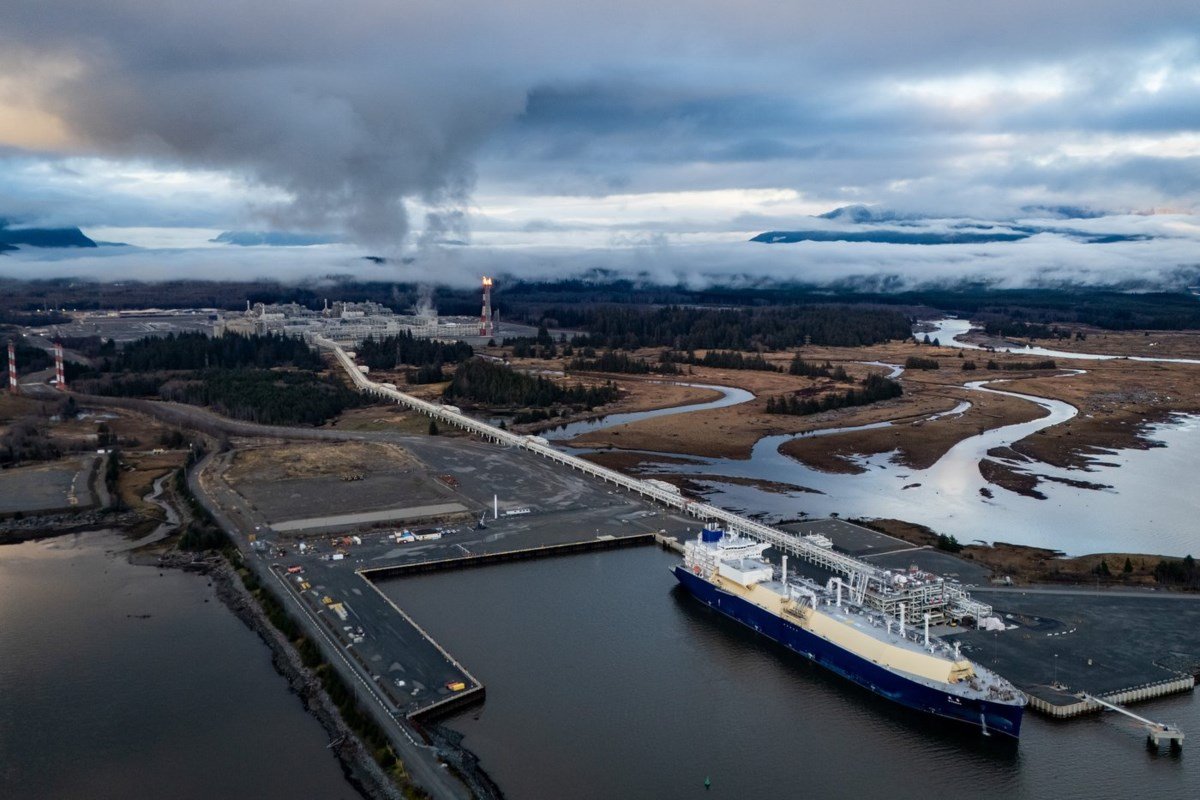

LNG Canada has been ordered to identify the root causes of “black smoke flaring” from its facility in Kitimat, B.C., and implement measures to prevent it by October.
LNG Canada has been ordered to identify the root causes of “black smoke flaring” from its facility in Kitimat, B.C., and implement measures to prevent it by October.
The British Columbia Energy Regulator issued the order Wednesday after an inspection revealed at least two instances of non-compliance with the company’s permit, which limits the emission of black smoke.
Staff with the regulator conducted an inspection of the facility on British Columbia’s north coast and found at least two releases of emissions that violated the permit, with one flaring event in January lasting more than seven hours, the order says.
An LNG Canada spokesperson confirmed Thursday that the regulator identified two instances where the black smoke went unreported since the facility’s start up.
The order says the company’s permit stipulates it must ensure flaring during normal operations doesn’t result in the emission of black smoke, or emission during “process upsets” that exceeds a total of 15 minutes in a two-hour period.
The order says the company must fulfil certain reporting requirements starting April 22, including reporting all instances of black smoke flaring lasting 15 minutes or longer.
The regulator has also ordered the Calgary-based company to submit a report by Aug. 15 that identifies the root causes of the emissions, along with measures to prevent it, and to implement those by Oct. 15.
An LNG Canada spokesperson said in a statement that the company was co-operating with the regulator to address the concerns.
“During commissioning and early operations, there has been intermittent periods of associated visible and black smoke due to incomplete combustion,” the email said.
“Our operators are trained to manage flare operations and are working to maximize combustion efficiency and minimize smoke,” it said.
The smoke is made up of carbon particles, or soot, which forms if there isn’t enough oxygen or if the mixing of air and gas isn’t optimal, it said.
The order follows the release of LNG Canada monthly air emissions reports that show flaring exceeded permitted volumes between last October and January.
The documents, obtained by University of Victoria air quality researcher Laura Minet under freedom of information proceedings, break down the flaring source into three categories: warm/wet, cold/dry and storage and loading.
Over those four months, warm/wet flares exceeded permitted volumes by 45 times on average, cold/dry by 40 times and storage and loading by five times.
An earlier statement from LNG Canada in response to the release of the emissions reports said increased flaring is normal during the facility’s early operations phase and it would drop significantly in normal operations.
Natural gas is piped to the plant in Kitimat, B.C., and chilled into a liquid to be shipped in specialized tankers across the Pacific to Asian markets.
LNG Canada has posted seven community notifications about “unplanned flaring” to its website so far this month.
The latest bulletin said unplanned flaring on Tuesday resulted in a flare height of about 10 to 15 metres.
It said a planned event would start Wednesday, resulting in intermittent flaring of about the same height and lasting about three to four days.
“Flaring is a provincially regulated safety measure that ensures the controlled, efficient combustion of natural gas during specific operational phases. It is a critical part of safely operating a facility of this scale and is not expected to be routine during regular operation,” the company said in the public notice.
Environmental and health-care advocates have raised concerns over the potential impacts of pollutants released through flaring.
In an email earlier this month, the energy regulator said there have not been any measurements in excess of the province’s ambient air quality objectives in the Kitimat Valley due to LNG Canada’s operations.
Asked about potential negative impacts, the regulator said it had received complaints about noise and light from the facility, but it had not found the company in contravention of permit conditions related to “noise or other community impacts.”
The LNG Canada spokesperson said Thursday that publicly available air-quality data from monitoring stations in Kitimat show nitrogen dioxide and sulphur dioxide have been consistently low over the past year.
A page on the BC Energy Regulator’s website notes that in response to non-compliance with flaring rates, it had asked LNG Canada to perform “dispersion modelling” assessment to evaluate air quality impacts in July 2025.
It also asked for an analysis of ambient air quality data to determine if there was any correlation or causation between flaring and elevated concentrations.
The company submitted its report the following October, concluding the effect of increased flaring volumes on local air quality was “small to negligible” and not discernible from other local sources, the regulator’s website says.
In its email response this month, the regulator said updated modelling showed no significant deviation from the company’s original air discharge permit application.
— With files from Lauren Krugel
This report by The Canadian Press was first published April 23, 2026.
Brenna Owen, The Canadian Press