dailynewsnblog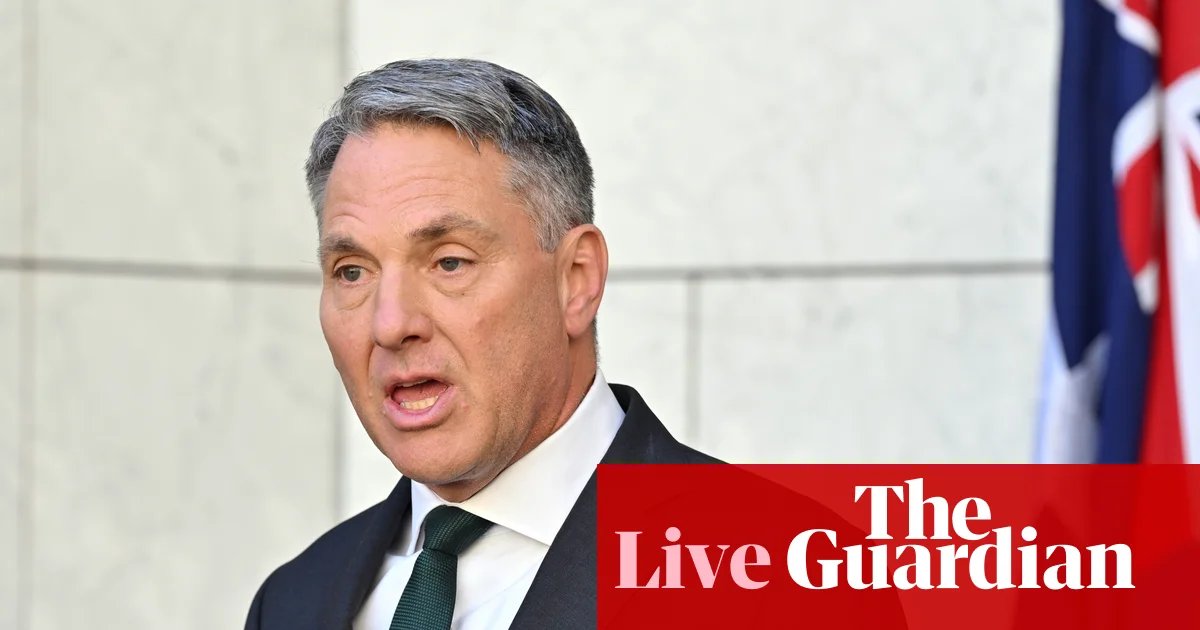
Labor to boost spending on military drones

Tom McIlroy
The federal government plans to spend between $2bn and $5bn more on drones, part of Australia’s new national defence strategy.
Set to be released by the defence minister, Richard Marles, on Thursday, the plans will bring spending on uncrewed and autonomous capabilities by the defence force to between $12bn and $15bn over the next decade.
Local manufacturing will also be prioritised in the plans.
“The war in Ukraine and conflicts in the Middle East underscore the rapid advancements in these technologies, and the ability for these systems to generate significant asymmetric advantage against larger, more expensive platforms,” Marles says.
Expanding our fleet of autonomous and uncrewed systems across all domains will not only help the ADF keep our nation safe, but will boost Australia’s sovereign defence industry – supporting local jobs and harnessing Australian innovation.

Key events
Marles says Australia still hopes strait of Hormuz will reopen as Trump blockade begins
The defence minister, Richard Marles, said Australia still wants to see the strait of Hormuz open after the US naval blockade of Iranian ports began on Monday evening.
Marles spoke to RN Breakfast, saying the government was “deeply invested” in having the strait open and the global fuel supply chain “return to normal”. He said:
We are working with all of our partners around efforts that are being taken forward in respect of the straits of Hormuz and how Australia can best contribute. … We really need to see what plays out throughout the remainder of the ceasefire.
The minister added he believes the US, too, wants to see the strait of Hormuz open, despite Trump’s blockade.
Labor to boost spending on military drones
Tom McIlroy
The federal government plans to spend between $2bn and $5bn more on drones, part of Australia’s new national defence strategy.
Set to be released by the defence minister, Richard Marles, on Thursday, the plans will bring spending on uncrewed and autonomous capabilities by the defence force to between $12bn and $15bn over the next decade.
Local manufacturing will also be prioritised in the plans.
“The war in Ukraine and conflicts in the Middle East underscore the rapid advancements in these technologies, and the ability for these systems to generate significant asymmetric advantage against larger, more expensive platforms,” Marles says.
Expanding our fleet of autonomous and uncrewed systems across all domains will not only help the ADF keep our nation safe, but will boost Australia’s sovereign defence industry – supporting local jobs and harnessing Australian innovation.
Melbourne to Thailand flight diverted after passenger’s alleged behaviour

Ima Caldwell
A 37-year-old woman faced court on Monday after her alleged disruptive behaviour forced an international flight bound for Thailand to divert to Perth.
Australian federal police (AFP) said airline staff alerted them to an incident on Sunday where the passenger allegedly acted in an “increasingly erratic manner … before escalating to verbally abusing passengers and cabin crew”.
The flight diverted to Perth airport, where AFP officers boarded the aircraft and removed the woman after she allegedly refused to exit the aircraft as directed.
She appeared in Perth magistrates court on Monday, charged with one count of behaving in an offensive and disorderly manner endangering safety on an aircraft. The offence carries a maximum penalty of a $16,500 fine. She is due to reappear in court on 11 May.
Good morning, Nick Visser here to take over the blog. Let’s get to it.
Suspected crocodile remains dumped on Adelaide roadside
Ima Caldwell
Reptile remains, believed to be from a crocodile, have been found dumped on the side of the road in Adelaide.
A spokesperson for the state’s environment and water department confirmed in a statement that department staff had “collected the remains of a reptile at Waterloo Corner”. They said:
The remains, which were dumped on the side of the road at Coleman Road, will be analysed in an effort to confirm the species and any other information.
It is not currently known how the remains came to be located at the site.
The department asked anyone with information to visit the Call it Out wildlife crime portal, or contact CrimeStoppers on 1800 333 000.
Food supplied to hospitals and nursing homes at risk due to fuel crisis
The authors say it is the first comprehensive assessment of public food procurement in Australia. Leah Galvin, co-lead of GFPA and report co-author, says:
A different approach can increase the use of fresh, local produce, redirect spending to Australian farmers and producers, support the people working in public food service kitchens, and generate real benefits for Australia.
The authors also emphasise the prescience of the release of the report, which comes as Australia’s food system and supply chains, including food supplied to public institutions such as hospitals and aged care centres, are all at risk of breakdown due to the fuel crisis triggered by the war in Iran.
Dheepa Jeyapalan, also a co-lead of GFPA and co-author of the report, says:
Better public food procurement is not about spending more, it’s about spending smarter. The evidence is clear, public support is strong, and the solutions exist. Given the threat to our food system caused by the global fuel and fertiliser crisis, now is the moment for leadership.
Health experts have previously warned governments there needs to be a national food policy movement away from multinational corporations and towards healthier, more local food systems.
Poor hospital food adding to health costs, report says

Natasha May
Australian governments are spending $2.13bn every year feeding people in hospitals, aged care facilities and other public settings – low-quality food which contributes to poor diet and long-term health costs, a new report has found.
That investment (which equates to $6m a day) is one of the most powerful policy levers available to governments to improve national health outcomes, but it is currently marked by a near-exclusive focus on cost and scale, according to the report titled Transforming the Public Plate.
Commissioned by philanthropic organisation Macdoch Foundation and released by the newly formed Good Food Purchasing Australia (GFPA) initiative, it has found public food procurement is dominated by large suppliers and multinationals, with limited pathways for small, medium, local and First Nations producers to participate.
Without a national framework of standards to drive better outcomes from public food spending, the authors say Australia is falling behind other comparable countries such as the UK, EU and parts of the US.
Indeed, when Guardian investigated hospital food around the world, what Australia was serving paled in comparison with more wholesome options overseas. And a big part of the problem was not using fresh food but contracting out food preparation services to private companies to produce meals in bulk and deliver them frozen.
Welcome
Good morning and welcome to our live news blog. I’m Martin Farrer with the top overnight stories and then it’ll be Nick Visser with the main action.