dailynewsnblog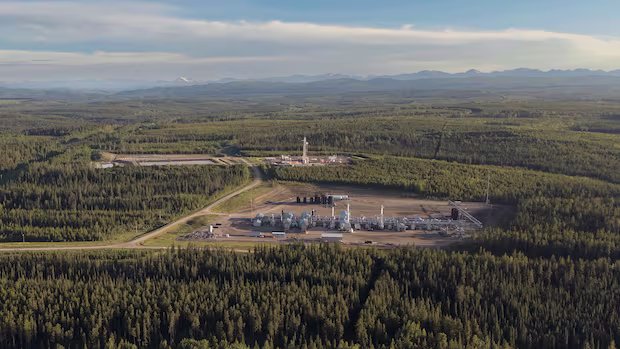
An energy company owned by a major Canadian natural gas producer is proposing to build a massive data centre in west-central Alberta, even though the developer has yet to secure a tech company to operate the facility.
Emerald Energy Technologies, a wholly-owned subsidiary of Tourmaline Oil Corp., is planning to build a power-generation facility and a data centre called Malachite One.
The proposed site is on Crown land, adjacent to Tourmaline’s active Banshee Gas Plant about 40 kilometres southwest of Edson in Yellowhead County.
If approved, the plant would convert 150 million cubic feet of natural gas daily into one gigawatt of electricity to power the data centre, which would serve as a warehouse for computer equipment that processes data at high speeds.
Tim Shaw, manager of public affairs for Tourmaline, said artificial intelligence (AI) tech companies like Meta and Amazon are typical users of data centres. Earlier this month, Meta announced it will build its first Canadian data centre in Sturgeon County, northeast of Edmonton.
Emerald Energy Technologies is proposing to build the Yellowhead facility as early as 2027, in hopes of attracting an operator.
“What we’re trying to do is put all the pieces together for a project that makes sense for the area that will bring in one of those data hall participants that need access to this type of infrastructure.”
Last month, Emerald Energy Technologies gave its first public presentation to Yellowhead County council to give an overview of the project. Coun. Brigitte Lemieux, deputy mayor for the county, called it the beginning of what will be a long public process.
“With all major developments in Yellowhead County, our priority is always to ensure that any project respects residents, protects land and environment and aligns with our long-term interests,” she said.
Lemieux said it is too early to determine whether Malachite One checks those boxes.
Project details, including hundreds of jobs
Malachite One is part of a rapid wave of AI and computing investments targeting Alberta because of its cooler climate, regulatory framework and its reliable source of natural gas to fuel the power plants.
Provincial regulations prioritize the approval of data centres that supply their own energy. Shaw said Malachite One’s energy will be largely self-generated.
The proposed site is right off Highway 47, close to the hamlet of Robb. Fibre optic cables already in place can transport data across Canada and the United States.
Shaw said Tourmaline is considering an optional carbon sequestration component for the power-generation facility which would reduce emissions by compressing carbon dioxide, turning it into a liquid and then injecting it 3,700 metres underground.
Tourmaline is currently drilling a sequestration well adjacent to its existing Banshee Gas Plant.
The power-generation facility could cost up to $5 billion, with the data centre infrastructure costing up to $15 billion. If the proposal is successful, Shaw said Tourmaline would have investment partners to build and finance Malachite One.
According to Tourmaline, construction is expected to employ several hundred short-term workers. Once operational, the data centre is projected to create 300 to 500 long-term jobs and 40 to 60 permanent positions at the power-generation facility.
County has questions
The June 23 presentation to Yellowhead County councillors prompted questions about electricity, water usage and plans for the facility’s end of life.
Councillors were told it is possible for the power-generation facility to tie back into the provincial grid if the AI market shifts.
Lemieux said council also pressed developers on plans for reclamation at the end of the data centre’s life in 30 to 50 years, including details about recycling plans for the centre’s graphics processing units (GPUs), which is the electronic hardware that would fill the data centre. GPUs have a lifespan of three to five years.
In its presentation, Emerald Energy Technologies said Malachite One’s water usage from the Embarras River and McLeod River would be limited to 1.74 per cent and 0.19 per cent of annual flow rates respectively. Shaw said this equals about 50 litres per second from both rivers combined.
The data centre would be cooled using a closed loop, meaning it would not actively consume fresh water, Shaw said, adding that water is used primarily for the process that turns natural gas into electricity.
Lemieux said council heard that for every one litre of water the project uses, about 1.5 litres will be returned into the atmosphere. She said council raised questions about how returning the water in vapour form impacts the microbiology of the water.
Shaw said Emerald Energy Technologies is currently drafting an FAQ document to address the questions. The company expects to host open houses in the region later this year.
The approval process
Malachite One must meet several provincial regulatory requirements regarding environmental protections, consultation with Indigenous stakeholders and the Alberta Utilities Commission.
In addition, Malachite One will also have to meet all of Yellowhead County’s bylaws.
“We are simply a cog in the wheel,” said Lemieux.
One of the last steps would be done at the municipal level to issue a development permit.
Yellowhead County council has not yet made any decisions about support for the project.
“We recognize the potential economic opportunity that this project, this scale, could bring to the region,” said Lemieux. “However, those benefits have to be balanced with responsible development.”
CBC News reached out to the Alberta’s Ministry of Technology and Innovation to ask whether the provincial government has veto power to push the project through if Yellowhead County opposes it.
Jonathan Gauthier, press secretary for the ministry, provided a statement in response that said “the focus of Alberta’s government is to have respective data centre projects work with the data centre concierge team to help them navigate the regulatory landscape and highlight how Alberta is a top destination in North America.”