dailynewsnblog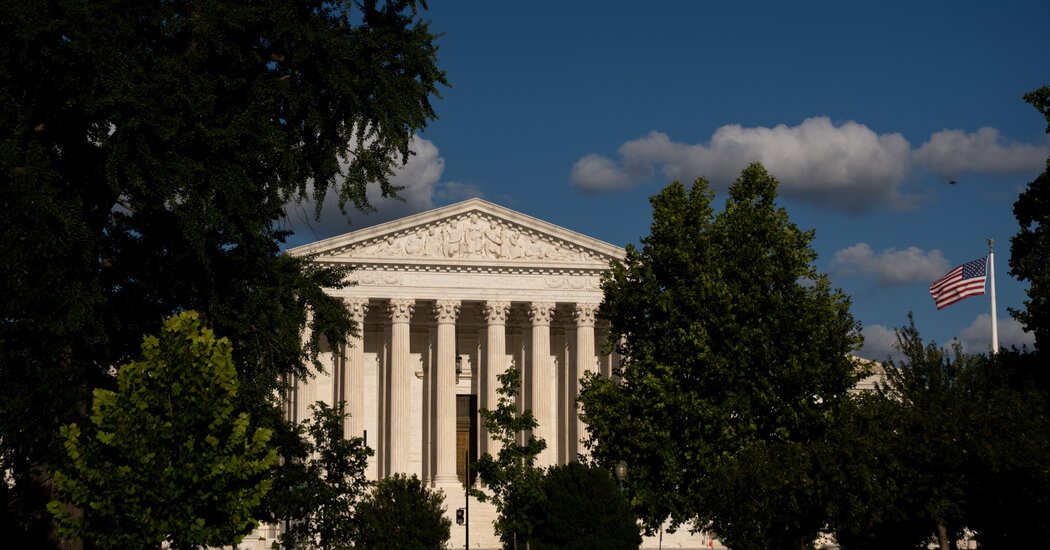
These days, it can seem like everyone thinks their request to the Supreme Court is an emergency.
The court has been inundated in recent years with emergency asks from all manner of people and groups who want the justices to short circuit the lower courts and intervene in their cases immediately.
But this week might have seen the first such request on behalf of a dog.
His name was Bruce, and he was a 120-pound, 3-year-old Anatolian Shepherd dog who had been detained in Ventura County, Calif., and ordered to be euthanized after a state court found he was vicious. His crimes included biting three people, including a child, and knocking over a man pushing a wheelchair.
Bruce’s lawyers asked the nation’s highest court to step in and, as a Facebook post created by the dog’s fans in California begged, “SAVE BRUCE!”
“Applicants do not ask this Court to release Bruce, transfer Bruce, place Bruce in the community, or review the merits of the underlying state-court dangerous-dog determination,” his lawyer, Dan C. Bolton, wrote in the Wednesday filing.
“They ask only that Bruce, Animal ID A842188, remain alive in the custody of Ventura County Animal Services,” while litigation continues, according to the filing.
Alas for Bruce, the request to the court came too late. He was euthanized Wednesday afternoon before the justices had an opportunity to act.
But the plea was a reminder of the court’s burgeoning fast-track docket, where the justices typically issue temporary orders with little briefing and no oral argument.
The emergency docket often includes profoundly weighty questions, including final appeals from death-row inmates. Justices from across the ideological spectrum have spoken publicly about how seriously they take the emergency requests and how difficult they find them no matter the outcome.
But by granting more fast-track requests, particularly during the Trump administration, they have opened the door wider to all kinds of requests. Justice Elena Kagan recently suggested that the court itself was in part to blame for essentially inviting people — and in this case, an animal — to seek emergency relief.
“Why are all these people coming to us for this relief when they didn’t in the past? I think, partly, it has to do with the fact that the court did grant some of these petitions, and then you encourage everybody else to bring them to you,” she said during testimony before a congressional committee in July.
Indeed, the court has issued more than two dozen emergency orders in response to various requests from the Trump administration since Donald Trump returned to office. The full court ruled on about 70 emergency applications each term for much of the late 2010s. By last term, the number was more than 130, according to Georgetown Law professor Steve Vladeck, who tracks the emergency docket as part of his One First newsletter on the court.
“People see that there is, at least, a potential for us to grant relief. And so, why not file a petition?” Kagan continued in her testimony last month.
Bruce’s lawyer acknowledged that a Supreme Court request to save a dog’s life was “a bit of a long shot.” He called the court “the last resort.”
“We’re just trying to preserve his life until it’s sorted out,” Mr. Bolton said in an interview Wednesday before he knew that Bruce had been euthanized.
No one disputed Bruce’s record of bad behavior.
Ventura County posted a lengthy memo about the case, which included graphic photos of the severe injuries from Bruce’s bites, including to the bloodied lips of a minor and the mangled arm of a woman, who the county said required surgery and skin grafts.
Still, Bruce had won supporters who had urged county officials to spare him, citing county records describing Bruce as a “model citizen” while housed in the kennel during litigation.
According to court filings, Bruce was adopted from the Santa Paula Animal Rescue Center by Claire Birgy, a Ventura County woman, in 2023, and lived with her and her then-spouse for about 10 months without any known issues.
But according to the county, Bruce bit a boy on the lips in February 2024, causing “severe disfiguring lacerations.” Then, in the fall of 2025, Bruce wounded a man in the knee, chest and forearm while tied to a pole outside a CVS pharmacy.
A Ventura County Superior Court judge determined this spring that Bruce should be euthanized because his release “would create a significant threat to the public health, safety, and welfare.”
Ms. Birgy then sued in federal court, arguing among other claims that Bruce had been taken from her without a fair or due process.
Bruce was euthanized a 4:14 p.m. on Wednesday — about 45 minutes after his lawyers filed at the Supreme Court.
Mr. Bolton said he was appalled that the county had proceeded with the euthanasia even after he informed officials early Wednesday that he planned to ask the Supreme Court to intervene, calling it a “shameful disrespect for Bruce’s life.”
In a statement, Ventura County Animal Services director Esteban Rodriguez said there had been no court order preventing the action.
“Decisions involving the humane euthanasia of an animal are difficult and complex,” Mr. Rodriguez said. “We do not take the loss of an animal’s life lightly. We have compassion for Bruce and for those who care about him, just as we have compassion for those who were injured.”
Bruce’s tale at the Supreme Court officially came to a close on Thursday when Justice Kagan, who handles emergency filings from the Ninth Circuit, formally denied the request.