dailynewsnblog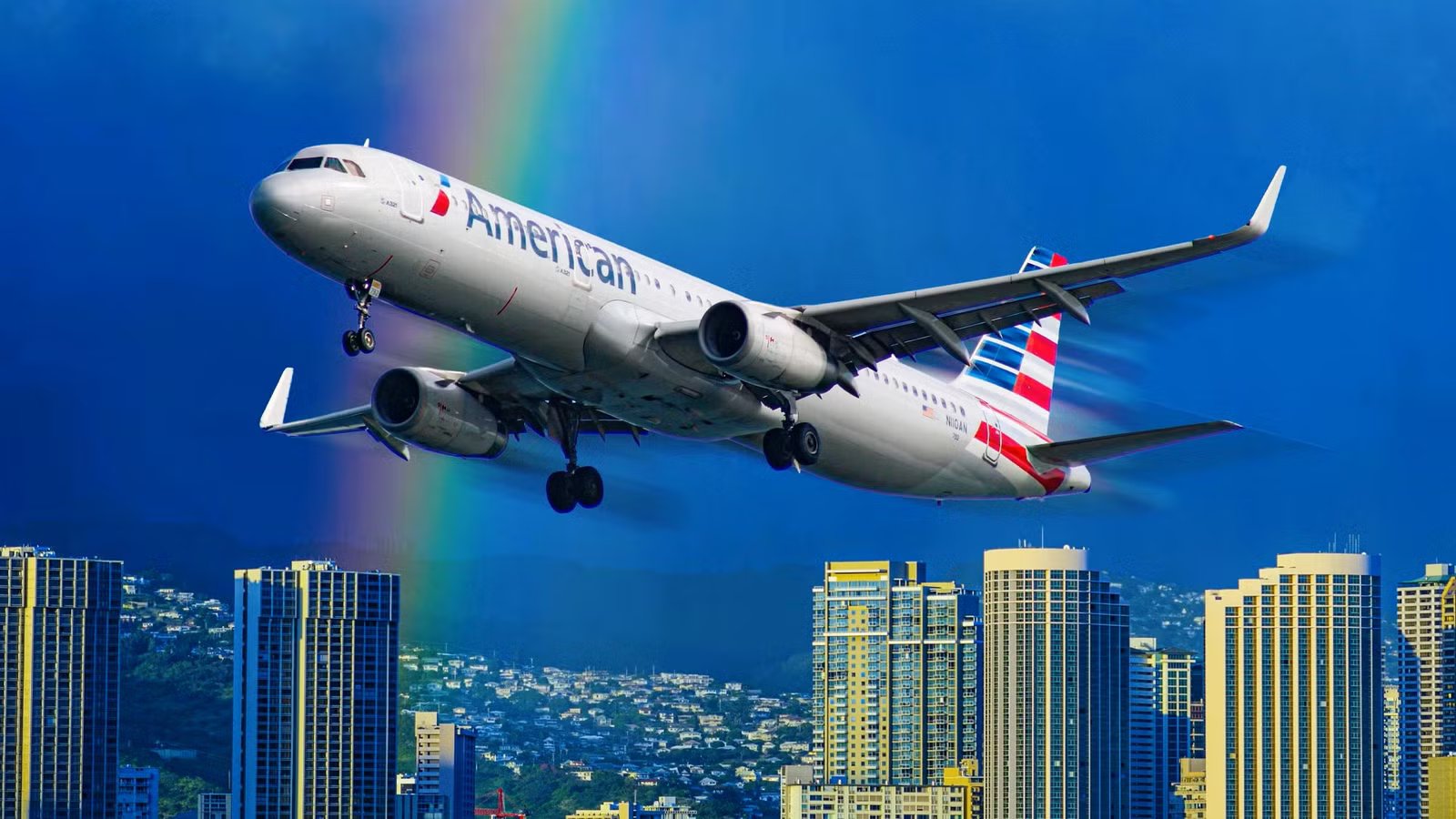
 American Airlines is making a major move in the fast-changing US inflight connectivity race, with CNBC reporting that it plans to install Starlink WiFi on more than 500 narrowbody aircraft from the first quarter of 2027. The deal will focus on its Airbus narrowbody fleet, and comes as American continues rolling out free WiFi for AAdvantage members through its existing AT&T-sponsored program.
American was one of the last major US airlines to make free WiFi part of its brand. By contrast, JetBlue has offered its free Fly-Fi for years, and more recently, Delta Air Lines was the first legacy carrier to make the leap. American has arrived late to the free WiFi party, only to find that the party has already moved on: free WiFi is no longer the differentiator; it is becoming table stakes. Now the real fight is over who can offer the fastest, most reliable, and most consistent onboard internet, prompting this new push towards Starlink.
Free WiFi Is No Longer Enough

Back in January, American Airlines announced free high-speed WiFi across “the majority” of its fleet, saying the program would cover more than two million flights per year. The initial focus was on its narrowbody and dual-class regional fleets, leaving much of its legacy Boeing 777 and Boeing 787 fleets still with paid WiFi (for now).
The reason for this discrepancy is that American uses high-capacity Ka-band satellites from Viasat for its domestic narrowbodies, which allow sufficient bandwidth for all passengers to browse or stream on the flight. However, most of American’s widebody fleet still utilize legacy Panasonic Avionics satellite systems, and these older Ku-band systems lack the bandwidth to support hundreds of passengers streaming simultaneously.
American clearly recognizes the issue, announcing today that it is taking its first steps towards the much-faster Starlink, which will be installed across more than 500 Airbus narrowbodies. Starlink offers multi-gigabit connectivity to aircraft using its Aero Terminal, which can support up to 1 Gbps per antenna. Heather Garboden, American Airlines’ chief customer officer, emphasized this when making the announcement:
“Starlink’s high speed and low latency make the Wi-Fi more reliable, which matters when customers are trying to load pages, join real-time collaboration tools or stay connected consistently throughout a flight. We are excited to bring an at-home level of Wi-Fi experience to our narrowbody fleet, enabling our customers to work, game, stream and scroll endlessly.”
Of course, this raises the question of what Starlink means for American’s existing WiFi providers, which already equip more than 900 mainline aircraft. Reuters says installations will begin in the first quarter of 2027, but the airline has not yet said how long it will take to equip all 500-plus aircraft that it has scheduled. But it is safe to say that it will be a years-long roll-out, meaning that American will operate a mixed connectivity strategy for the rest of the decade.
The Airbus Fleet Is The Starting Point, Not The Whole Story

The Starlink deal centers (for now) on American’s single-aisle Airbus fleet. The Wall Street Journal reported that the rollout will initially include newer aircraft such as the Airbus A321neo and Airbus A321XLR, including more than 150 examples that still need to be delivered by the manufacturer.
|
American Airlines’ Airbus Narrowbody Fleet |
|||
|---|---|---|---|
|
Type |
In Service |
On Order |
Avg Age (Years) |
|
A319-100 |
132 |
– |
22.2 years |
|
A320-200 |
48 |
– |
25.1 years |
|
A321-200 |
218 |
– |
13.8 years |
|
A321neo |
84 |
113 |
5.1 years |
|
A321XLR |
3 |
47 |
0.8 years |
|
Total |
484 |
160 |
|
The A321neo and A321XLR are obvious candidates as American is these are the future of the narrowbody fleet, and new additions can have Starlink installed prior to entering service. They will also operate on longer missions where a weak internet connection is much more noticeable than on a short domestic hop.
American Airlines also operates nearly 400 A320ceo-family aircraft, the oldest of which are approaching 30 years, so some might question whether they will automatically get Starlink. However, American is already investing in A319 and A320 upgrades, including power at every seat, larger overhead bins, and refreshed interiors. So the airline does not view its older Airbus aircraft as near-term retirement candidates, and they too are in line for the WiFi upgrade.
Catch what other flight trackers miss
Emergency squawks, holds, NOTAMs — live signals, no signup.
Open tracker
Catch what other flight trackers miss
Emergency squawks, holds, NOTAMs — live signals, no signup.
Open tracker
What isn’t clear is what lies ahead for the massive  Boeing narrowbody fleet. American operates 303 Boeing 737-800s and 103 Boeing 737 MAX 8s, and there has been no announcement about if or when they might get Starlink. Similarly, the 777s and 787s aren’t included in this announcement. Which suggests that in the short-term, passengers can expect a split WiFi experience: some passengers get high-speed Starlink, while others get the prior generation of Viasat or Intelsat.
That then begs the question whether passengers will know what kind of WiFi they are getting before they fly. Will American identify Starlink-equipped aircraft during booking? Will it brand those flights differently? Or will passengers simply see “free WiFi” and discover the provider once onboard? That distinction will matter when Starlink produces a noticeably better experience, leaving passengers less-than-happy with the older experience.
American Airlines’ Free WiFi: Why Some Passengers Will Still Pay
The carrier’s widebody fleet uses an older WiFi technology that cannot support the free service.
The US WiFi Race Is Splitting Between Starlink And Amazon Leo

American Airlines’ move also has to be understood in the context of a broader US airline technology race. The industry is no longer dividing neatly between airlines that charge for WiFi and airlines that offer it free. Increasingly, it is splitting between airlines moving toward Starlink and airlines backing Amazon Leo, the renamed version of Amazon’s Project Kuiper low-Earth-orbit satellite network.
|
Airline |
Current Provider(s) |
Future Provider |
Current Progress With New Provider |
|---|---|---|---|
|
Alaska Airlines |
Intelsat |
Starlink |
Alaska says Starlink rollout begins in 2026, with regional, narrowbody, and widebody aircraft connected by 2027. |
|
American Airlines |
Viasat, Intelsat |
Starlink |
More than 500 narrowbody aircraft are due to receive Starlink from Q1 2027. |
|
Delta Air Lines |
Viasat and Hughes |
Amazon Leo |
Amazon Leo installation on 500 aircraft begins in 2028. |
|
Hawaiian Airlines |
Starlink |
Starlink |
Hawaiian has completed Starlink on Airbus A321neo and A330 aircraft; Boeing 717s are not included. |
|
JetBlue |
Viasat |
Amazon Leo |
JetBlue is the first airline customer for Amazon Leo, with installations beginning in 2027. |
|
Southwest Airlines |
Anuvu, Viasat |
Starlink |
First Starlink-equipped aircraft expected in summer 2026; more than 300 aircraft targeted by year-end. |
|
United Airlines |
Panasonic, Viasat |
Starlink |
Starlink is already installed on 300+ regional aircraft; targeting 800+ equipped aircraft by the end of 2026. |
This is where American’s deal becomes strategically important.  United Airlines is already using Starlink as a passenger-experience talking point,
  Southwest Airlines is moving toward Starlink as part of a broader product overhaul, and
  Alaska Airlines gains a Starlink platform through Hawaiian while preparing its own connectivity push. American now has an answer to that group, although it is still behind carriers that already have Starlink aircraft flying or entering service sooner.
Delta and JetBlue are taking a different path with Amazon Leo. This is a fundamentally different value proposition, one that goes beyond bandwidth and latency metrics and instead emphasizes how connectivity interacts with airline systems as a whole. By leveraging its broader technological portfolio, Amazon will offer a solution that connects aircraft not just to satellites, but to a global network of cloud infrastructure and data services.
This means that Amazon’s solution is not just the internet “pipe”, but a digital platform that can be customized and scaled over time to meet evolving airline requirements and deliver new customer experience innovations. That is potentially a much more promising long-term bet for a premium carrier like Delta, but the downside is that Leo is currently far behind Starlink in terms of satellite infrastructure, and Delta’s rollout is still two years away. Which means that there is some short-term customer experience risk as Leo carriers race to catch up to the Starlink group.
As for American Airlines, its Starlink deal does not instantly simplify its WiFi strategy. If anything, it makes the fleet/supplier mix more complicated for a while. But it does show that the airline understands where the US market is going: free WiFi is now the baseline, and the next battle is over performance, reliability, and consistency. While American Airlines is once again late to the party, it is signaling that it’s not going to let its competitors define the next generation of onboard WiFi without it.