dailynewsnblog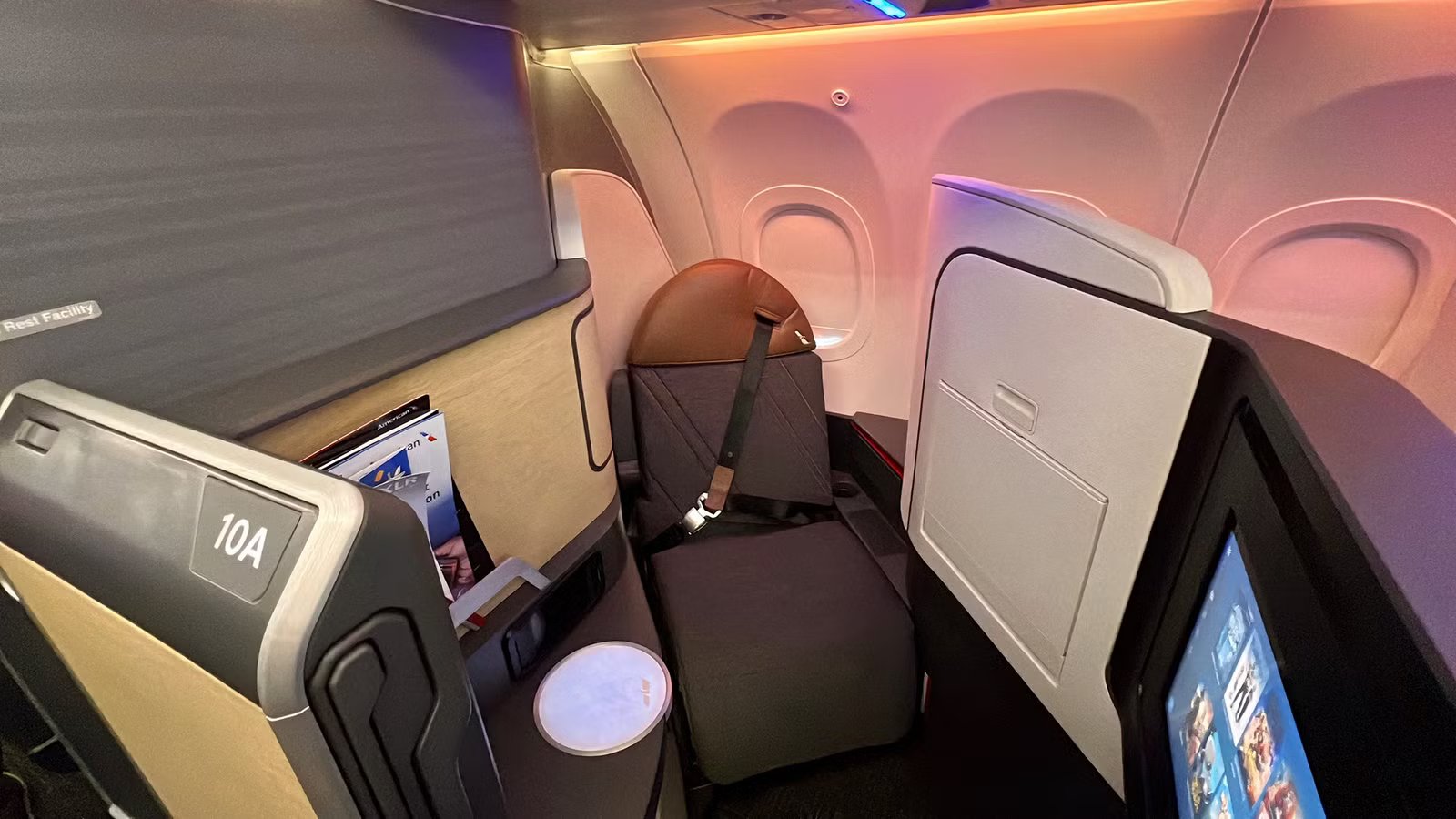
 American Airlines is reportedly flying several of its new Airbus A321XLR jets with some business class suites blocked from sale after suffering repeated failures involving the seats’ control systems. The problem causes the lie-flat seats to get stuck in an upright or reclined position, forcing the airline to mark them as inoperative and leave them empty for the flight.
Recent seat selection data showed that several American A321XLRs had at least one business suite out of action, while some planes had more than one out of service. The carrier took delivery of its first A321XLR in October 2025 following a delay due to seat supplier shortages, and currently has eight airframes out of a total of 50 ordered.
American A321XLR Flagship Suites Keep Breaking Down

According to aviation insider JonNYC, a source reported that the Flagship Business suites on American’s A321XLRs are breaking down “more often than one might have expected,” with the issue primarily due to malfunctioning seat controls. American’s A321XLR suites are based on the Collins Aerospace Aurora platform and feature lie-flat seats — the problem has left affected suites with their seats “stuck up/reclined,” with American subsequently removing them from sale until fixed.
Lie-flat business class seats feature complex seat controls and machinery, with multiple motors and control systems fitted into each unit. While passenger-caused faults with lie-flat seats are not uncommon (typically due to dropping items into seat gaps), reports point towards the seat control systems themselves as the cause of failure.
Suites Are Sought-After On Premium Routes

American is deploying the A321XLR on some of its most premium-focused markets, including transcontinental and transatlantic flights, where business class demand is high. Premium cabins are where the major US carriers make a lot of their money, and there has been widespread investment to boost premium capacity in recent years.
Each American A321XLR features 20 business suites, along with 12 premium economy and 123 main cabin seats for a total of 155 passengers. Despite formally taking delivery of its first A321XLR in July 2025, that aircraft would not leave Europe until October due to what the airline called “ongoing seat supply chain challenges.” At the time, the carrier declined to name the supplier or which specific seats were involved.
American Airlines A321XLR Layout | |
|---|---|
Cabin | Seats |
Flagship Business | 20 |
Premium Economy | 12 |
Main Cabin | 123 |
Total | 155 |
After entering revenue service in December 2025, the A321XLR initially flew with its Flagship Suites privacy doors locked open due to certification delays, eventually getting the green light from the FAA in July. The doors were then activated, starting with N302NY, with the rollout continuing across the remaining jets through the autumn.
American recently launched an initiative known as OneCabin, which deployed a team of 60 additional maintenance technicians specifically to address cabin defects, such as broken seats or faulty in-flight entertainment (IFE). American’s chief customer officer, Heather Garboden, said the program was launched in response to “too many broken seats,” “too many IFE systems that do not work,” and “duct tape where we should not have duct tape.”
A321XLR Plans As The Subfleet Grows

American is set to deploy the A321XLR on four new European routes in 2027. This includes  New York JFK Airport (JFK) to Amsterdam (AMS) and
  Philadelphia International Airport (PHL) to Porto (OPO) in late March, followed by New York JFK to Nice (NCE) and Philadelphia to Vienna (VIE) in May.
American used the A321XLR on its first transatlantic route this summer, a daily seasonal service between New York JFK and Edinburgh (EDI). Offering a range of around 4,700 nautical miles (8,700 km), the carrier will eventually operate 50 A321XLRs.
Catch what other flight trackers miss
Emergency squawks, holds, NOTAMs — live signals, no signup.
Open tracker
Catch what other flight trackers miss
Emergency squawks, holds, NOTAMs — live signals, no signup.
Open tracker
However, many of the airline’s flight attendants have voiced concerns over the A321XLR’s cabin layout, saying that the aircraft is “hard to work” due to a range of issues. This includes its awkward lavatory setup of one at the front and three at the back, a difficult service flow, cramped galleys and inadequate crew rest facilities.