dailynewsnblog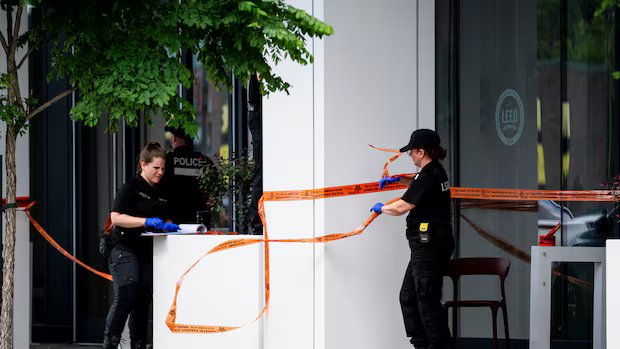

Listen to this article
Estimated 5 minutes
The audio version of this article is generated by AI-based technology. Mispronunciations can occur. We are working with our partners to continually review and improve the results.
The digital trail of the alleged gunman responsible for an attack in Montreal on Monday reveals that the 25-year-old man posted disturbing imagery, followed conspiracy theorists online and created a manifesto weeks before the attack, according to a CBC visual investigation.
On Monday, police operations began in the Côte-des-Neiges area around 11:30 a.m. ET, and just after 12:30 p.m., Montreal police warned of an “armed and dangerous suspect.” Authorities later announced the death of police officer Mohamed Lamine Benredouane, civilian Michel Mizrahi and the suspect. On Tuesday, a Quebec coroner confirmed that the suspect is Seth Scott Hatfield, 25, of Lethbridge, Alta.
A LinkedIn account created with Hatfield’s email address, which used the name “S Hatfield,” lists his location as Lethbridge. Several addresses linked to Hatfield’s online accounts are located near the University of Lethbridge, including one on the same street where police conducted a “high-risk search” on Tuesday.
The University of Lethbridge on Tuesday confirmed that the alleged shooter was a student. A page for the 2026 Dean’s Honour List shows that Hatfield studied philosophy.

The digital trail
CBC’s visual investigations team, using online investigation tools Darkside and OSINT Industries, connected Hatfield’s email and phone number to a number of social media profiles and online accounts for various apps, like language learning service Duolingo — where he was learning Russian — and a Google review for a watch repair shop in Lethbridge.
A search also uncovered a deleted YouTube account using the name “Seth Hatfield” and the same avatar of a medieval heraldic wolf that appears on his LinkedIn and other accounts.
The YouTube account created a playlist called “Favorites” that contains more than a dozen videos by conspiracy theorist and former Infowars host Paul Joseph Watson that were published around five to seven years ago. Another video features an anthem used by the anti-Soviet White Army during the Russian Civil War. The most recent video in the playlist is a Q&A on fascism that was posted in 2021 by a channel that uses pagan and neo-Nazi imagery, featured a Holocaust denier and called COVID-19 an “invented threat.” Channels followed by the account include ones focused on pagan beliefs, fishing and firearms.

The digital trail also linked a phone number belonging to Hatfield to an account on VSCO, a video- and photo-sharing site, that was active in 2018. On the page, there are what appear to be partial selfies, a photo of fictional serial killer Patrick Bateman from the film American Psycho holding an axe and a screenshot of the cover for Metallica’s 1983 album Kill ‘Em All.
CBC News obtained a copy of the 104-page manifesto allegedly authored by Hatfield that circulated widely after the attack, which ends with a phrase that echoes the Metallica album title.
Manifesto created weeks before attack
Metadata attached to the manifesto shows that the document was created two weeks prior to Monday’s attack. Titled “Manifesto of June 22nd,” it was created on June 8 using Microsoft Word by a user named Seth Hatfield; the name also appears at the top of the document as the author. It also appears the document was not modified after June 8. The time zone in which it was created appears to correspond with Mountain Daylight Time, observed in Alberta.
“The manifesto featured a blend of incel beliefs with Marxist ideology. Written in a more academic fashion than we typically see in manifestos, the author espoused anti-pornography views and described men as an oppressed class who are being exploited by both capitalism and women,” said Katherine Keneally, director of threat analysis and prevention at the Institute for Strategic Dialogue, an international think-tank dedicated to studying authoritarianism, hate and extremism.

The manifesto is “clearly linked” to beliefs held by incels — a misogynistic subculture for men who deem themselves “involuntarily celibate” — and encourages others to violently overthrow the existing system, Keneally said.
The document lists a variety of targets, including the pornography industry, pedophiles, sex traffickers, companies with ties to Zionism, drug dealers, real estate investors, law enforcement and others.
The attack took place across the street from a building that includes the Montreal offices of Aylo, the multinational company that owns the pornography site Pornhub, which is one of the most-visited websites in the world.
Aylo said in a statement that it was “aware of recent media reports about yesterday’s shooting, including reports discussing a possible connection to Aylo and Pornhub” but wouldn’t comment further as the investigation was ongoing.