dailynewsnblog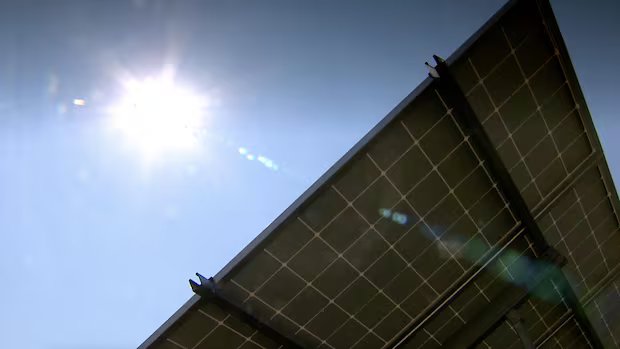
Alberta’s plan to introduce Canada’s first recycling fee on solar panels is drawing criticism from the renewable energy industry. Sector leaders argue the charge is disproportionately high and could discourage investment – in what was once the country’s hottest green energy market.
Starting Oct. 1, a $14 eco fee will be charged on new solar panels sold in Alberta as part of a province-wide recycling program.
The new fee means recycling a solar panel will cost five times more than recycling a large television.
“We were not expecting the fee to be so extraordinarily high and so discriminatory and so different from every other electronic device in the province,” said Heather MacKenzie, executive director of Solar Alberta.
The fee arrives on the heels of a tumultuous period for Alberta renewables, following a provincial moratorium and shifting land-use rules.
“This fee in and of itself is not going to kill the sector,” said MacKenzie. “This fee is being added on to numerous other punitive costs that have just been dumped on the sector in the last couple of years alone.”
“It’s very upsetting because we are used to being the solar powerhouse of Canada,” she said.
This comes as the federal government has repeatedly pledged to position Canada as both a clean-energy leader and an ‘energy superpower,’ while calling for major investments in electricity infrastructure and clean power projects across the country.
1st program in Canada
The Alberta Recycling Management Authority (ARMA), the agency mandated to oversee the program, defends the upfront charge. The goal is to keep solar panels out of landfills and build a domestic recycling system long before a massive wave of decommissioned panels hits the market. Panels have a typical 25-year lifespan.
The University of Ottawa’s think-tank Smart Prosperity Institute estimates Canada could generate between 250,000 to 450,000 tonnes of solar panel waste by 2050, underscoring the challenge governments and industry will face as early generations of panels reach the end of their useful life.
“There’s actually a lot of science behind coming up with an eco fee,” said Ed Gugenheimer, CEO of ARMA.
“You have to understand the number of panels currently in place and active in the province, as well as what you think the future sales of panels are going to look like in the province. There’s a lot of moving parts,” said Gugenheimer.

Gugenheimer noted that while 80 per cent of a solar panel is made of glass, that material has very little recycling value. The real recoverable value is in the aluminum frame, but that isn’t enough to cover the heavy cost of processing the remaining materials.
Currently retired panels are often shipped to the United States for processing. ARMA plans to collect the fees now to fund and build Alberta’s own recycling infrastructure over the coming decade.
“We’re the first organization to do this. There’s a lot of unknowns,” said Gugenheimer. “We will always add flexibility into the system as we learn more.”
A fee for good behaviour?
Some in Alberta’s solar industry believe the fee feels more like an administrative headache.
Jeff Jackman, general manager of Calgary-based installation company Simple Solar, said the fee represents roughly 10 per cent of the cost of a typical solar panel.
“I think it’s very high,” he said.
Jackman estimates the fee will add roughly $200 to the average residential installation. While it’s unlikely to lead people to cancel projects outright, he questions the immediate urgency.
“It’s more of an irritating small taxation levied against people who are doing something that’s good for the environment,” said Jackman.

The Canadian Renewable Energy Association (CanREA) warns the $14 upfront charge damages Alberta’s competitive edge, just as the rest of the country looks to expand its clean energy footprint and double its electricity grid capacity by 2050.
“For years, Alberta was a leader in Canadian renewable energy investment markets. That position has weakened, and these fees are weakening it further,” said Radha Rajagopalan, CanREA director of political affairs for Alberta, in a statement.
“Adding costs not justified by evidence, and which no other province has chosen to impose, sends a bad signal to investors and developers at a critical time for the development of the province’s electrical grid,” she said.
CanREA was able to convince the province not to apply the eco fee retroactively.

The ‘how and when’ dilemma
Jeff MacAulay, CEO of Charge Solar, a solar and battery distributor, said the sector is unified on the need for a recycling strategy.
“The industry is not debating whether we should do this or not,” he said. “It’s really about the how and when.”
MacAulay said voluntary, private recycling options already exist for as little as $10 a panel, paid when the panel is actually discarded.
He also questions why the industry is being forced to fund infrastructure years in advance.
“A sudden, mandatory 10 per cent price when the industry is not convinced that ARMA has the latest, greatest technology — that’s hard to stomach,” said MacAulay.
MacAulay said instead of pushing back, their approach is to collaborate with ARMA to shape the rules of implementation before the Oct. 1 deadline.
Government response
The provincial government is not saying whether it plans to reconsider the pricing structure.
In a statement, the Ministry of Environment and Protected Areas confirmed targeted stakeholder engagement took place in August and September of 2025.
“The results of the solar panel reuse and recycling engagement sessions are under review. We look forward to making an announcement in the near future.”