dailynewsnblog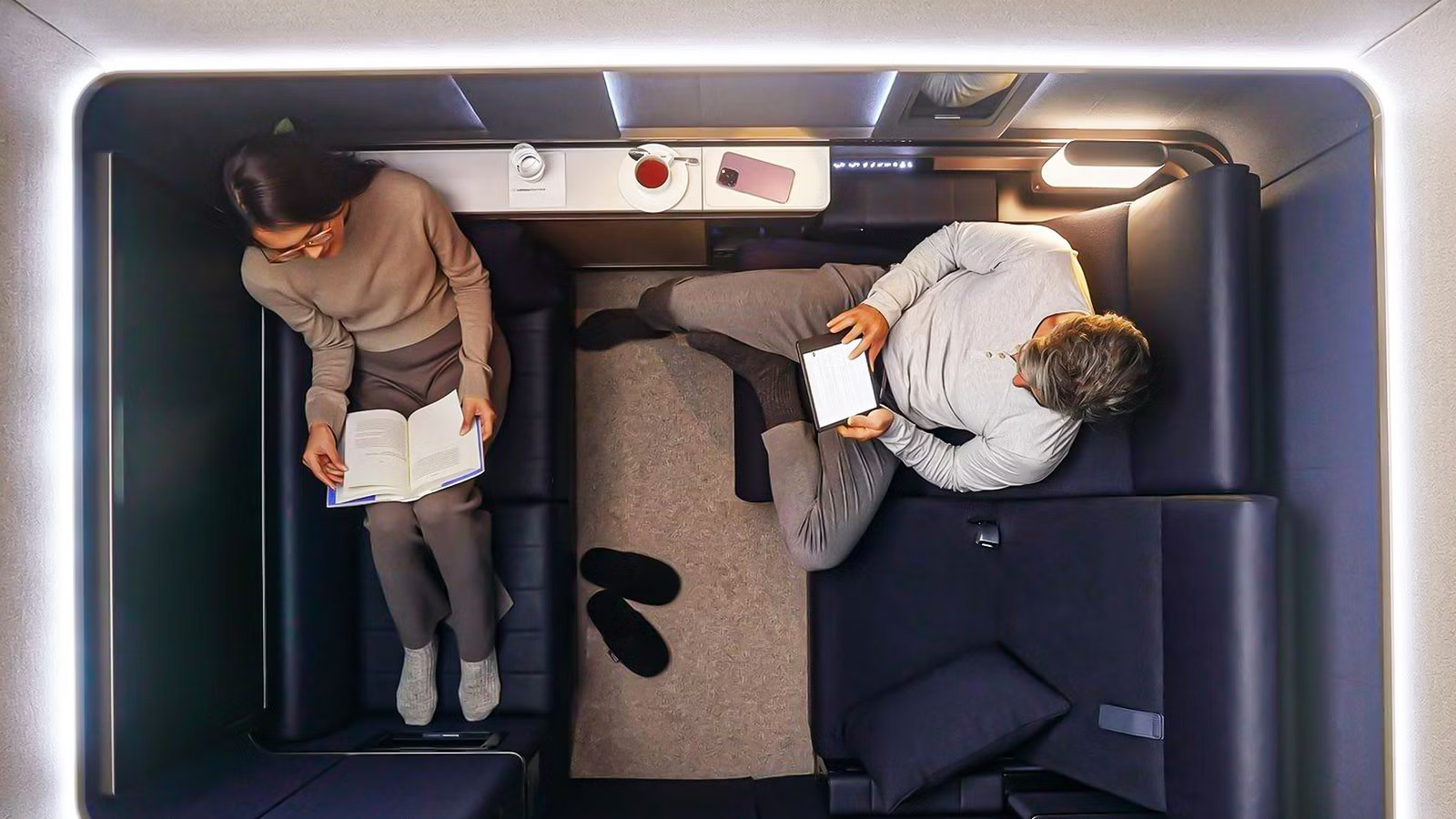
For decades, airline profitability was driven largely by one simple principle: fit as many passengers onto an aircraft as possible. That philosophy is rapidly changing. Airlines are now redesigning cabin layouts to accommodate larger business-class suites, exclusive first-class products, and expanded premium economy cabins, sacrificing seat density in favor of higher-yield passengers. The economics are compelling. An article by CNN Travel shows premium cabins account for only around 3% of passengers but generate approximately 15% of airline revenue.
Rather than maximizing passenger numbers, airlines are increasingly focused on maximizing revenue from every square foot of cabin space. The biggest catalyst behind this transformation is not corporate travel, but a new generation of affluent leisure travelers. Airlines report growing demand from passengers willing to spend thousands of dollars on upgraded experiences for vacations, honeymoons, milestone celebrations, and once-in-a-lifetime trips.
As a result, carriers are investing billions in next-generation cabin products that feature sliding doors, full-length beds, oversized entertainment screens, and private suites that occupy significantly more floor space than previous generations of premium seating. A report by McKinsey & Company shows that since January 2020, scheduled business and first-class capacity has increased by 27%, compared with just 10% growth in economy seating, highlighting how airlines are physically reshaping aircraft around premium demand rather than simply adding more seats.
Why Premium Cabins Have Become Airlines’ Most Profitable Investment

Rather than chasing maximum seating capacity, airlines are increasingly optimizing aircraft for higher yields. Every additional premium seat can generate several times the revenue of an economy seat on long-haul routes, making cabin configuration a key part of an airline’s commercial strategy. As operating costs continue to rise and aircraft deliveries remain constrained, carriers are finding it more profitable to increase premium seating than add more economy capacity.
The financial advantage extends beyond ticket prices. Delta Air Lines revealed that margins generated by its premium cabins were 15 percentage points higher than those in economy during 2024, underscoring why airlines increasingly prioritize premium travelers. On many international routes, a single business-class passenger can generate the same revenue as several economy passengers, while first-class fares on flagship routes often exceed $10,000 to $20,000 for a round-trip ticket.
Industry capacity trends reflect this strategic shift. McKinsey found that scheduled business and first-class seats have grown 27% globally since January 2020, almost three times faster than economy capacity, which increased by just 10%. Rather than expanding aircraft indiscriminately, airlines are investing in cabins that generate higher yields and stronger long-term profitability.
Premium Leisure Travelers Are Driving The Shift

Before the COVID-19 Pandemic, premium cabins relied heavily on corporate travelers booking flexible, last-minute fares. While business travel has recovered, airlines increasingly identify affluent leisure travelers as the fastest-growing segment purchasing premium tickets. These passengers are paying for luxury vacations, destination weddings, cruises, anniversaries, and bucket-list experiences, often viewing the flight itself as part of the overall holiday.
McKinsey estimates that at some airlines, nearly half of premium bookings now come from leisure travelers, fundamentally changing airline revenue strategies. Unlike corporate customers, these travelers often book months in advance, giving airlines greater pricing certainty while reducing reliance on unpredictable business demand.
The wider luxury travel industry points to continued growth. Virtuoso’s 2026 Luxe Report found that 63% of luxury travel advisors expect customer spending to increase slightly during 2026, while 16% anticipate significant spending growth. Those figures help explain why airlines remain confident in investing billions of dollars in premium products despite broader economic uncertainty affecting other parts of the travel sector.
Airlines Are Spending Billions On Private Suites

Rather than simply installing wider seats, airlines are redesigning cabins around privacy and exclusivity. Modern first-class and business-class suites increasingly feature sliding doors, floor-to-ceiling partitions, wireless charging, 4K entertainment systems, personal wardrobes, oversized dining tables, and beds approaching six feet, six inches (two meters) in length. The objective is to replicate aspects of a private jet while remaining within the constraints of a commercial airliner.
Catch what other flight trackers miss
Emergency squawks, holds, NOTAMs — live signals, no signup.
Open tracker
Catch what other flight trackers miss
Emergency squawks, holds, NOTAMs — live signals, no signup.
Open tracker
 Lufthansa represents one of the clearest examples of this trend. The airline is investing €2.5 billion ($2.8 billion) in its Allegris cabin program, introducing enclosed First Class Suites and the flagship Suite Plus, designed for two passengers traveling together. Air France has similarly reinvented La Première with almost 38 square feet (3.5 square meters) of personal space per passenger, while Emirates continues expanding its Game Changer First Class, featuring fully enclosed suites inspired by Mercedes-Benz luxury vehicles.
These products inevitably consume significantly more cabin space than earlier generations of premium seating. Wider aisles, larger monuments, enclosed partitions, dedicated wardrobes, and enhanced service areas all reduce the number of seats that can fit inside an aircraft. Airlines accept this trade-off because each premium seat has the potential to generate several times the revenue of an economy seat over the course of a year.
Bigger Suites Can Mean Smaller Economy Cabins

Every aircraft has a fixed cabin footprint, meaning airlines cannot add larger premium suites without making compromises elsewhere. In many cases, introducing a new business-class product means removing several economy seats, reducing overall passenger capacity, or redesigning cabin layouts to accommodate larger monuments and service areas.
This trend is becoming increasingly visible across new aircraft deliveries. Airlines taking delivery of Airbus A350s, Boeing 787 Dreamliners, and the upcoming Boeing 777X are configuring these aircraft with substantially larger premium cabins than their predecessors. Some carriers are also retrofitting older fleets, replacing legacy business-class seats with newer suite designs despite the reduction in total seating capacity.
Although removing economy seats may appear counterintuitive, airline economics support the decision. Revenue management today focuses on yield per square foot of cabin space, rather than simply maximizing passenger numbers. On premium-heavy long-haul routes, fewer passengers can often generate higher total revenue than a densely configured aircraft operating with mostly economy seating.
Premium Economy Has Become A Second Growth Engine

While enclosed first-class suites attract the headlines, premium economy has quietly become one of aviation’s fastest-growing products. Positioned between economy and business class, these cabins typically offer 38 to 40 inches of seat pitch, wider seats, upgraded catering, larger entertainment screens and increased baggage allowances, providing a significant comfort upgrade without business-class pricing.
Airlines including American Airlines, United Airlines, Lufthansa, Air France, Virgin Atlantic, Air Canada, and Qantas continue expanding premium economy across their long-haul fleets. For many travelers, paying an additional $500 to $1,500 on an intercontinental journey represents a far more attainable upgrade than spending several thousand dollars on business class.
The segment also produces attractive economics for airlines. Premium economy occupies only slightly more floor space than standard economy while commanding significantly higher fares, making it one of the industry’s most profitable cabin products. Combined with strong demand from leisure travelers, it has become a cornerstone of future fleet planning.
Airlines Believe Luxury Travel Is Here To Stay

Airlines are making these investments with decades rather than years in mind. Airbus and Boeing both hold record commercial aircraft backlogs stretching well into the 2030s, with airlines around the world continuing to order long-haul aircraft such as the A350 and 787 specifically to replace older, less efficient fleets. Most of these new deliveries are being specified with entirely new premium cabin concepts, reflecting how airline priorities have shifted from maximizing seat count to maximizing passenger value.
The opportunity is significant. The International Air Transport Association (IATA) expects global airline revenues to exceed $1 trillion for the first time in 2026, while passenger numbers are forecast to surpass 5.5 billion worldwide. Yet much of the industry’s profitability is expected to come from high-yield travelers rather than simply carrying more people. That is encouraging airlines to compete on privacy, comfort, and exclusivity instead of adding more economy seats.
As the next generation of aircraft enters service, cabin layouts will increasingly reflect those changing economics. Rather than measuring success by how many passengers an aircraft can carry, airlines are focusing on how much revenue each flight can generate. The result is likely to be more enclosed suites, larger premium cabins, and fewer densely packed layouts, making luxury travel one of the defining forces shaping commercial aviation over the next decade.