dailynewsnblog
 Air Canada’s widebody fleet consists of 85 aircraft. According to ch-aviation, the
  Star Alliance member has 32 Boeing 787-9s, 20 Airbus A330-300s, 19 777-300ERs, eight 787-8s, and six 777-200LRs. The A350-1000 and 787-10 have been ordered. The carrier’s 767s are now freighters.
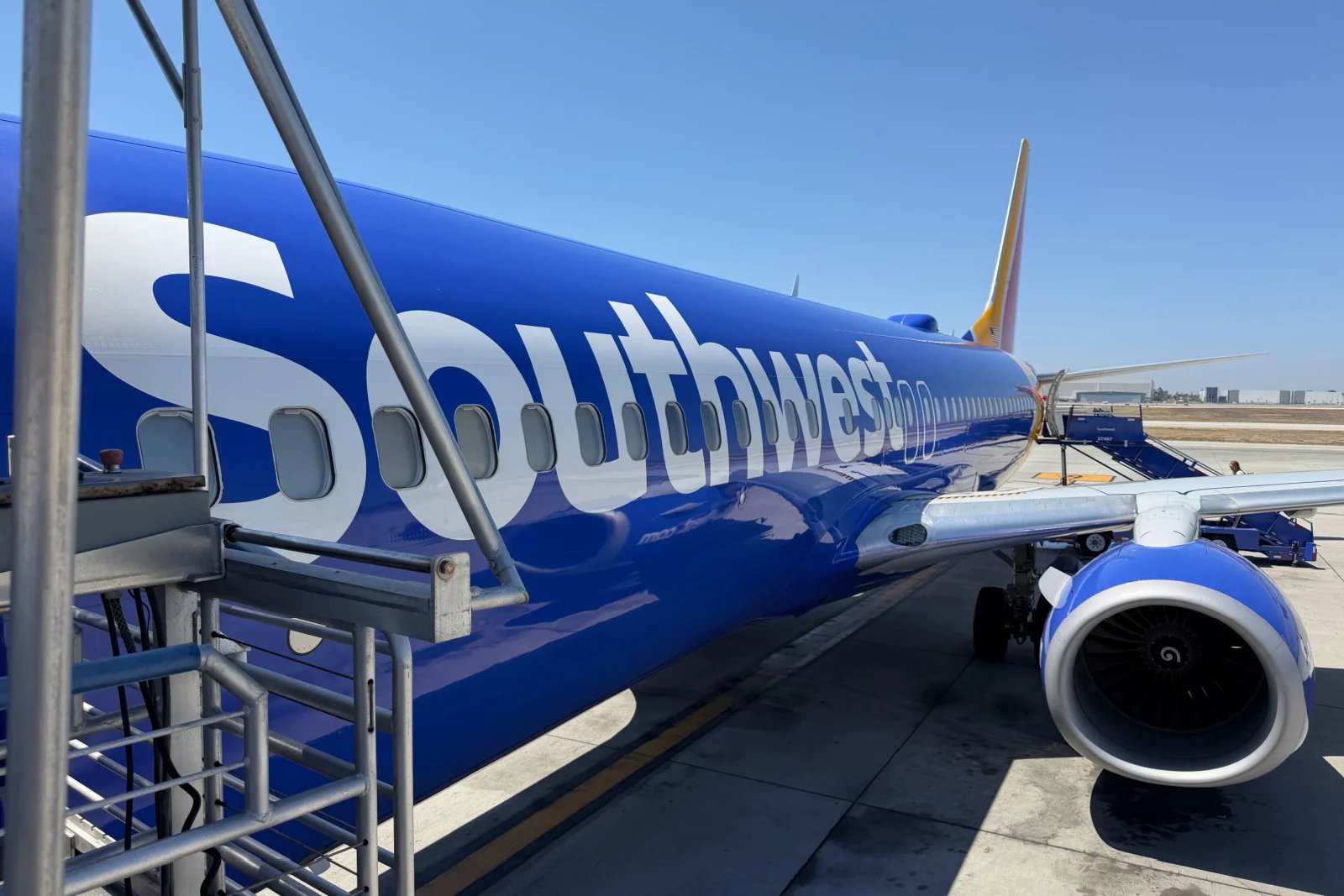
Seven of Air Canada’s 19 777-300ERs have 440 seats. Until earlier this year, they had 450 seats, although several airlines have triple sevens with more than that. Capacity was removed by eliminating row 29. Having fewer seats means slightly lighter equipment, which reduces fuel burn, lowers airspace charges, and so on. Having 440 seats remains remarkable among North American operators.
Where Air Canada’s 440-Seat 777s Fly

Airlines usually make the most money (or lose the least money) in Q3 (July-September). While it varies depending on the specific route, this is often when demand and fares are at their highest. In those three months, Air Canada’s schedule submission to Cirium Diio shows that it plans eight routes on its 440-seat 777-300ERs, which predictably revolve around leisure and visiting friends and relatives markets. The equipment has 28 business class seats, 24 premium economy seats, and a whopping 388 economy seats.
Nearly all the markets involve the airline’s second-busiest hub of Montréal–Trudeau International Airport (YUL). The busiest hub of  Toronto Pearson International Airport (YYZ) barely sees it, as it tends to have equipment with more premium seats. All eight routes are summarized in the following table and shown on the interactive map below.
440-Seater Route | Number Of Departures In Q3* |
|---|---|
YUL to Paris | Two daily |
YUL to Athens | Daily |
YUL to Brussels | Daily |
YUL to Rome | Daily |
YUL to Tokyo Narita | Daily |
YUL to Vancouver | Daily |
YUL to Toronto | Only once in Q3 (September 30) |
YYZ to Barcelona | Only once in Q3 (September 30) |
* Double for both ways |
Loading map…
Drag to explore
Air Canada Between Montréal & Vancouver

When all airlines are considered, booking data shows that approximately 490,000 round-trip passengers flew between YUL and Vancouver International Airport (YVR) in the 12 months to April, They were local and did not fly elsewhere. This includes all local passengers. Obviously, most people flew nonstop, but 60,000 or so connected elsewhere in Canada, particularly at YYZ or Calgary International Airport (YYC).
836 departures will exist between YUL and YVR in Q3, up by 8% compared to the same three months in 2025. That’s equivalent to an average of nine daily services each way, although the number varies from seven to 10. For obvious reasons, Air Canada is massively dominant. It has 78% of the departures, followed by Flair Airlines (11%) and Porter Airlines (11%).
Air Canada’s offering varies from six to eight daily flights. On the randomly chosen Thursday, August 13, for example, eight outbound services will be available. They will leave YUL at 7:30 AM (A330-300), 8:30 AM (787-9), 1:10 PM (A220-300), 4:30 PM (A321ceo), 5:30 PM (440-seat 777-300ER), 6:35 PM (A220-300), 7:45 PM (A220-300), and 9:30 PM (A220-300). The airline’s highest-capacity equipment will coexist with the lowest-capacity mainline aircraft.

Flight Alerts: 24 Exciting New Nonstop Routes Launching This Week
See which notable examples made the list this week!
Where Air Canada’s Montréal-Vancouver Passengers Actually Went

In the 12 months to April 2026, an estimated 390,000 of Air Canada’s traffic on this transcontinental route only flew between YUL and YVR. Getting on for 230,000 passengers connected to another flight at the carrier’s Pacific hub in YVR. The most popular segments were Shanghai, Manila, Victoria, Hong Kong, Sydney, Kelowna, Beijing, Shanghai, Seoul, and Brisbane. Almost one in four passengers flew to/from mainland China. YUL has not had nonstop flights to China since Air Canada ceased flying to Shanghai in 2020.
Then there are those passengers who started or ended their journey in YVR and transited in YUL. Approximately 210,000 did so. The ten most popular markets were São Paulo, Halifax, Quebec City, Barcelona, Paris (CDG), Delhi, Lisbon, Boston, Rome, and Athens. Around 30,000 people ‘bridged’: they connected to another flight at both YUL and YVR. Portland to Athens, via YVR and YUL, was first.