dailynewsnblog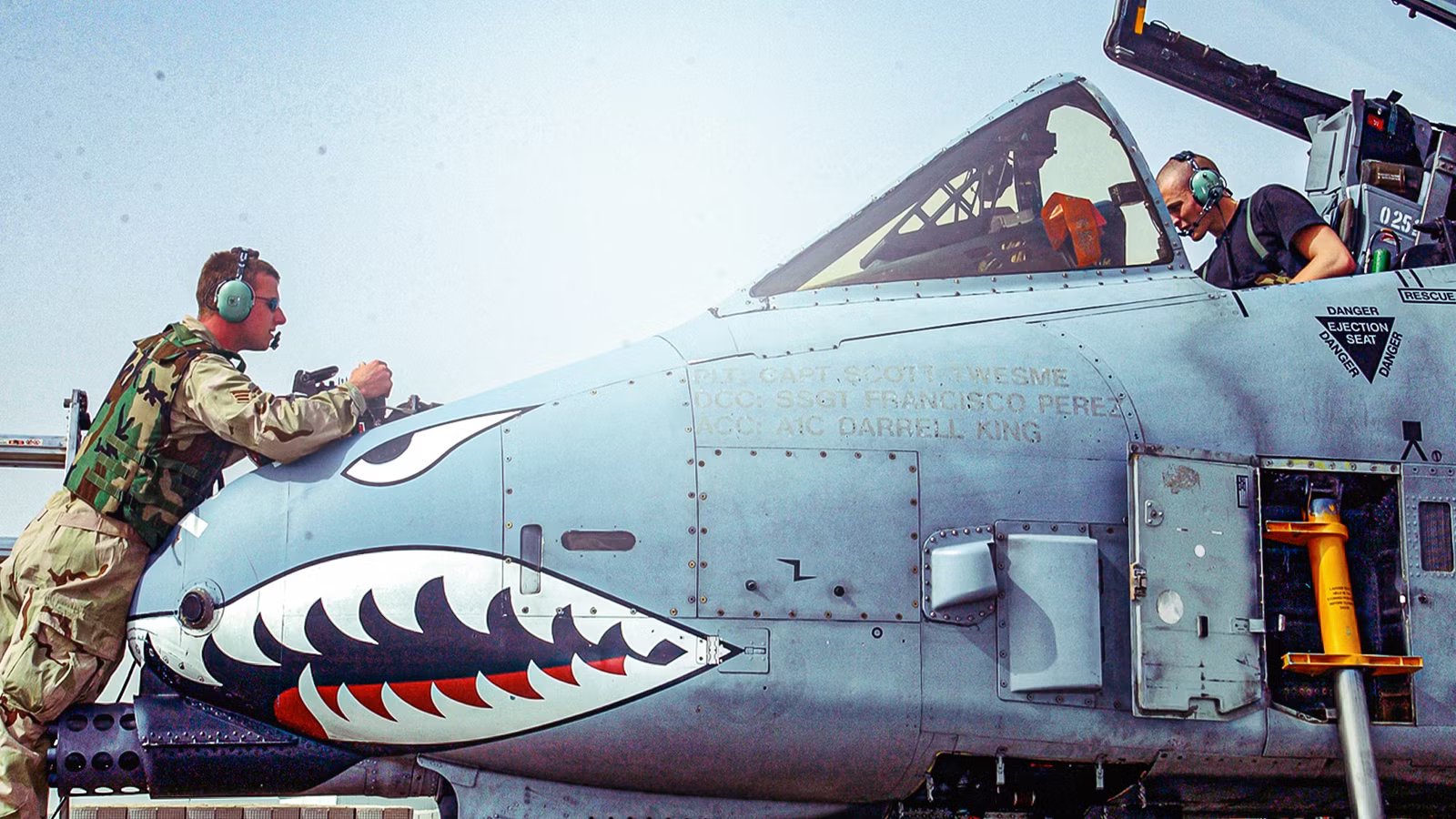
The revered US Air Force ‘Warthog,’ officially the Fairchild Republic A-10C Thunderbolt II, is experiencing yet another Renaissance in its long and illustrious career as the premier ground attack platform of the US Armed Forces. The 75th Expeditionary Fighter Generation Squadron has been spotted flying back to RAF Lakenheath Air Base in the United Kingdom with some fresh additions to the themed nose art showing the Warthogs have scored kills on Iranian ships.
The Aviationist published photos of the eleven A-10C Warthogs landing, with more elaborate paint schemes to match Nintendo-themed monikers they were given for deployment to the US Central Command area of responsibility. Under Operation Epic Fury, the Warthogs have been re-equipped with smart rocket packs to complement their iconic GAU-8 Avenger cannons as they provide close air support, shoot down Iranian drones, and battle against the Navy of Iran. All the jets photographed on June 12 bore mission tallies from dozens of airstrikes and drone shoot-downs, but one in particular had marks for two surface vessel sinkings.
During Operation Epic Fury, the A-10C has been instrumental in turning the tide against the asymmetrical warfare conducted by the Iranian military using cheap drones. Over 120 Iranian naval vessels have been reportedly destroyed in the course of the operation, including 44 known to be actively laying sea mines. The anti-ship victories of the A-10s illustrate their contribution to making the Strait of Hormuz safe for merchant ships, a key objective in the joint US-Israeli campaign.
The Flying Tank: Not a Fair Fight

The A-10C Warthog is uniquely well-equipped to handle the Iranian Revolutionary Guard tactics, thanks specifically to its ‘old school design,’ which is a stronger match for the current battlefield than the more advanced platforms of the USAF. Flying low and slow with its heavy armament, the Warthog can loiter over the battlefield, waiting for the enemies to appear and then strike with precision and devastating firepower. It quickly dispatches fast-attack craft using their 30mm GAU-8 Avenger rotary cannons, AGM-65 Maverick anti-ship missiles, or APKWS laser-guided rockets.
The Thunderbolt II is exceptionally good at destroying light naval craft because it was originally designed to hunt moving tanks on land. Just like shooting down drones that target the US and its allies’ bases, the A-10 is exceptionally effective in a maritime environment against small craft thanks to its Cold War ‘tank-buster’ design. Complementing its hard-hitting armament is a 1,200-pound titanium bathtub that surrounds the cockpit, ensuring that the pilot of the Warthog can dish out damage to the enemy without fear of being wounded from anti-aircraft fire.
The enormous 30mm GAU-8 can fire its anti-tank shells at 3,900 rounds per minute and completely vaporize a light vehicle in a single burst, like a fast boat. Light rockets with retrofitted precision guidance are also very effective at tracking and striking erratically moving watercraft. And even if one of these light attack boats manages to fire a shot that damages the Warthog, it has multiple redundancies built into its control system and a ballistically reinforced airframe. That gives it the jet resilience to make it back to base even with an engine out or half a wing blown off.
Ultimate Team Up: American Combined Arms

The striking success of the A-10C Warthog during Operation Epic Fury relied heavily on an unprecedented combined arms approach. By marrying the Navy’s carrier strike group with the Air Force’s low-and-slow firepower, the Pentagon solved a tactical mismatch: multi-billion-dollar warships to fight swarms of fiberglass speedboats. Patrolling on the deck, at roughly 3,000 feet, the Warthogs acted as the ‘shooters’ for any hostile fast-attack craft or minelayers operating on the water’s surface.
While more advanced fighter jets like the Boeing FA-18 Super Hornet or Lockheed Martin F-35 Lightning II are too high-maintenance for this kind of messy mission, they provide air superiority that allows the A-10C to do its job. They can capitalize on their long endurance and ability to get up close to the target for strafing and pinpoint strikes, thanks to the support of the higher-flying, more delicate fighter jets in the sky above.
Because high-altitude naval radar and fast carrier-based jets struggle to isolate swarming speedboats from ordinary civilian ships, the Navy delegated the low-altitude surface fight entirely to the A-10Cs. Navy Aegis-class destroyers and cruisers also serve as the high-altitude air-defense umbrella. They focused on tracking and neutralizing complex, high-tier threats like anti-ship ballistic and cruise missiles using expensive SM-6 interceptors. On top of providing cover, the Navy also provided targeting as the Warthogs plugged directly into the Navy’s Link 16 data network.

From Tank Buster To Drone Hunter: Why The A-10 Warthog Is Proving Too Useful To Retire
The unkillable flying tank lives to fight another day.
The Warthog Gets Smart: APKWS

Until now, the A-10 operated on a closed-data-loop combat network designed primarily for talking to ground troops, making it difficult to communicate directly with Navy warships. The recent success of the A-10C, despite its advancing age and repeated calls from the USAF to retire the airframe, is thanks to new ‘smart’ upgrades. Specifically, the updates include modern Link 16 data-sharing integration and AGM-176/APKWS (Advanced Precision Kill Weapon System) smart rocket conversion kits.
Navy warships or aircraft can identify a threat, mark it digitally as a hostile target on the network, and hand it off to an approaching Warthog miles away. Through Link 16, USN ships and the air wing’s E-2D Advanced Hawkeye AWACS streamed real-time surface tracks directly into the A-10C’s cockpit display. Pilots could see exactly where Iranian fast-attack craft were clustered without needing to visually search the open water. In the highly congested Strait of Hormuz, Link 16 also allowed USN commanders to constantly track A-10 positions, preventing friendly-fire incidents.
APKWS has also closed the cost gap in the battle between America’s ‘exquisite’ high-end weapons and Iran’s simple, often improvised, platforms and munitions. The Warthog’s go-to AGM-65 Maverick is highly effective but expensive and heavy. APKWS is a mid-body guidance section fitted onto standard, inexpensive 2.75-inch Hydra 70 unguided rockets. It transforms cheap rocket inventory into highly precise, laser-guided ordnance.
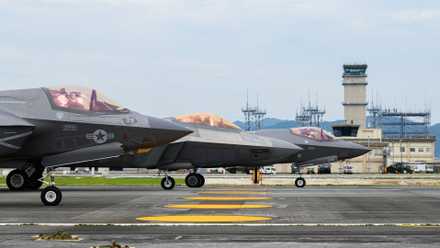
The Arsenal Of Epic Fury: Every US Aircraft Taking Part In The Strikes On Iran
Breaking down the staggering airpower massed in the Gulf.
A-10 By The Numbers: More Shots Per Sortie

A major driver behind this joint doctrine was economic sustainability. APKWS rockets are small compared to any other missiles. That means an A-10C can carry seven rockets per pod, loading up to four pods, or 28 guided rockets, per aircraft alongside its 30mm cannon. This massive capacity allowed a single flight of Warthogs to decimate an entire swarm of fast-attack craft in one go, rather than turning back after firing a couple of missiles.
APKWS uses semi-active laser seekers. Navy MH-60R Seahawk helicopters or unmanned surface vessels could illuminate a moving Iranian boat with a laser beam. The A-10 pilot could then fire an APKWS rocket from miles away, and the rocket would ride the laser beam directly into the speedboat’s hull. The rocket warhead is cheap enough to avoid wasting a million-dollar missile on a fast boat, yet entirely destructive enough to punch through any attack boat.
The E-2Ds also flew high above the strait, using their massive radar rotodome to track hundreds of light IRGC speedboats hidden among commercial civilian ships. Inside the Hawkeye, the naval flight officers acting as a kind of combat air control use Link 16 to transmit the precise coordinates of fast-attack craft directly into the A-10C’s digital maps, vectoring the Warthogs onto targets. Similarly, land-based P-8A Poseidon maritime patrol planes provide surveillance with powerful telephoto lenses and sensor suites to support A-10 pilots and all joint ops over the Strait of Hormuz.
Why America’s B-52 Stratofortress Is More Lethal In 2026 Than When It Was Built
The BUFF keeps leveling up on its path to become the USAF’s centurion.
The A-10 Lives To Fight Another Day… Again

The ongoing combat performance of the A-10C Warthog in Operation Epic Fury has triggered a major strategic reversal within the Pentagon. For what seems like decades, the US Air Force has been attempting to retire its fleet of A-10 Thunderbolt II fighters to introduce more modern platforms that integrate with the rest of the fleet. Yet, time and time again, the modern successors to the Warthog have proven that they lack some of the ‘punch’ to fully relieve it of its mantle. The F-16 Fighting Falcon was once offered as a successor but lacked the toughness, just as its even younger counterpart, the F-35 Lightning II, does.
The USAF originally intended for fifth-generation stealth aircraft like the Joint Strike Fighter to inherit close air support roles, but the realities of the Strait of Hormuz proved that strategy to be financially and operationally unsustainable. Air Force Secretary Troy Meink officially extended the A-10 platform’s service life to 2030. The USAF will retain 54 A-10s until 2029, then reduce to 36 aircraft the following year.
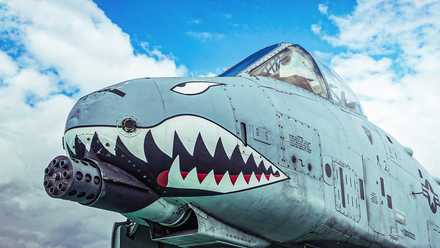
Second Look? Why The A-10 Warthog Is Being Retained Over High-Tech Potential Successors
The flying tank fights another day… again.
The Aftermath Of Operation Epic Fury

A congressional report revealed that the US lost or damaged at least 42 aircraft during the conflict, driving up replacement and repair costs. The Iranian theater is thick with shoulder-fired missiles, anti-aircraft guns, and explosive suicide drones. Sinking fiberglass speedboats and hunting low-flying Shaheds require pilots to get low, slow, and dirty. Risking a $100+ million F-35 on low-altitude boat-hunting or drone-interception missions is a massive strategic liability.
The A-10 thrives precisely where the F-35 is too vulnerable to play, and it does it at a far lower price point. Flying an F-35 costs between $34,000 and $36,000 per hour. Operating at roughly $6,000 to $20,000 per flight hour, the Warthog provides a highly sustainable, heavy-hitting solution to asymmetric swarms. The campaign proved that high-tech stealth is vital for winning control of the skies, but you still need a heavily armored, budget-friendly ‘flying tank’ to win the day.