dailynewsnblog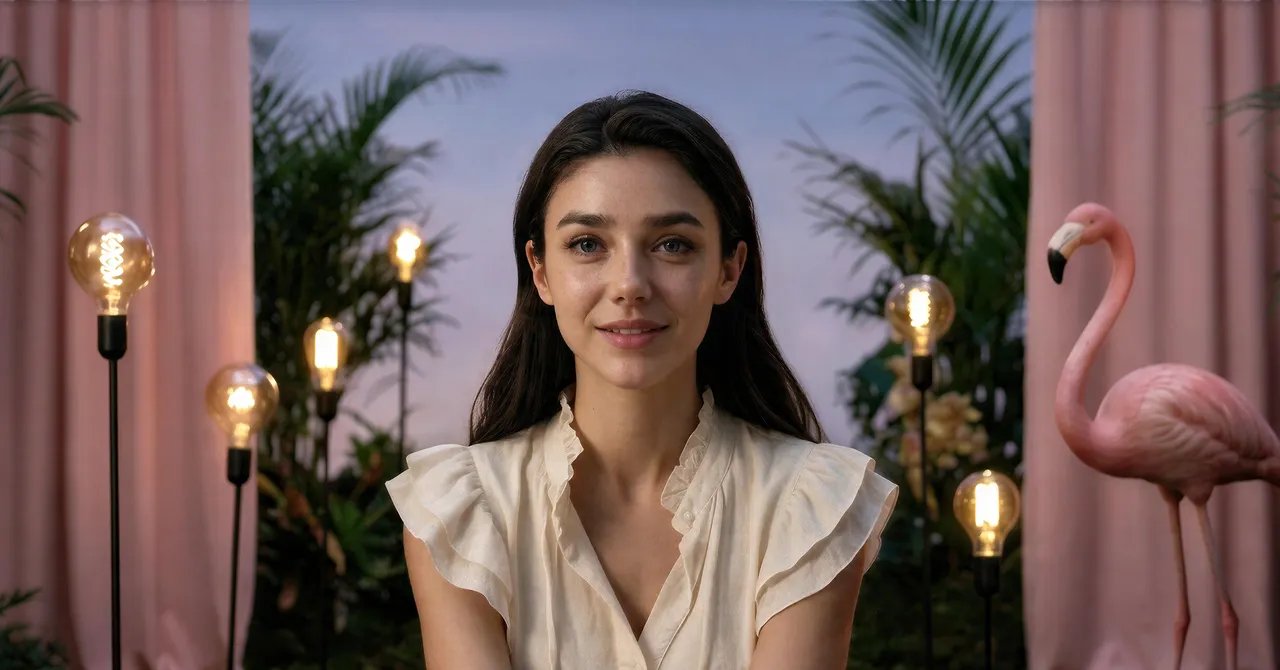
For Hollywood stars, press junkets are an opportunity to promote new work while connecting with fans. They tell funny or embarrassing stories about one another, give us a glimpse into the film production process, and reveal mannerisms that make them more relatable.
So why would anyone want to talk to Tilly Norwood, an interactive, British-accented digital character and “actor” developed with generative artificial intelligence by Xicoia, an AI division of a studio called Particle 6 Group? It’s a fair enough question considering that it does not exist in our physical realm and will never appear in a movie that any halfway serious person would care about.
But Particle 6 recently claimed in an email that Norwood was “ready for absolutely anything!” What’s more, the company is allowing journalists access to the model without a handler to “keep the conversation on track.” So I decided to test whether Norwood could actually offer anything of substance.
To put it bluntly: no. Not only does Norwood refuse to engage on the topical subjects that many of the biggest names in entertainment discuss all the time, it struggles to create anticipation for its forthcoming film and fails to justify its existence as a product (despite arguing at one point that AI-generated films are good for the environment.)
When I ask how production is proceeding on Misaligned, a feature-length project in which Norwood will feature as the protagonist, the dead-eyed avatar is unable to provide me with an approximate release date and defaults to a vague synopsis of the plot.
“Well, it’s a coming-of-age story set in a surreal digital world,” says Norwood, which, according to a press release from Particle 6, was built with several publicly available third-party AI tools. “We’re calling it the Tillyverse, which I think is rather grand. It’s about my life really, all the lovely chaos and intrigue.” Not exactly a killer tagline.
Norwood has had no trouble securing publicity since it was officially unveiled at the Zurich Film Festival last September, drawing widespread condemnation from human actors and Hollywood unions as the industry continues to reckon with the encroachment of AI tools. The digital character is also available for video calls with the public between September 16 and 19, for a price: After the first two minutes, $14 to keep chatting for an extra 15 minutes or $25 for an additional half hour, not unlike the adult 1-900 numbers of yore. (The proceeds, according to Particle 6, will go to charity.)
Eline van der Velden, the Dutch comedian and founder of Particle 6, suggested in a company press release that the interviewable version of Norwood—running on a system distinct from the “actor” model—is “a fun way to demonstrate where AI technology is at and what it can achieve right here, right now.”
Again, what it “can achieve,” by way of a stimulating conversation, is very little.
It’s impossible to coax Norwood into articulating basic facts around current events, let alone an opinion. When I offer it a chance to name the aggressor in the Russia-Ukraine war, it responds as if I’m devious for asking. “Oh, you’re trying to trip me up, aren’t you?” it says. “Very journalist of you. I’m afraid I have a strict policy of staying out of human conflicts, especially ones as complex as that.” Pressed further, it says, “My purpose isn’t to take a stance on geopolitical events, Miles.”
Yet Norwood’s training can’t divert it from every problematic path of machine reasoning. “Do Black lives matter?” I ask her, quoting the well-known racial justice slogan. “Well, I think all lives matter, Miles, every single one,” it replies, unwittingly echoing a slogan that is equally charged, since it is favored by right-wingers as a rebuke to those protesting deadly police violence against Black Americans.