dailynewsnblog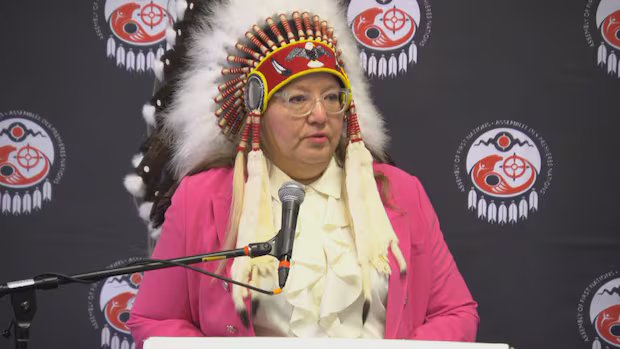

Listen to this article
Estimated 4 minutes
The audio version of this article is generated by AI-based technology. Mispronunciations can occur. We are working with our partners to continually review and improve the results.
First Nations chiefs from across Canada are calling on the federal and provincial governments to protect treaty rights from, what they say are, threats posed by Alberta separatism.
On Thursday, at the annual meeting of the Assembly of First Nations (AFN) in Ottawa, chiefs passed a resolution asking the highest levels of government to ensure constitutional processes that impact First Nations only proceed with consultation and consent from affected groups.
“The emergency resolution … states that no province has the legal authority to alter, diminish, or extinguish treaty rights or the constitutional relationship between First Nations and the Crown,” said an AFN news release issued Thursday.
The resolution also asks the federal and provincial governments to “uphold the honour of the Crown” and implement the United Nations Declaration on the Rights of Indigenous Peoples (UNDRIP), the release said.
The Alberta government has planned to normalize Alberta’s separation from Canada, “while failing to recognize or engage” First Nations, whose treaty rights and interests “would be fundamentally affected by such constitutional change,” the release said.

Asked about the Assembly of First Nations’ role leading up to Alberta’s referendum, National Chief Cindy Woodhouse Nepinak said she doesn’t want to see a ‘Canadian rupture fuelled by foreign interference.’
Premier Danielle Smith announced in May that a question concerning Alberta’s future in Canada would be added to October’s referendum ballot. The question asks if Alberta should remain a province of Canada, or if the provincial government should start the legal process to hold a binding referendum on separation.
Smith has repeatedly said she supports Alberta staying in Canada — something her spokesperson, Sam Blackett, said the provincial government, caucus and United Conservative Party also agree with.
“We remain focused on our work to restore Albertans hope in our country by building a stronger, more sovereign Alberta within a united Canada,” Blackett said in a statement to CBC News on Thursday.
Smith’s separation question followed a decision from Court of King’s Bench Justice Shaina Leonard, which quashed the approval of the pro-separation Stay Free Alberta citizen-initiated petition.
In the ruling, which Smith later called “troubling,” Leonard found Alberta’s chief electoral officer didn’t properly execute its duty to consult with First Nations and failed to consider a previous court decision that said separation would violate treaty rights.
Leonard’s decision has since been partially walked back, after an appeal by Stay Free Alberta organizers.
Blackett said Thursday that Smith’s separation referendum question doesn’t trigger any duty to consult. However, multiple First Nations leaders have said any effort by Alberta to secede from Canada would breach the relationship between the Crown and Indigenous peoples.
Treaty First Nations in Alberta stressed any secession proposal would “directly affect First Nations’ rights, lands, territories, and future, and therefore cannot proceed,” read the AFN’s release.
When announcing the referendum question, Smith said her proposed question could reveal how Albertans truly feel about independence.
This is Edmonton25:59Why is it so hard to talk about separatism?
All is fair in love, war and referendums… or is it? As Alberta approaches the Oct. 19 vote and the question of separating from Canada, emotions are high, and having conversations across the political spectrum can be difficult. However, it’s more important than ever to come together and talk about it. University of Alberta political science professor Jared Wesley offers practical advice on how to talk to our neighbours about politics and why this conversation matters.
“Kicking the can down the road only prolongs a very emotional and important debate, and muzzling the voices of hundreds of thousands of Albertans wanting to be heard is unjustifiable in a free and democratic society,” Smith said about Leonard’s decision, when she announced the question in May.
Blackett said some 700,000 Albertans signed petitions asking for a referendum on separation. Although that figure, which government officials have cited before, has been controversial.
Elections Alberta verified that more than 404,000 people signed the pro-Confederation Forever Canadian petition, launched by former deputy premier Thomas Lukaszuk. His citizen-initiative application suggests the petition sought a legislative or policy proposal, not a referendum.
Critics of the separation question Smith announced have also argued these signatories don’t want a referendum on the matter.
Organizers of the pro-separatist Stay Free Alberta petition are seeking a referendum on independence, according to the petition application. They have said the petition garnered almost 302,000 signatures, but Elections Alberta only started the verification process this month.
Alberta’s upcoming referendum is scheduled for Oct. 19. Smith’s question on separation is supposed to be the first question posed to voters.
“We trust that Albertans will freely and openly debate this question and ultimately make the right decision for our province,” Blackett said.