dailynewsnblog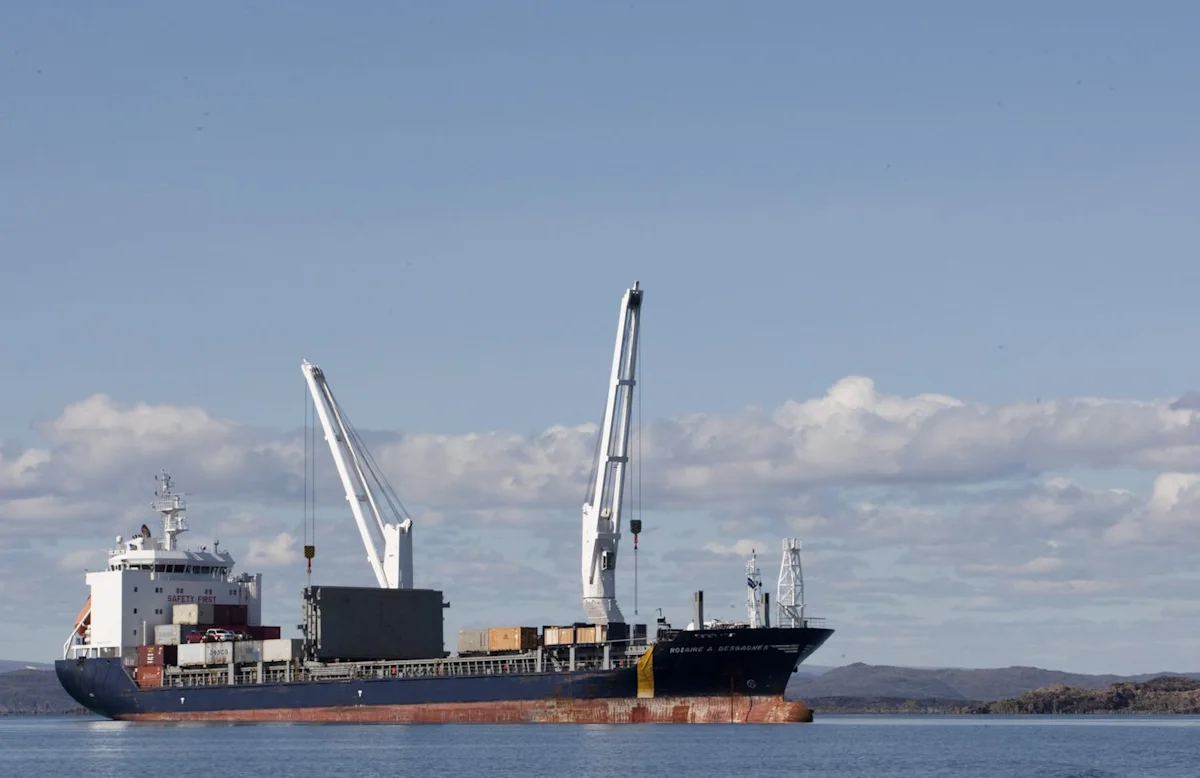

MONTREAL — A Canadian shipping firm has repeatedly had to postpone plans to exit the Strait of Hormuz after nearly five months trapped in the Persian Gulf amid the Middle East war.
Quebec-based Desgagnés’s two freighter ships are the only known Canadian commercial vessels that were stuck in the Gulf when the U.S. and Israel launched attacks on Iran in late February.
Desgagnés vice-president Pascal Larose says U.S. Navy officials in Bahrain have provided him with a route to steer clear of mines and pledged a measure of protection come departure day, but the “danger zone” will take 12 hours to sail through. And the timing is now anyone’s guess.
“It’s a moving target,” Larose said in a phone interview, stating that the exit hinges on American military authorities. “We’re going through their recommendation.”
Early last week, the company had aimed to have at least one of its freighters leave the region within seven days. That never came to pass. Even as the Middle East conflict ramped up, Desgagnés held out hope for an imminent voyage. None has been scheduled so far.
“It’s kind of changing every day,” Larose said.
A fresh round of fighting between America and Iran has put any plans for departure on hold.
Over the past week, U.S. forces said they hit more than 300 targets in Iran, including military speedboats near the Strait. In response, Iran’s military said early Monday it launched another barrage of strikes aimed at U.S. military facilities in Bahrain and Kuwait as well as sites in Oman and Jordan.
On Monday, U.S. President Donald Trump announced he was reimposing a naval blockade of Iranian ports and demanding a 20 per cent tariff for all cargo shipped through the critical waterway, which typically carries a fifth of the world’s oil and liquefied natural gas.
The would-be toll echoed previous threats that have failed to materialize and contradicted the administration’s earlier line that no state should charge fees for passage through open seas, a pillar of international maritime law.
For Desgagnés, prolonged shutdown of the passage has been “very costly,” Larose said.
The company had to lease a pair of freighters to replace the sidelined vessels and plug the hole in its 24-boat fleet. “When you charter a ship like that, your margin is very minimal, if not negative.”
The two stranded ships — the Miena Desgagnés and the Rosaire A. Desgagnés — had been transporting general cargo to ports in Iraq, Saudi Arabia and the United Arab Emirates when they passed through the Strait in the week leading up to the outbreak of war in late February, Larose said.