dailynewsnblog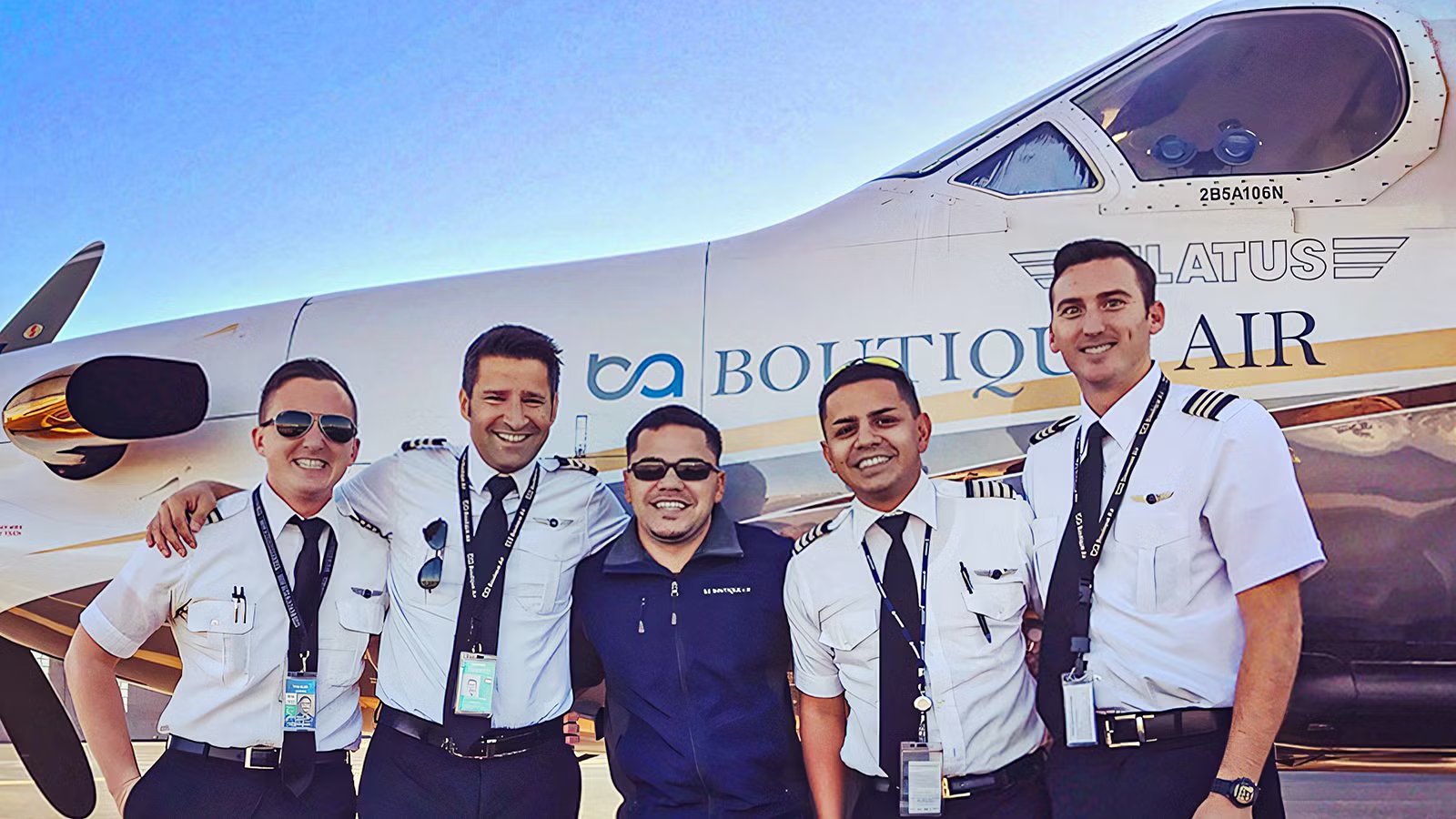
Regional airline pilot pay in the US has increased dramatically over the past decade, with first-year first officers at major regional jet carriers now earning between $80,000 and $110,000. That transformation has received significant attention across the industry and the media. What has received far less attention is the tier of professional flying that sits below it.
Turboprop and piston pilots flying for Essential Air Service carriers, charter operators, and medevac companies occupy a different part of the pay scale entirely. These are the pilots flying ATR 42s, Pilatus PC-12s, Cessna Caravans, and piston twins into small airports that regional jets do not serve, often building the hours they need to move up to a regional jet job.
What Turboprop And Piston Pilots Earn In The US In 2026

The list of carriers operating turboprop and piston aircraft in scheduled US service is short. JSX, known primarily as a semi-private charter carrier operating Embraer regional jets, began introducing ATR 42-600 turboprops to its fleet in December 2025, with four aircraft planned by early 2026 and a letter of intent for up to 25. The turboprops complement rather than replace its jet fleet, configured with 30 all-premium seats for routes to smaller airports that jets cannot serve efficiently. Beyond JSX, the remaining turboprop and piston operators are primarily Essential Air Service carriers. Boutique Air flies Pilatus PC-12 single-engine turboprops on EAS contracts. Southern Airways Express operates Cessna 208 Caravans. Cape Air is worth including here as well. While not a turboprop operator, it flies piston-powered Cessna 402s, Tecnam P2012 Travellers, and Britten-Norman Islanders on regional routes and occupies the same entry-level professional tier.
Pay across these carriers sits well below the regional jet floor. A first-year first officer at JSX earns approximately $35,000. A fifth-year captain earns approximately $135,000. Cape Air’s 2023 compensation data shows median gross pay for a first-year captain of $89,130 and $106,616 for a second-year captain, including the 40-hour weekly guarantee, overtime, and incentive pay. Smaller EAS operators flying single-engine turboprops typically pay at the lower end of the professional spectrum.
Regional jet first officers at major Part 121 regional carriers now start between $80,000 and $110,000 in their first year. Those positions require an Airline Transport Pilot certificate, which carries a minimum of 1,500 flight hours, or 1,000 hours under a Restricted ATP for graduates of approved aviation university programs. Most turboprop and piston operators fly under Part 135, which allows pilots to be hired with a Commercial Pilot License at significantly fewer hours. That lower entry barrier is part of why the pay sits where it does. These positions function as time-building roles for pilots working toward their ATP and a regional jet job rather than as long-term career destinations, and the compensation reflects that.
The Difference Between A Turboprop And A Piston Engine

A turboprop and a piston engine both turn a propeller, but the mechanical process behind that rotation is fundamentally different. A piston engine works the same way a car engine does. Cylinders containing fuel and air fire in sequence, driving pistons that turn a crankshaft connected to the propeller. Power output is limited by the number and size of the cylinders, and the engines are heavier relative to the power they produce compared to turbine alternatives.
A turboprop uses a gas turbine engine, the same core technology found in a jet, but instead of producing thrust directly through exhaust, the turbine drives a reduction gearbox connected to a propeller. The result is an engine that produces significantly more power relative to its weight than a piston, burns jet fuel rather than aviation gasoline, and operates more efficiently at the altitudes and speeds typical of regional airline flying. The ATR 42-600 that JSX operates uses two Pratt and Whitney Canada PW127M turboprop engines producing approximately 2,160 shaft horsepower each, roughly six times the output of the Cessna 402’s pistons.
The distinction matters operationally. Turboprops are more powerful, more fuel-efficient at cruise, and capable of carrying more passengers over longer distances than piston aircraft. They also cost more to operate and maintain, which is why the smallest EAS carriers tend to fly piston equipment on their shortest and thinnest routes while turboprops serve slightly larger markets. For pilots, the progression from piston to turboprop to regional jet reflects a standard career pathway, with each step typically bringing higher pay, larger aircraft, and more complex operating environments.
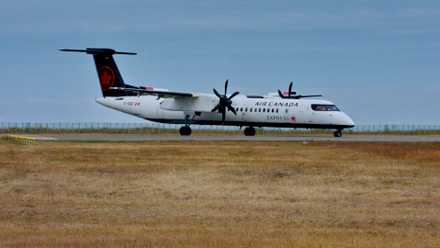
Seat Maps – Air Canada – Dash 8-Q400 (78M)
What’s it like onboard Air Canada’s Dash 8?
When Every US Regional Airline Flew Turboprops

The US regional airline industry was built on turboprops. Through the 1980s and 1990s, carriers like American Eagle, USAir Express, United Express, and Northwest Airlink operated networks almost entirely composed of turboprop aircraft. The Saab 340, a 34-seat Swedish twin-turboprop, became one of the most common regional aircraft in the country. The Beech 1900, a 19-seat pressurized turboprop, served hundreds of small communities. The de Havilland Dash 8, later the Bombardier Q400, carried up to 78 passengers on routes that connected smaller cities to major hubs. ATR 42s and 72s flew across the South and Midwest. Horizon Air, which operated as a regional partner for Alaska Airlines, built its entire identity around the Q400 and kept the type in service longer than almost any other US carrier.
The shift to regional jets began in the late 1990s and accelerated through the 2000s. The Bombardier CRJ-200 and later the CRJ-700 and CRJ-900 offered jet speeds, pressurized cabins, and a passenger experience that travelers preferred over turboprops. The Embraer E170 and E175 followed, offering even larger cabins with a 2-2 seating layout that felt closer to a mainline narrowbody. As regional jet deliveries ramped up, turboprops were steadily retired from mainline regional flying. Passengers associated propellers with older, slower, less comfortable aircraft, and airlines responded by replacing them with jets on any route where the economics supported it.
By the mid-2010s, turboprops had largely disappeared from the US regional landscape. Horizon Air retired its last Q400 in 2023. American Eagle and United Express had long since moved entirely to regional jets. The turboprops that remain in US scheduled service are concentrated in the Essential Air Service program and a handful of niche operators, serving routes that are too short, too thin, or too constrained by runway length for regional jets to operate economically.
Single-Engine Turboprop Flying: Medevac, Cargo, And The PC-12

Outside scheduled airline service, single-engine turboprops remain a significant part of the US aviation workforce. The Pilatus PC-12 is the most widely used, operating across medevac, cargo, charter, and EAS passenger service. The aircraft’s combination of a pressurized cabin, 1,800 nautical mile (3,334 km) range, and ability to operate from short unimproved runways makes it one of the most versatile commercial aircraft available. Boutique Air uses the PC-12 for Essential Air Service routes. Numerous air ambulance operators use it as their primary platform for fixed-wing medevac missions across rural and remote areas of the US.
The Daher TBM series, a single-engine turboprop capable of cruising above 300 knots (555 km/h), fills a similar role in the medevac and charter market. The TBM 960 is one of the fastest single-engine aircraft in production, and its speed and range make it competitive with light twins on many mission profiles while burning less fuel and requiring one fewer engine to maintain. Medevac operators flying TBMs and PC-12s cover vast geographic areas, particularly across the Mountain West, Great Plains, and Alaska, where ground transport distances between hospitals can exceed several hundred miles, and weather conditions make helicopter operations unreliable for significant portions of the year.
Pilot pay in single-engine turboprop operations varies widely. Medevac first officers typically start between $40,000 and $55,000, depending on the operator and region. Captains with several years of experience earn between $65,000 and $90,000. The work involves night flying, weather decision-making in challenging environments, and operations into small uncontrolled airports, often with a medical crew and patient on board. For many pilots, single-engine turboprop medevac serves as the bridge between flight instructing and a regional airline job, offering turbine time and real-world decision-making experience that flight instructing alone does not provide.

The Five Aircraft In The Daher TBM 900 Series
A list of the chronology, and feature comparison of Daher’s five versions of their successful TBM 900 series aircraft.
How Regional Pilot Pay Has Changed Over The Past Decade

A decade ago, a first-year first officer at a US regional airline could expect to earn between $20,000 and $30,000 annually. The pay was low enough that many regional pilots qualified for government assistance programs, and the financial reality of the job was widely discussed as one of the most significant barriers to entry in professional aviation. Regional carriers justified the pay by pointing to the training value of the position, framing the role as a paid apprenticeship that would eventually lead to a mainline job at a major carrier. Pilots accepted it because the alternative was not flying at all.
The shift began in the mid-2010s as the pilot shortage started affecting regional carrier staffing in measurable ways. Mandatory retirement age, post-pandemic attrition, and the 1,500-hour ATP rule combined to reduce the available pilot pool at a time when mainline carriers were hiring aggressively. Regional airlines that had relied on a surplus of aspiring pilots willing to work for minimal pay found themselves unable to staff their schedules. The response was a series of pay increases that accelerated rapidly through 2022 and 2023, with carriers like Republic, SkyWest, Piedmont, and Envoy competing directly on first-year compensation to attract candidates.
The result is a regional jet pay scale that would have been unrecognizable ten years ago. First-year first officers at major regional carriers now start between $80,000 and $110,000. Captains with several years of seniority earn $150,000 or more. The turboprop and piston tier has not seen the same gains, largely because those operators are smaller, less profitable, and not competing for the same pilot pool with the same urgency.