dailynewsnblog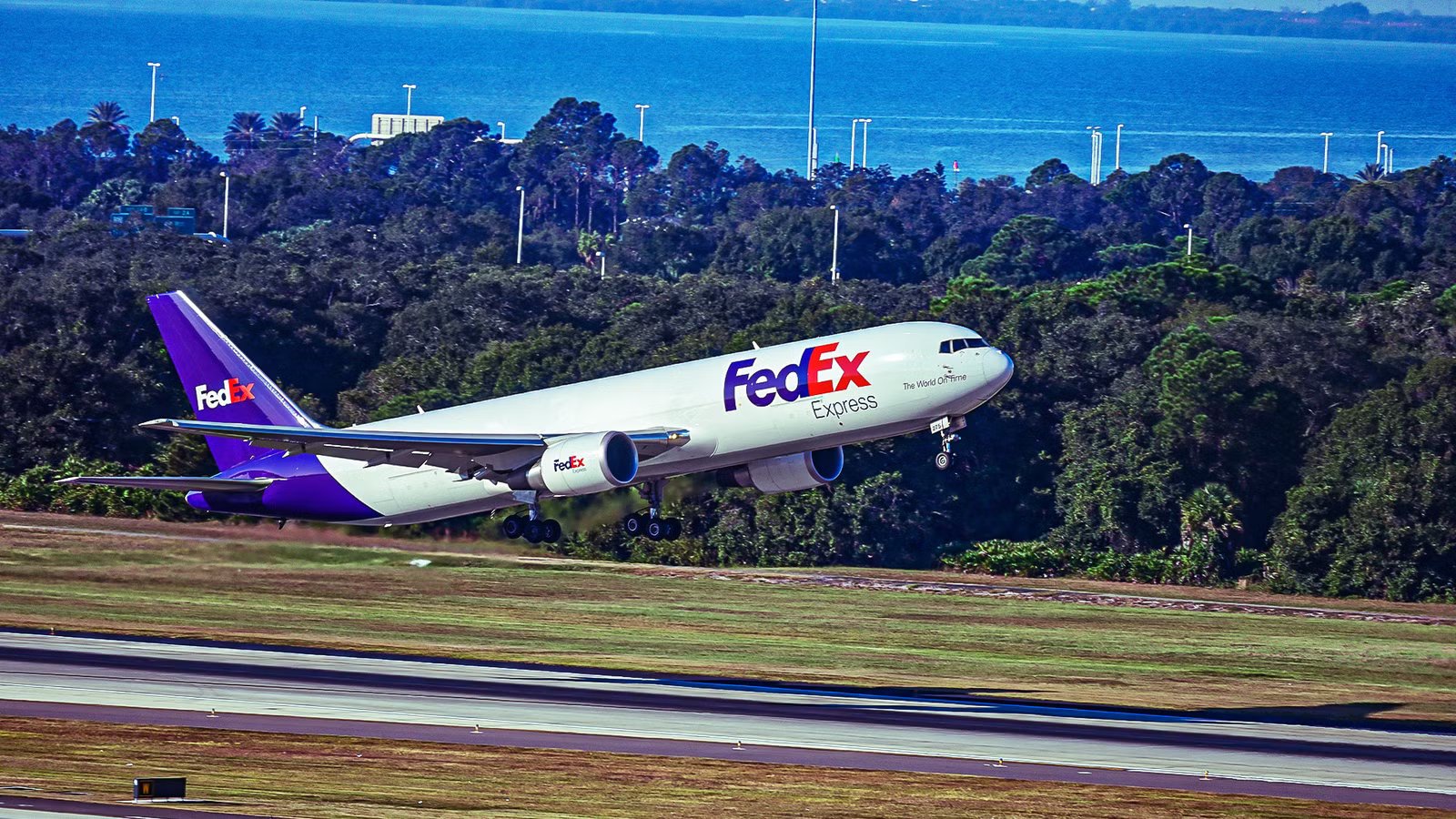
The global air cargo industry is built on aircraft that rarely receive the attention given to passenger jets. While travelers are familiar with widebody airliners carrying hundreds of people across oceans, much of the world’s express freight, medical shipments, e-commerce orders, and industrial components move behind the scenes aboard dedicated freighters. Among these aircraft, few have been as influential as the Boeing 767-300F. For nearly three decades, it has occupied a sweet spot that airlines and logistics companies desperately need: large enough to carry meaningful cargo volumes, yet efficient enough to operate routes that would be uneconomical for larger freighters.
That formula has made the aircraft extraordinarily successful. Nearly 250 commercial Boeing 767 freighters have been delivered since the program began, making them a cornerstone of the fleets operated by global cargo leaders. Yet despite its continued popularity and a remaining order backlog, production is now entering its final years. The reason has little to do with market demand and everything to do with a tightening regulatory landscape. Strict international emissions standards taking effect at the start of 2028 will effectively close the door on new commercial builds of this legendary workhorse, leading Boeing to choose to wind down production in 2027, creating a significant fleet-planning challenge for the entire air freight sector.
The Success Of The Boeing 767-300F

Unlike iconic passenger aircraft that become household names, freighters tend to build their reputations through reliability and economics rather than public recognition. The Boeing 767-300F exemplifies this reality. Introduced in the 1990s as a purpose-built cargo variant of the successful 767 passenger jet, it quickly found favor among operators seeking an aircraft capable of carrying approximately 114,640 lb (52,000 kg) of cargo over distances exceeding 3,000 nautical miles (5,556 km). That combination enabled airlines to connect major sorting hubs while maintaining the flexibility needed for regional and international freight operations.
Its popularity is reflected in fleet numbers. FedEx Express operates more than 150 Boeing 767 freighters and recently received its 152nd, making it the world’s largest operator of the type. UPS Airlines has also built a substantial fleet around the aircraft, using it extensively throughout North America, Europe, and Asia. Together, these two companies move millions of packages daily, and the 767 has become one of the principal tools that make modern overnight delivery possible.
The aircraft’s success stems from its ability to occupy a market segment that few competitors have effectively addressed. Larger freighters such as the Boeing 777F can carry significantly more cargo, but they also come with higher acquisition costs, greater fuel consumption, and a need for consistently strong demand. Smaller aircraft, meanwhile, lack the payload capacity required for major hub-to-hub operations. The 767 sits comfortably between these extremes, allowing operators to maintain higher frequencies while avoiding the inefficiencies associated with flying oversized aircraft on medium-demand routes.
A Production Line Running Out Of Time

For most aircraft programs, the end of production is caused by declining demand. The  Boeing 767-300F faces a very different reality. Airlines continue to value the aircraft, and operators are still taking delivery of newly built examples. What is ending the program is a regulatory clock that cannot be ignored.
The International Civil Aviation Organization (ICAO) has spent years developing stricter emissions and fuel-efficiency requirements for newly manufactured aircraft. These standards are designed to push manufacturers toward cleaner technologies and more efficient airframe designs. While newer aircraft have been engineered with these targets in mind, older designs face increasing difficulty meeting certification requirements.
The challenge for the 767 is that its origins date back to the late 1970s. Although Boeing continuously refined the aircraft over decades, there is only so much efficiency that can be extracted from a platform conceived long before modern environmental standards emerged. Regulators ultimately concluded that the freighter would not satisfy future requirements, effectively placing a sunset date on production.

The Striking Differences Pilots Notice Between Flying The Boeing 767 & 777
Two iconic Boeing aircraft that have a lot in common, but also, plenty of interesting differences. What really makes these aircraft unique?
Why Boeing Can’t Simply Upgrade The Aircraft

At first glance, the solution might appear straightforward. Why not install newer engines, update systems, or modify the airframe to meet the latest standards? In practice, the answer is far more complicated. Modern aircraft efficiency comes from a combination of factors rather than a single breakthrough. Advanced composite materials, highly optimized wings, sophisticated flight control systems, and next-generation engines all contribute to lower emissions.
The 767 was designed in an era when fuel prices, environmental concerns, and engineering priorities were very different. While Boeing has steadily improved the aircraft throughout its production life, the underlying airframe remains based on technology developed decades ago, limiting how much additional efficiency can be extracted from the design. Even substantial modifications would struggle to bridge that gap, as new-generation engines and aerodynamic improvements would require extensive structural changes and a costly recertification process. At that point, Boeing would effectively be creating a new aircraft rather than updating an existing one, making the economics difficult to justify for a program nearing the end of its production life.
Implementing the necessary changes would effectively require Boeing to redesign large portions of the aircraft. Such an undertaking would cost billions of dollars while serving a relatively small market segment. Given the age of the program and the limited number of future deliveries that could justify such an investment, the economics simply do not work. In many respects, creating an all-new freighter would be easier than attempting to transform the existing design into a compliant aircraft.
The Replacement Boeing Never Built

The end of the 767-300F highlights a gap in Boeing’s product strategy that has become increasingly apparent in recent years. While the company developed the technologically advanced 787 Dreamliner family for passenger operations, it never launched a dedicated freighter version capable of replacing the 767 in the cargo market, unlike Airbus has with the A350 family.
Instead, Boeing’s future freighter plans center around the 777-8F. Scheduled to enter service later in the decade, the aircraft promises dramatically improved efficiency and greater payload capability. However, it is also significantly larger than the 767 and serves a different category of operator.
This creates a dilemma for airlines that do not require the capabilities of a large intercontinental freighter. Many cargo carriers need an aircraft capable of moving moderate volumes efficiently rather than maximizing payload at all costs. Without a direct successor, operators may find themselves forced to choose between converted aircraft and larger freighters that exceed their current requirements.
The Boeing 767 Is About To Take On A New Role: Firefighter
The Boeing 767 firefighter will help tackle growing wildfires.
A Gap In The Cargo Market

The production retirement of the 767F leaves a noticeable gap in the global air cargo market. For decades, it occupied the sweet spot between narrowbody freighters and larger widebody cargo aircraft, offering a balance of capacity, range, and operating economics. That role remains as important as ever, particularly as e-commerce continues to fuel demand for fast, reliable delivery services. With no direct replacement currently available from Boeing, some operators have already broken tradition to look elsewhere; most notably, cargo specialist Atlas Air, which historically operated an all-Boeing widebody fleet, placed a landmark order for 20 Airbus A350 freighters to secure its future capacity.
Passenger-to-freighter conversions are expected to absorb part of the demand. Hundreds of passenger 767s remain available for conversion, providing airlines with a way to expand cargo fleets without purchasing newly built aircraft. The conversion market has already become an increasingly important component of global air freight capacity.
Nevertheless, conversions cannot fully replace factory-built freighters. Converted aircraft often have shorter remaining service lives and may not offer the same operational advantages as aircraft designed specifically for cargo operations. Over time, the absence of a purpose-built successor could become one of the industry’s most significant challenges.
The End Of Production, Not The End Of The Story

Although the final commercial Boeing 767-300F is expected to leave Boeing’s production line in 2027, the aircraft itself is likely to remain a fixture of global cargo networks for many years. Unlike passenger aircraft, which are often retired as airlines pursue newer cabins and passenger amenities, freighters are judged primarily on reliability, operating costs, and cargo-carrying capability. In those areas, the 767 continues to perform exceptionally well.
The aircraft’s staying power is reinforced by the extensive infrastructure built around it. Airlines have invested heavily in maintenance facilities, pilot training programs, spare-parts inventories, and operational procedures tailored to the 767 platform. Replacing those fleets would require substantial capital investment at a time when no direct new-production successor exists. As a result, many of today’s 767 freighters are expected to remain in service well into the 2030s, continuing to connect cargo hubs, manufacturing centers, and major consumer markets around the world.
What makes the 767’s departure from production particularly unusual is that it is not being forced out by a lack of demand. Instead, it is becoming a victim of evolving environmental regulations that favor newer aircraft designs. Few commercial aircraft leave the market while still enjoying strong customer support and without a true replacement waiting in the wings. When the final 767-300F is delivered, it will mark the end of one of aviation’s most successful freighter programs, but not the end of the aircraft’s influence. For years to come, the 767 will remain one of the workhorses of global air cargo, a lasting reminder of a design that proved remarkably difficult to replace.