dailynewsnblog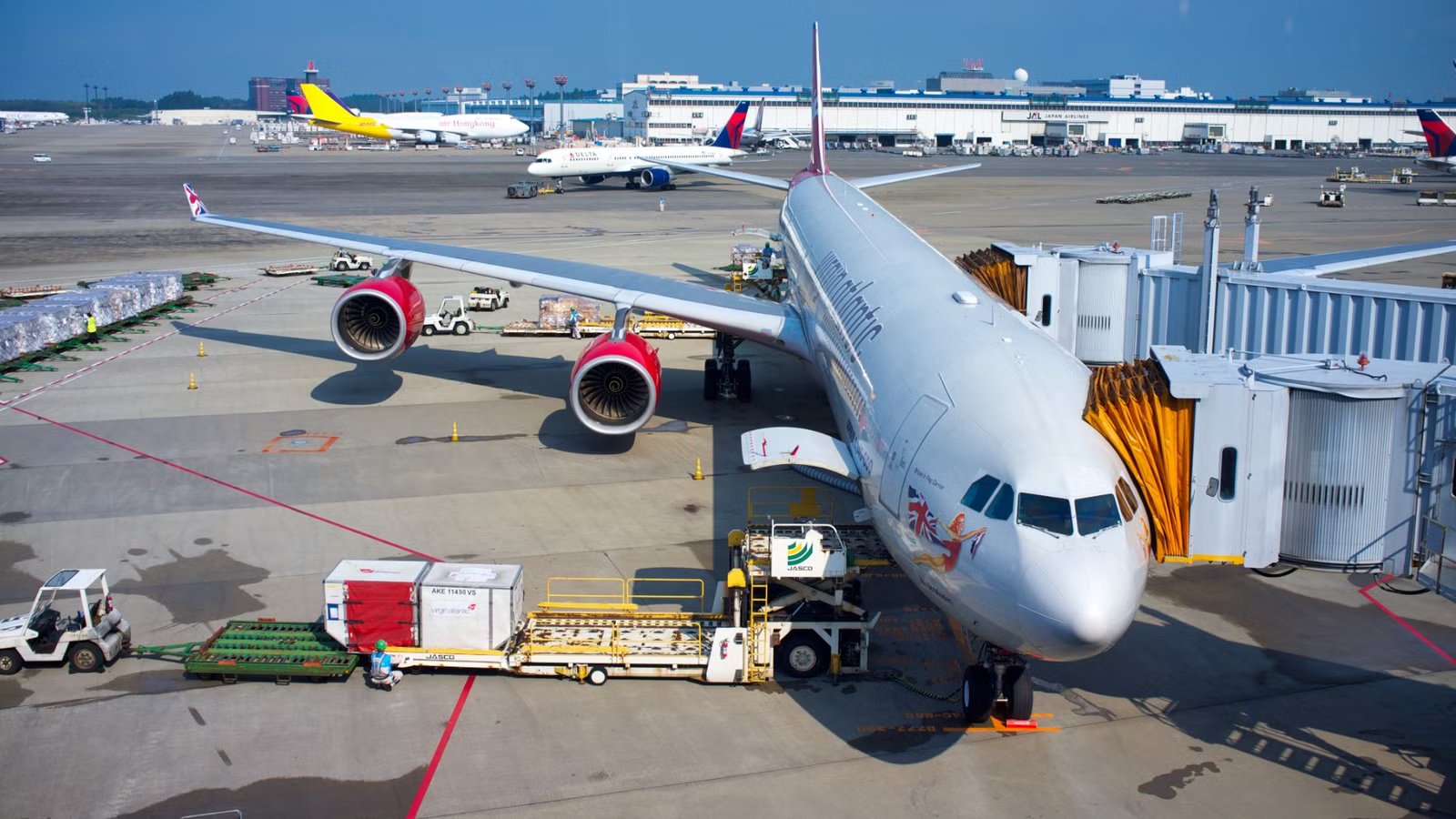
On October 18, 2026, Lufthansa is scheduled to operate its final A340-600 services from Frankfurt to  New York JFK Airport and Washington Dulles. The dates could still change, but the end is clearly near. After more than two decades of long-haul service, one of the most elegant airliners ever built is about to leave the passenger world.
I flew the A340 for 25 years and logged around 15,000 hours, half of my total career flying hours, so this retirement feels very personal. Whenever I’m asked which is my favourite airliner, I usually say the Airbus A350-1000, which I fly today. It has perfect proportions, serious power and effortless speed.
It’s lighter, quieter, smarter and more efficient than anything before it, and in my view the finest airliner Airbus has ever built. However, aviation isn’t only about numbers. The A350-1000 may be the best airliner I’ve ever flown, but the A340-600 is the one I loved the most.
The A340 Family: Airbus’s Long-Haul Quadjet

The A340 entered service in 1993, and the family eventually covered four variants: the -200, the -300, and later the larger, more powerful -500 and -600. Just under 380 were built. For many airlines, the A340 became the long-haul workhorse, with four engines, huge range, and the ability to cross oceans as if that was simply what it was designed to do. I first flew the A340-300 in 1994, and began flying from London to Hong Kong and Tokyo.
It was my first four-engine aircraft and my first experience of long-haul flying. Within a year, it also gave me my first command, at the age of 30. Airbus called the A340-300 “a finely tuned quad”. It was smooth and dependable, but with its four ‘hairdryer’ engines it wasn’t overburdened with power.
Departing Hong Kong’s old Kai Tak Airport on a hot night at heavy weight, we would always just manage to ‘scrape’ off the end of runway 13 and out over the harbour. It then took over an hour to reach our initial cruising level. The A340-300 taught you patience and forward planning. I flew it to Tokyo Narita, Boston, New York, Newark, Washington, Los Angeles and Johannesburg in the mid-1990s.
Virgin Atlantic Was The Launch Customer For The A340-600

In 2002, Virgin Atlantic became the launch customer for the A340-600. That August, I had the privilege of flying our first aircraft between  London Heathrow Airport and New York. Over the following years, 19 of these longer, far more powerful jets gradually replaced Virgin’s ten A340-300s.
Virgin Atlantic Airbus A340 Specifications | Key Figures |
|---|---|
Length | 75.36 m (247 ft 3 in) |
Engines | 4 × Rolls-Royce Trent 500, 56,000 lb thrust each |
Maximum takeoff weight | 365 to 380 tonnes, depending on variant |
Range (Virgin figure) | About 7,250 NM with a full passenger payload |
Seats (Virgin, 2019) | 308: 45 Upper Class, 38 Premium, 225 Economy |
Approximate fuel burn | About 9,000 kg (3,000 US gal) per hour, averaged over a flight |
The -600 was a very different animal. When it arrived, the -600 was the longest airliner in the world, a title it kept until the Boeing 747-8 appeared.
What Was The A340-600 Like To Fly?

The numbers are impressive, but they don’t tell you what she was like from the left seat. The -600 was overpowered in the best possible way. We regularly took off and cruised using less than 70% of the available thrust. On the occasions we used full takeoff/go-around thrust on a lightly loaded aircraft, the acceleration was breathtaking. It was the kind of takeoff that reminds you why you fell in love with flying in the first place.
It was also very capable. Even with an engine out, a lightly loaded -600 could keep climbing to a higher, more efficient altitude and carry on. That gave it a quiet, reassuring four-engine confidence, and as a captain, you always felt there was something in reserve. What I loved most, though, was its shape. The Airbus A340-600’s long, slender fuselage and elegant lines gave it a beauty of its own.
It was perfectly proportioned, equal parts grace and power, with two huge Rolls- Royce Trent engines beneath each wing. It was remarkable that an aircraft so large could look so light and sleek. To my eye, Virgin Atlantic’s purple-and-red livery of that era was the finest the airline ever wore, and it looked its best on two aircraft: the Boeing 747-400 and the Airbus A340-600. The latter wasn’t the fastest, the newest or the most efficient airliner, but it had both grace and character.
Two Decades Around The World

For the best part of two decades, the -600 carried me around the world, to Hong Kong, Tokyo, Sydney, Johannesburg, Cape Town, Lagos, New York, Boston, Washington, Orlando, Miami, San Francisco, Los Angeles, Atlanta, Dubai, Delhi and Mumbai. Those places became much more than destinations. They became memories, friendships and chapters of a life lived at 38,000 feet.
I remember sunrise over the Indian Ocean, the soft glow of the flight deck on a long night dodging storms over Africa, and the wonderful Virgin Atlantic cabin crews who made every trip feel like a family vacation. At the end of it all came the quiet satisfaction of bringing everyone safely home.
Why The Four-Engine Era Ended

Several forces came together against the A340. Through the 1990s and 2000s, ETOPS rules, which govern how far a twin-engine aircraft may operate from a suitable diversion airport, were extended to 180 minutes and beyond. Twins such as the Boeing 777 and Airbus A330 could now fly direct oceanic routes that had once belonged to four-engine aircraft.
Secondly, jet fuel cost around 50 cents a gallon in the late 1990s and reached close to $4 at its 2008 peak. With four thirsty engines, the economics turned firmly in favour of efficient twins. The pandemic delivered the final blow. In January 2019, well over 100 A340s flew every day.
When travel collapsed in 2020, quadjets were among the first aircraft parked, and most never returned. Virgin Atlantic had already retired its A340-300s in 2015, and its last A340-600 commercial flight operated on March 8, 2020. I had moved to the A350-1000 only a few months earlier, but part of me never left the A340-600’s flight deck.
A Second Act As A Freighter

Some -600s weren’t finished yet, including several I used to fly. When passenger flying stopped in 2020, supply chains still had to keep moving. Medical supplies, perishable food and factory parts all needed transporting, just as the belly-hold capacity of the world’s passenger fleets had disappeared. UK-based European Cargo stepped into that gap.
From its base at Bournemouth Airport, the airline started with a couple of former Virgin Atlantic A340-600s and a team of highly experienced pilots who were also grounded and now available. At first it carried protective equipment and test kits. Later it flew everything from urgent freight to the e-commerce parcels that now arrive on our doorsteps from all over the world. The operation grew into a fleet of seven A340-600s. What made European Cargo special wasn’t only the aircraft: it was the people.
They built an airline around camaraderie, professionalism and a shared love of flying, which reminded me very much of the airlines I grew up in. Many of their pilots, managers and crew are former colleagues and close friends. However, in June 2026, European Cargo entered administration. The pressures behind it included higher fuel burn and maintenance costs than newer freighters, returning belly-cargo capacity, and wider geopolitical and market instability.
Some of my friends there are close to retirement and may have flown their final sectors. The younger ones will, I’m sure, be back in the air soon. Talent, experience and determination have a habit of finding their way back to the flight deck. European Cargo gave an iconic aircraft a remarkable second act, and it showed what a small team of passionate professionals can achieve. Still, as I write this, I have received news from colleagues that European Cargo may “rise like a phoenix” as European Aviation.
Lufthansa: The Last Major Operator

That brings us back to Lufthansa: no airline operated more A340-600s, or for longer. Lufthansa took 24 of them from 2003 onwards and kept them flying long after most carriers had moved to twins. Delivery delays on new widebodies bought the type extra time, but that time is now running out.
Fittingly, one of its replacements is the A350-1000. Elsewhere, only a handful of A340s remain in service: some continue to have a life in VIP aviation. AirX, which has a base at  London Stansted Airport, operates an A340-300 with 100 lie-flat seats for private group charters, including sports teams and music tours.
Other examples remain in VIP and royal transport roles, so retirement from scheduled airline service doesn’t necessarily mean the end of the aircraft’s flying career. So, if you see an A340-600 in the sky over the coming weeks, stop and watch it for a moment. That long silhouette and the sound of four engines climbing away will soon be gone.
The Bottom Line

Over 25 years on the A340, first the -300 and then the -600, I collected more memories than any logbook can hold: extraordinary destinations, wonderful crews, and countless passengers who reached home safely without ever knowing the aircraft carrying them was someone’s favourite.
Today’s modern airliners are extraordinary, and I’m proud to fly the A350-1000. However, some aeroplanes carry passengers and cargo, and others carry a lifetime of memories. The Airbus A340-600 was a beauty and a beast, and a true long-haul legend. The skies will look a little emptier without it.
Captain Chris Pohl is a senior training captain and A350 examiner with 45 years of commercial flying experience. He is the author of ‘Calm At 38,000 Feet,’ and helps nervous flyers on social media as @captainchris.