dailynewsnblog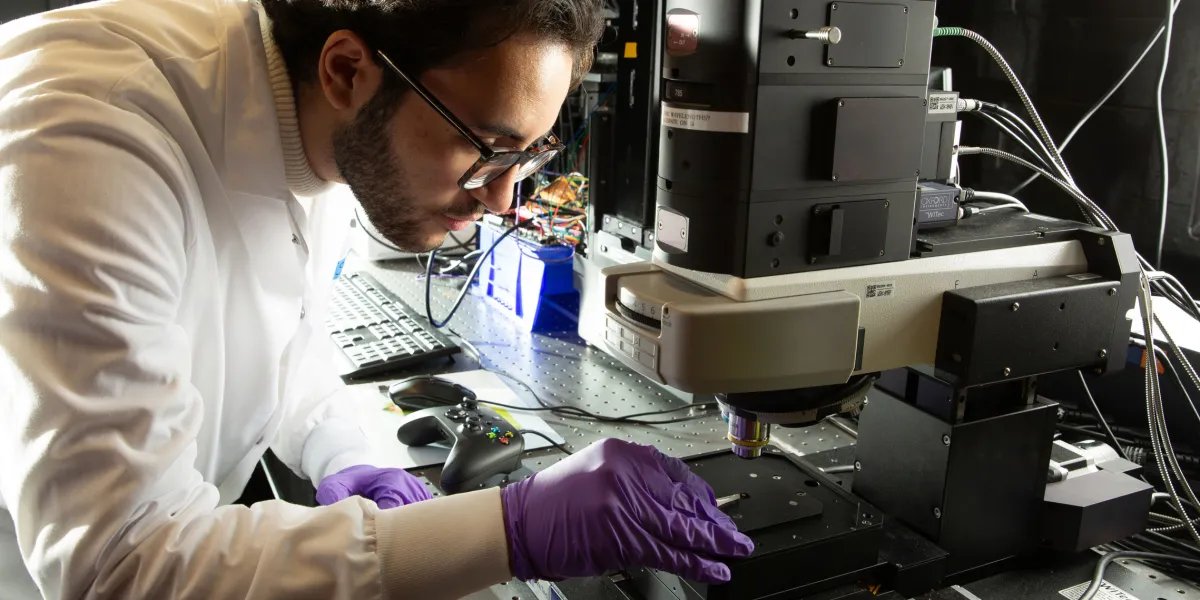

TONY PULSONE
If the person is healthy, the particles would eventually circulate out of the body intact. In someone with a disease such as pneumonia, however, the enzymes would snip off the biomarkers, freeing them to be exhaled and measured.
In a 2020 paper, Bhatia’s lab demonstrated that the nanoparticles could be used to detect pneumonia in the breath of mice, but the measurements required laboratory-grade instruments not available in most doctor’s offices. Now Loza Tadesse, an assistant professor of mechanical engineering, and her colleagues have shown they can detect exhaled biomarkers of pneumonia at extremely low concentrations using an enhanced form of Raman spectroscopy, an optical technique in which molecules are illuminated with light.
They plan to incorporate the new sensor into a handheld instrument that could be used in clinical settings or at home. “We envision that a patient would inhale nanoparticles and, within about 10 minutes, exhale a synthetic biomarker that reports on lung status,” says Aditya Garg, an MIT postdoc and lead author of a paper on the work.
Detecting diseases like pneumonia is not the system’s only potential application. “It can sniff out industrial chemicals or airborne pollutants as well,” Tadesse says.