dailynewsnblog
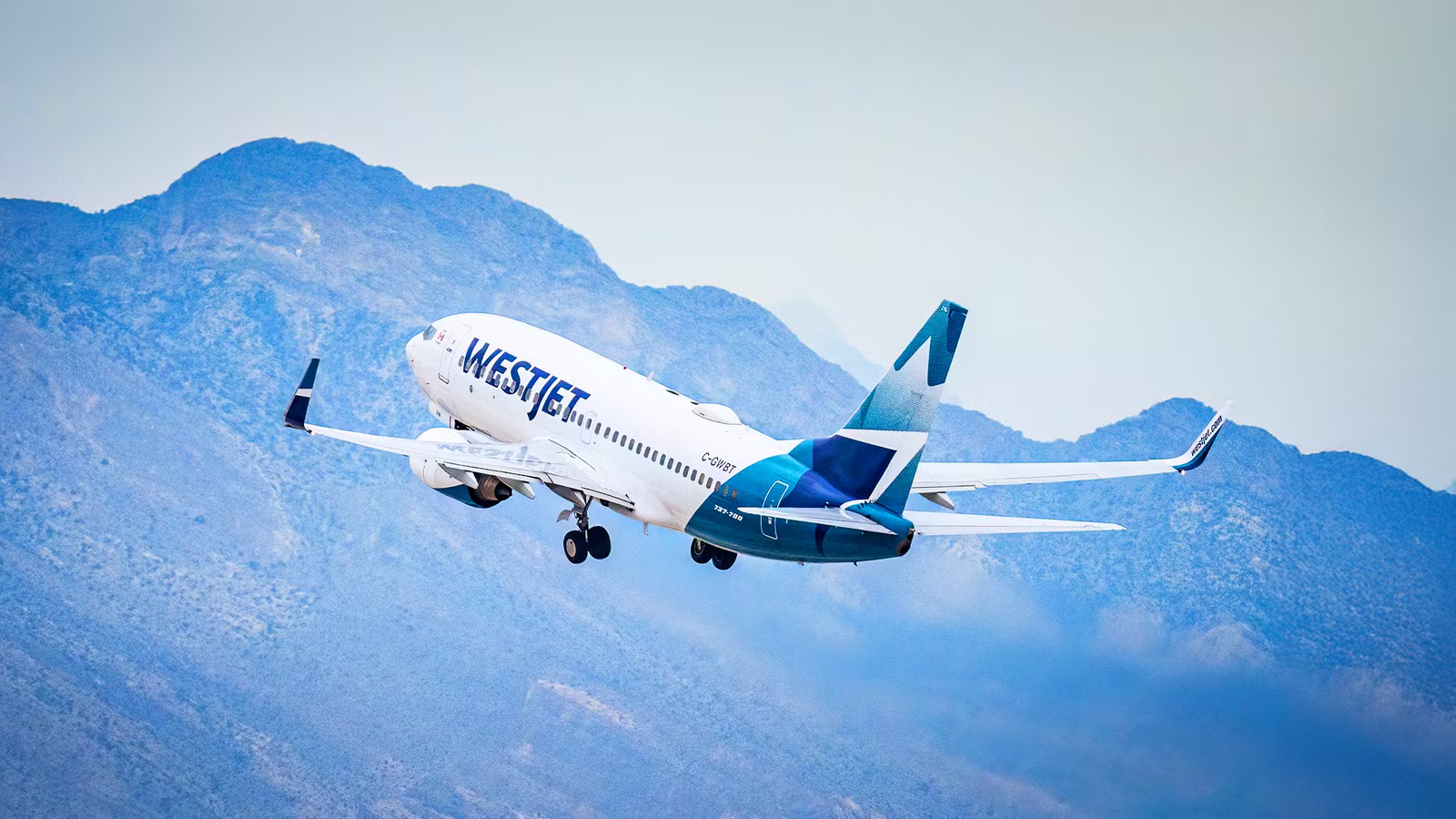
The first wave of exit of the Boeing 737-700 Next Generation airliners is beginning for Canada’s WestJet despite the delayed arrival of the upcoming 737 MAX 10 that will succeed the veteran narrowbodies. The 27-strong fleet will be phased out in a sale-and-leaseback deal with New York-based FTAI Aviation. The airline is turning its older aircraft into cash as a stopgap amidst a 25% drop in transborder traffic to the US and the rollback of its fleet renewal, as Aviation Week reported.
The timing of the announcement is uncanny given that the Federal Aviation Administration has announced a brief stall on the long-overdue certification of the MAX 10 over a recently discovered software bug. Although the new flaw is not considered an in-flight safety risk, it will force the already behind-schedule variant of Boeing’s latest and greatest 737 to take even longer to complete final documentation before going into full-rate manufacturing.
Ever since the two crashes of the 737 Max Jets in 2018-2019 that claimed the lives of nearly 350 people, the program has impacted the aviation industry all over the world. With the MAX 7 and the MAX 10 still not in active service and the overall 737 MAX production at low output, carriers and lessors alike have suffered operational impacts for years. This leaseback strategy gives WestJet vital operational flexibility if its new Boeing deliveries slip further. Meanwhile, FTAI Aviation secures reliable leasing assets and a steady supply of parts for its maintenance business division.
What WestJet Actually Sold To FTAI

The 27 Boeing 737-700 aircraft involved in the transaction with FTAI Aviation are being split into two categories, meaning only a specific portion of the fleet will be parted out. The ten aircraft that were already off-lease are being completely retired from passenger service and will be parted out. FTAI’s Aerospace Products division is taking these specific airframes to disassemble them and harvest their highly valuable CFM56-7B engines and modules.
The dual-structured transaction serves as a strategic win for both companies by aligning WestJet’s need for financial and operational flexibility with FTAI Aviation’s demand for scarce engine components. These components will immediately enter FTAI’s global inventory to support its maintenance, repair, and exchange customers. The remaining 17 aircraft are not being parted out right now. These jets are wrapped into a formal sale-leaseback agreement managed through FTAI’s Strategic Capital business.
Parting With Old 737s To Power The Global Fleet

WestJet sold its older airframes to unlock capital and is only leasing some of them back to keep them flying under its own colors. This allows the airline to maintain its active flight schedules uninterrupted while it waits to transition to next-generation models down the road. At least one former WestJet jet, tail number C-GWBF, has already been re-registered in the United States under tail number N757FT specifically to be broken down for spare parts.
Mike Scott, WestJet Group Executive Vice President and Chief Financial Officer, gave this remark on the sale: “This 27-aircraft transaction is a strategic milestone that officially marks the start of our retirement of our 737-700 fleet. We’re pleased to partner with FTAI Aviation Ltd. to make this happen, and we look forward to building on this relationship for future opportunities.” David Moreno, President at FTAI, also commented on the deal:
“We are pleased to expand our relationship with WestJet through this transaction. It demonstrates how our Strategic Capital and Aerospace Products businesses work together to offer airlines comprehensive fleet solutions, from sale-leaseback capital for in-service aircraft to a flexible exit for aircraft transitioning out of the fleet. For Aerospace Products, the retiring aircraft will add CFM56-7B engines and modules to the exchange pool to support our customers’ maintenance requirements.”
For WestJet, the deal unlocks substantial cash reserves. This move allows the Canadian carrier to shed ownership costs of less efficient airframes during a period of high fuel prices and a drop in transborder demand, which is normally the greatest source of traffic, helping to ease the financial side of its transition to newer aircraft.
How Fuel Prices Moved The Schedule Forward

The cumulative impact of three major geopolitical events that have strained the global aviation industry as well as the supply of oil across the world directly contributed to the decision made by WestJet to sell these airplanes. Those three major ongoing crises are Russia’s invasion of Ukraine, Operation Epic Fury in Iran, and the feud between the administration of President Donald Trump and Canada’s leaders over trade and security.
Together, these have created a highly volatile energy market that ultimately reshaped WestJet’s long-term fleet strategy. Global aviation was already managing elevated energy baselines established in 2022 following the Russian invasion of Ukraine. However, the crisis escalated drastically after the US and Israel launched Operation Epic Fury against Iran. In retaliation, Tehran disrupted maritime transit through the Strait of Hormuz, choking off global oil flows and driving international crude prices past $100 to $120 a barrel.
The Fuel Price Pain Point Forcing Airlines To Rethink Fleet Plans

For commercial airlines, this multi-front geopolitical shock caused jet fuel prices to more than double, soaring from an average of $2.50 per gallon up to $3.99 per gallon. Because fuel typically accounts for 20% to 25% of an airline’s overall operating structure, a 100% price surge inflated WestJet’s absolute baseline costs by a staggering amount.
Compounding the volatility was U.S. President Donald Trump’s controversial domestic energy policy. After domestic fuel prices hit painful records due to the war in Iran, Trump bypassed international allies and coordinated a deal directly with Vladimir Putin to temporarily lift sanctions on imports of Russian diesel.
WestJet’s legacy Boeing 737-700 airframes burn significantly more fuel per seat than modern variants. Under standard fuel prices, these fully owned planes served as inexpensive buffer capacity; under doubled fuel prices, they became financial drains. Instead of absorbing ongoing losses, WestJet used the crisis to completely restructure. Selling the ten off-lease airframes for parts and utilizing a sale-leaseback on 17 active units allowed WestJet to simultaneously shed the long-term ownership costs of an inefficient fleet, unlock immediate liquidity, and maintain capacity.
A Software Flaw Bottlenecking An Assembly Line

WestJet most likely would not be flying these planes right now if it were not for the exceptionally long delay of the 737 MAX 10 due to the unprecedented manufacturing deficiencies which have caused Boeing to delay its debut for years. The most recent problem is a newly discovered software bug which can cause a go-around if the flight crew modifies the pre-programmed Flight Plan during the landing phase.
The U14 Flight Management Bug causes the automated Vertical Navigation (VNAV) system to unexpectedly disengage, dropping the autopilot into a rudimentary pitch mode. The Federal Aviation Administration (FAA) stepped in to review the risk. On October 2, 2026, the FAA’s review board officially ruled that the glitch does not pose an imminent flight safety risk because cockpit warnings are completely transparent and pilots maintain direct manual control.
Specification | Boeing 737-700 | Boeing 737 MAX 10 |
|---|---|---|
Length | 110 feet, 3 inches (33.6 meters) | 143 feet, 9 inches (43.8 meters) |
Capacity | 149 passengers | 230 passengers |
Engine | CFM International CFM56-7B | CFM International LEAP-1B |
Maximum Takeoff Weight | 154,544 lb (70,100 kg) | 202,825 lb (92,000 kg) |
The U14 glitch is only a minor footnote in a massive, systemic backlog. The entire 737 MAX lineage is fundamentally constrained by the physical footprint of the original 1960s 737 airframes. To compete with the fuel-efficient Airbus A320neo without spending billions to build a clean-sheet plane, Boeing bolted much larger, ultra-efficient LEAP engines onto the legacy body.
Instead of redesigning the airframe or mandating expensive flight simulator training for airlines, which would destroy their marketing promise that pilots could transition seamlessly from older 737s, Boeing implemented the Maneuvering Characteristics Augmentation System (MCAS).
Boeing purposely omitted MCAS from pilot manuals and training briefs, so the plane would qualify for a cheap, shared type rating. The corporation essentially hid a catastrophic, single-point-of-failure system from the very people flying it. This cutting of corners directly caused the crashes of Lion Air Flight 610 in 2018 and Ethiopian Airlines Flight 302 in 2019, killing 346 people and turning the MAX family into a permanent symbol of dangerous corporate negligence.
The Operational Math Of The Leaseback Hedge

A sale-and-leaseback agreement provides far cheaper operational insurance than outright ownership. If Boeing 737 MAX 10 delays drag on, WestJet maintains its planned capacity without holding depreciated jets as permanent, dragging assets. Conversely, if a software fix arrives quickly, the airline can let the leases lapse as fresh aircraft land.
However, this hedge carries steep penalties; because the 737 MAX 8 is the actual direct replacement for the aging 737-700, the deal functions as a shield against delivery disruptions across the entire MAX family rather than the MAX 10 alone. Furthermore, the thirsty 737–700 burns significantly more fuel per seat, meaning WestJet is paying monthly rent on top of soaring fuel bills just to preserve short-term fleet flexibility.
The buyer’s side of the trade reveals the true structural thesis of the deal. FTAI Aviation did not merely buy aircraft; it acquired mature airframes powered by CFM56 engines that it can service, overhaul, and rebuild entirely in-house. Engines are where the profit sits in commercial aviation, as evidenced by FTAI’s recent 78% surge in Aerospace Products revenue, driven by a 61% jump in engine module output.
Because the global CFM56 market suffers from a severe supply deficit, module orders vastly outpace FTAI’s manufacturing capacity. Each retired 737-700 carries two highly valuable CFM56-7B powerplants, representing the true worth of the airframe. By using its $2 billion strategic financing facility to buy these assets, FTAI secures a captive customer for its proprietary maintenance network, earning predictable rental income from the lease and a second, highly lucrative stream from mandatory engine upkeep.