dailynewsnblog
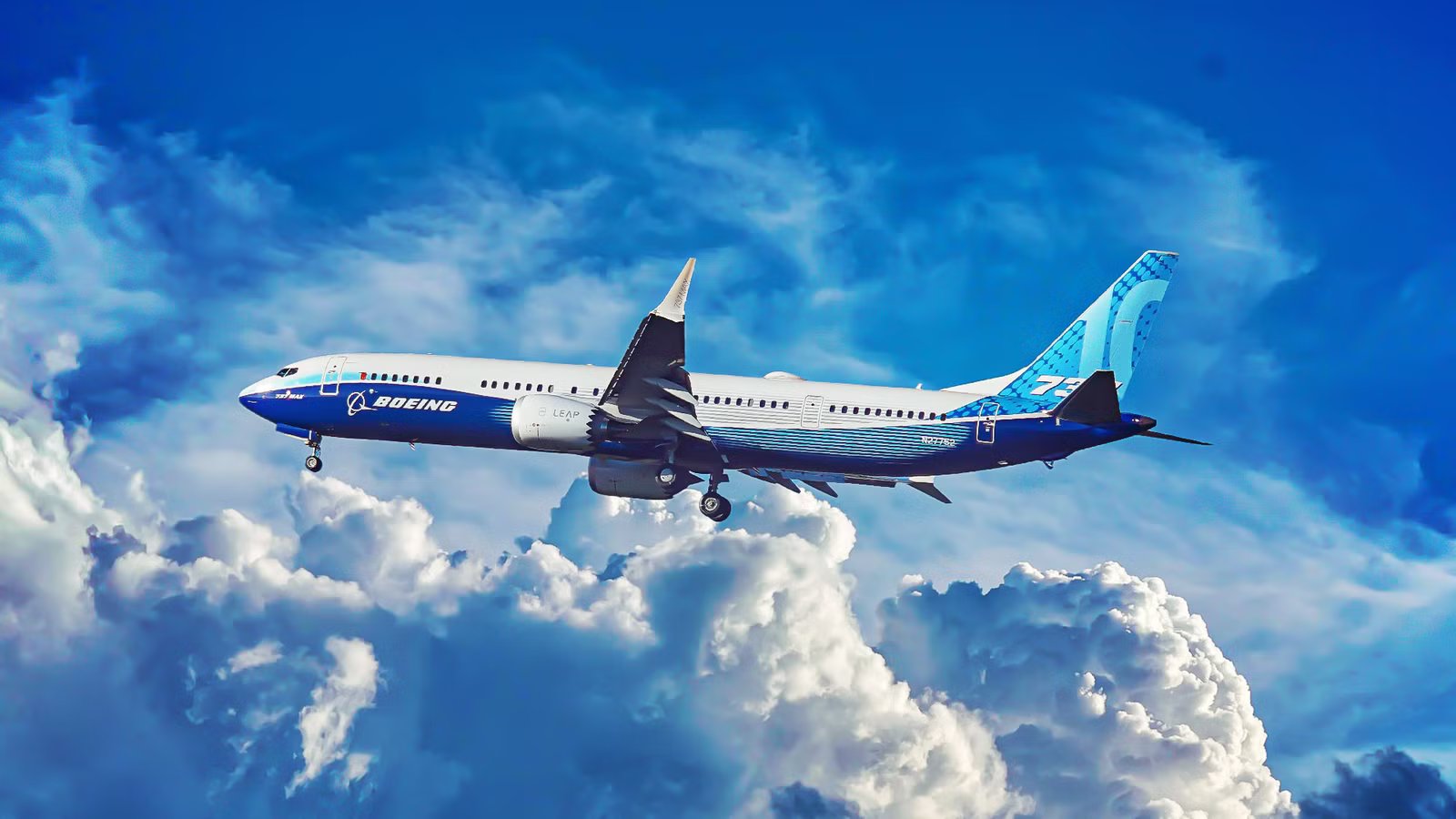
 Boeing has officially secured Federal Aviation Administration (FAA) type certification for its long-delayed 737 MAX 10 aircraft, marking a major milestone for the American planemaker as it now works to bring the largest member of its best-selling narrowbody family into commercial service. Coming in the form of an amended type certificate, the announcement came on October 20, 2026, by US Transportation Secretary Sean Duffy during a visit to Boeing’s new 737 MAX production line in Everett, Washington.
The approval brings an end to a lengthy certification campaign that has repeatedly pushed back the MAX 10’s anticipated entry into service. With Boeing originally expected to begin deliveries of the type in 2020, the MAX 10 has faced a slew of technical challenges, further compounded by additional testing requirements and heightened regulatory scrutiny following the two fatal Boeing 737 MAX 8 accidents in 2018 and 2019, as well as several high profile incidents in the early 2020s. Overcoming those challenges and with final FAA certification in hand, Boeing will now look toward delivering the MAX 10 to its long list of awaiting customers, with the aircraft’s entry into commercial service expected early next year.
Boeing 737 MAX 10 Certification Finally Concludes After Years Of Delays

The certification of the Boeing 737 MAX 10 represents the product of years of engineering work, flight testing, and, of course, regulatory reviews. As the longest and highest-capacity variant of the 737 MAX family, with a length of 143 feet 8 inches (43.8 meters) and a maximum seating capacity of 230 passengers, the MAX 10 offers airlines increased passenger capacity while retaining commonality with Boeing’s best-selling narrowbody platform.
Commenting on the MAX 10’s achievement, president and CEO of Boeing Commercial Airplanes Stephanie Pope remarked:
“Completing the certification program clears the path for us to deliver a Boeing airplane that will set a new standard in commercial aviation. The 737-10 offers greater capacity, longer range and the best seat economics in its class, a platform that will create more value and opportunities for airlines around the world.”
Several challenges on the technical side contributed to the MAX 10’s extended timeline. Among the issues requiring additional work was the 737 MAX’s engine anti-ice system, an issue that pushed back certification of both the Boeing 737 MAX 7 and MAX 10. Late last year, Boeing finally introduced a new engine anti-ice system that resolved the issue of potential thermal damage to the MAX’s engine during prolonged use of the anti-ice system, allowing the aircraft to continue through the certification process. Additionally, Boeing recently completed testing on an enhanced angle-of-attack system intended to simplify flight deck indications and prevent erroneous warnings, as well as a fix to a software glitch that threatened to push certification to 2027.
In total, from its first flight on June 18, 2021, the MAX 10’s certification process has spanned over five years, 976 flights and over 2,060 flight hours. The final major procedural milestone came on Friday, October 16, when Boeing and the FAA held a Type Certification Board meeting to review the aircraft ahead of its anticipated approval. The meeting was reported to have concluded successfully, clearing the way for Boeing to submit its Project Statement of Completion before the formal certification was signed early this week.
“After extensive safety reviews — including thousands of hours of test flights — the team at the FAA is ready to approve this critical aircraft for sale,” commented US Department of Transportation secretary Sean Duffy.
MAX 10 Certification Is A Major Win For Boeing And Its Customers

For Boeing, the 737 MAX 10 represents over 30% of its order backlog for Boeing 737 family aircraft, totaling 1,555 aircraft to 30 customers. With a typical two-class seating capacity of 185 to 210 passengers and a range of up to 3,100 nautical miles (5,740 km), the MAX 10 will serve as a workhorse aircraft on high-density medium-haul routes while offering the best per-seat operating economics of any narrowbody aircraft available on the market. Its appeal is particularly strong among carriers with extensive 737 fleets, where commonality with the other 737 types offers cost reductions in training and maintenance.
Additionally, certification is a crucial step to converting Boeing’s massive MAX 10 backlog into deliveries, especially as the American manufacturer has invested in expanding its 737 production capabilities. In July 2026, Boeing opened a new 737 MAX final assembly line in Everett, the same location where today’s certification announcement took place. This assembly line, the fourth 737 MAX production plant and first outside of Renton, Washington, now allows Boeing to produce up to 52 aircraft per month, potentially increasing in the future.
Top 5 Largest 737 MAX 10 Customers | |
|---|---|
Airline Operator | Firm 737 MAX 10 Commitment |
United Airlines | 167 |
Ryanair | 150 |
American Airlines | 115 |
Delta Air Lines | 100 |
Pegasus Airlines | 100 |
Come 2027, WestJet will become the MAX 10’s launch customer when it becomes the first airline to receive and operate the new 737 variant, assuming smooth sailing with Transport Canada’s certification of the type. Seattle-based  Alaska Airlines plans to receive its first MAX 10 by the spring of 2027, with hopes to commence passenger operations by mid-May. Across the pond, Ryanair, which holds one of the largest MAX 10 orders for up to 300 aircraft, has said it plans to receive its first 15 aircraft in spring 2027. Meanwhile,
 United Airlines, one of the first carriers to order the MAX 10 back in 2017, has already scaled back its ambitions with the largest MAX variant, now planning to accept 167 aircraft with many of its previous orders moved to the slightly smaller Boeing 737 MAX 9 instead.
All Four 737 MAX Variants Now Certified, But Issues Remain

With the MAX 10 now certified, all four members of Boeing’s 737 MAX family have received type certification from the FAA. The MAX 8 and MAX 9 are already in commercial service worldwide, with nearly 2,500 aircraft already delivered. Less than three months ago, the 737 MAX 7 joined as it was granted FAA certification and added to Boeing’s production certificate. The MAX 10’s approval completes a major milestone for the family, giving Boeing a broader range of options to offer airlines as it looks to compete more heavily against Airbus, and, in particular, the success of the A321neo. “We are delighted to complete the 737 MAX family and provide our customers the most-efficient and flexible single-aisle airplane portfolio in the industry,” said Pope.
However, despite the successful certification, it comes amid continued concerns over a software glitch affecting certain versions of the 737 MAX’s flight management computer. The issue can cause the aircraft’s vertical navigation (VNAV) system to disengage during certain missed-approach scenarios, potentially increasing pilot workload during a critical phase of flight. Despite being deemed to not pose a safety concern as pilots retain clear control of the aircraft throughout the process, several airlines, including United Airlines and Southwest Airlines, have said they will not accept aircraft installed with the problematic software in question.