dailynewsnblog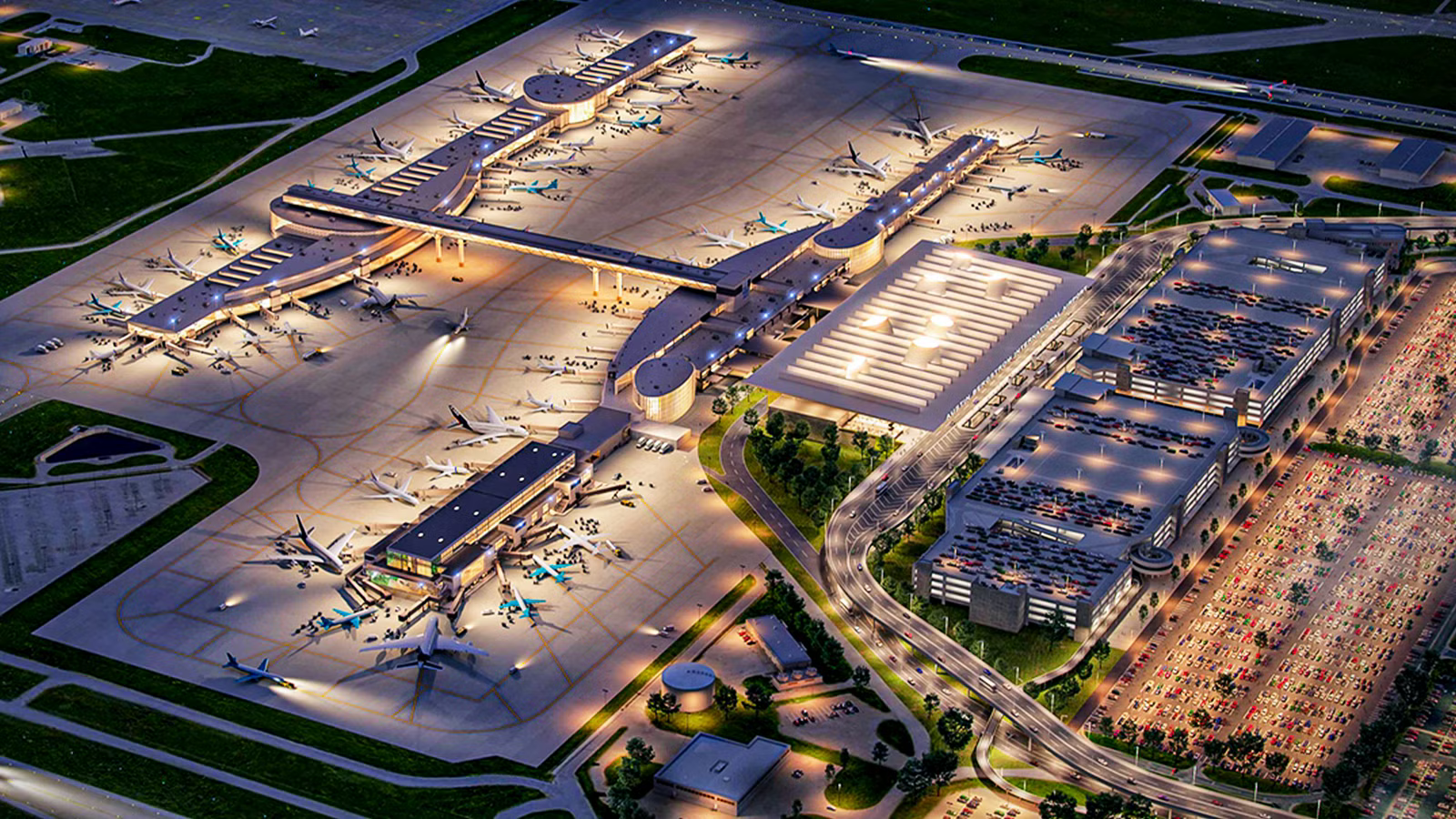
Airlines rarely volunteer to bankroll an airport’s multi-billion-dollar expansion plans, but seven major carriers in Austin Bergstrom International Airport (AUS) just signed away a decade of funding to do exactly that. Five passenger airlines and two cargo carriers at Austin finalized ten-year leases committing them to fund a massive $5 billion modernization program, even though many of the new gates will not open until the early 2030s.
In exchange for this heavy financial backing, the carriers secure a permanent, larger footprint at a facility slated to nearly double from 34 gates to 66, as Bisnow covered. The cost of this ambition will hit airlines and passengers directly via boarding fees. The airport’s finance chief expects these charges to climb from roughly $15 per departing passenger to about $20.
The City of Austin reported that zero local taxpayer dollars will be used to fund the enhanced terminal. The financial burden has been taken on entirely by the airlines, with future enplanement fees offsetting the up-front investment with revenue after traffic numbers start climbing. Still, what was so compelling that Southwest, Delta, United, American, and Alaska were willing to absorb so much sunk cost in an industry notorious for its sensitivity to economic pressure?
A Terminal Built For 11 Million Passengers

The terminal upgrades that will double the number of jet bridges at Austin are not for the sake of vanity but come in direct response to steadily climbing traffic that legacy facilities are struggling to keep up with. Austin-Bergstrom was originally designed to accommodate 11 million passengers annually, but it now stretches its resources to handle an estimated 15 million today. Looking ahead, it is now on track to serve a record 22 million passengers by the end of the year.
Pushing double the airport’s intended capacity through just 34 active gates has created operational gridlock. That bottleneck is generally attributed to Central Texas’s rapid technology boom and high-traffic events like SXSW and Formula 1, which draw crowds from across the US.
Kirk Watson, Mayor, City of Austin, gave these remarks in the January announcement of the cooperative expansion plan:
“I’m proud to have been here when this airport first opened, and I’m proud to stand here again as we usher in a new era for aviation in Central Texas. The expansion we commit to today will define the expansion of the future—supporting travelers, strengthening our economy, and preparing Austin for the decades of growth ahead. We are grateful to the airlines for believing in Austin, investing in Austin, and helping us build what comes next.”
Terminal crowding is still just one trigger, as the airlines explicitly lobbied for more capacity. AUS-based carriers initially demanded more than 20 additional gates, which would have forced the airport to also scale up parking, curbside drop-off space, and security checkpoints in lockstep with the expanded concourses.
Austin ended up approving 12 more gates than the 20 it began with when talks opened in August of last year. Those extra gates raised the estimated cost of the modernization program from $4 billion to over $5 billion. That capital was raised thanks to the underlying ten-year lease agreements that actually translate that appetite into a financial commitment that will fund improvements years before the buildings are erected.
The Scope Of The Journey With AUS Program

The improvements coming to the facilities at Austin Bergstrom Airport include an all-new 700,000-square-foot midfield Concourse B. Along with that will be a tunnel that goes underneath the tarmac to connect with the Barbara Jordan terminal’s passenger and cargo corridors. Concourse B will account for 26 gates in total when it is complete.
Meanwhile, the Westgate and infill expansion will add 84,500 square feet to the existing terminal, replacing 12 older passenger boarding bridges and adding three brand-new gates. It also brings enhanced concessions, quiet sitting zones, and an open-air observation deck. A new ‘Yellow’ parking garage is also being built to add 7,000 spaces ahead of the new terminal’s opening.
The old ‘Red’ garage will be demolished to make way for an Arrivals and Departures Hall. International Arrivals is being expanded with a 20,600-square-foot customs area. There will be new dual-use baggage carousels and modernized processing areas to improve the efficiency of security checks by Customs and Border Protection officers.
Ghizlane Badawi, Chief Executive Officer, Austin-Bergstrom International Airport, said in the official press release:
“This agreement reflects years of partnership, thoughtful negotiations, and shared vision with our airline partners. Their commitment provides the financial foundation we need to modernize our facilities, transform customer experience, and build the infrastructure needed to support Central Texas’ continued growth for generations to come.”
“AUS would not be where it is today without the collaboration and investment of our airlines, and we are deeply grateful for their trust and partnership as we shape the future of air travel in Central Texas.”
On the airside, AUS is undertaking construction of 2 miles (3.2 km) of concrete parallel taxiways and connecting bridges. The new tarmac will route aircraft around midfield without interrupting operations at existing runways and terminal gates. Baggage systems are also being upgraded to accommodate as many as 30 million flyers per year, with 1.5 miles (2.4 km) of new automated conveyor belts capable of sorting and screening 4,000 bags per hour.
The Per Passenger Price Tag

To pay for so many improvements, the budget has gradually crept from its initial $4 billion placeholder to $5 billion after adding gates. Some other reports speculate that the true cost could be closer to $5.5 billion or even reach $6.5 billion. Under the cost-recovery structure of the lease, every single budget revision automatically passes debt service directly onto the carriers, which in turn pass that cost on to customers in the form of higher airfares.
The airport’s financial chief, Rajeev Thomas, told commissioners that boarding fees would go up to roughly $15 per passenger to about $20, though he declined to predict how much of that surge would be passed into ticket fares. These charges cover everything from ticket counters to baggage claims. For all the major airlines involved, signing a long-term lease was a calculated investment in future market share.
Notably, Austin lacks a dominant home carrier. In such a non-hub market, the airline holding the most real estate can aggressively add flight frequencies while blocking its rivals from expanding. Southwest anchored its position by claiming 18 gates to support an active local crew base, while Delta locked down 15 gates and invested $250 million in terminal upgrades to cement its rapid Texas expansion. All of the airlines helping to fund the expansion at AUS are: Southwest Airlines, Delta Air Lines, United Airlines, American Airlines, Alaska Airlines, FedEx, and UPS.
Conversely, American Airlines scaled back to serving its primary hubs, securing just nine gates that it will not fully utilize until the next decade. Under the lease’s use-it-or-lose-it clauses, American will eventually be forced to scale up its flight operations or permanently forfeit the space to its competitors. These operational rules prevent airlines from hoarding real estate, ensuring that newly constructed terminal space does not sit idle and bottleneck the airfield.
Austin’s New Strategic Gate Allocations

The Airline Use and Lease Agreement, alongside companion cargo pacts, serves as the framework that outlines the business relationship between AUS and its resident carriers. Taking effect on January 1, 2026, the recent batch of binding agreements will run through September 2035. This commits all the airlines that signed on the dotted line to operate out of Austin for the full ten-year term.
In exchange for absorbing this long-term financial risk, signatory airlines gain preferential control over specific gates within the expanded layout. Under the city’s master plan, Southwest Airlines acts as the anchor tenant for the brand-new, 26-gate Concourse B, locking down 18 dedicated gates alongside five for United and three common-use domestic gates.
The redeveloped Barbara Jordan Terminal, reconfigured as Concourse A, positions Delta Air Lines as its primary anchor with 15 gates. DAL will be flanked by nine for American, one for Alaska, and eight common-use gates equipped for international flights. This blueprint hands SWA and DAL combined control over exactly half of the airport’s future 66-gate capacity.
The airlines must fund their proportional share of the $5 billion infrastructure program under a standard cost-recovery formula through steadily escalating facility rents and landing fees. Conversely, non-signatory foreign carriers operating on transient monthly arrangements bypass the long-term commitment but must pay a 15% pricing premium on all airport fees.
Building Around A Working Airport

Austin broke ground on the 37,000-square-foot Concourse M in September, as Airline Geeks covered. Yet, an active airport cannot simply close its gates to dig tunnels, forcing Austin to build temporary relief infrastructure. A three-gate western extension of the existing concourse will open later this year to offset the gates lost as crews are digging the pedestrian tunnel beneath the apron. This remote concourse is aiming for an opening in early 2028.
Concourse M will serve as a vital reliever while the 26-gate Concourse B is constructed and Concourse A is remodeled. This sequencing keeps airlines active, working gates while the airport adds capacity in stages instead of waiting for a single, massive opening. The phased model has allowed Austin to avoid the taxpayer backlash that derails large-scale infrastructure projects.
With $4.2 billion in additional bonds left to sell through 2030, the critical metric to watch is the per-passenger charge. If the boarding fee stays close to the projected $20 ceiling, it will prove that AUS successfully doubled its footprint without public subsidies. If it drifts significantly higher, it will test whether the tenant carriers can deliver the traffic volumes needed to recoup the investment and grow along with the airfield itself.