dailynewsnblog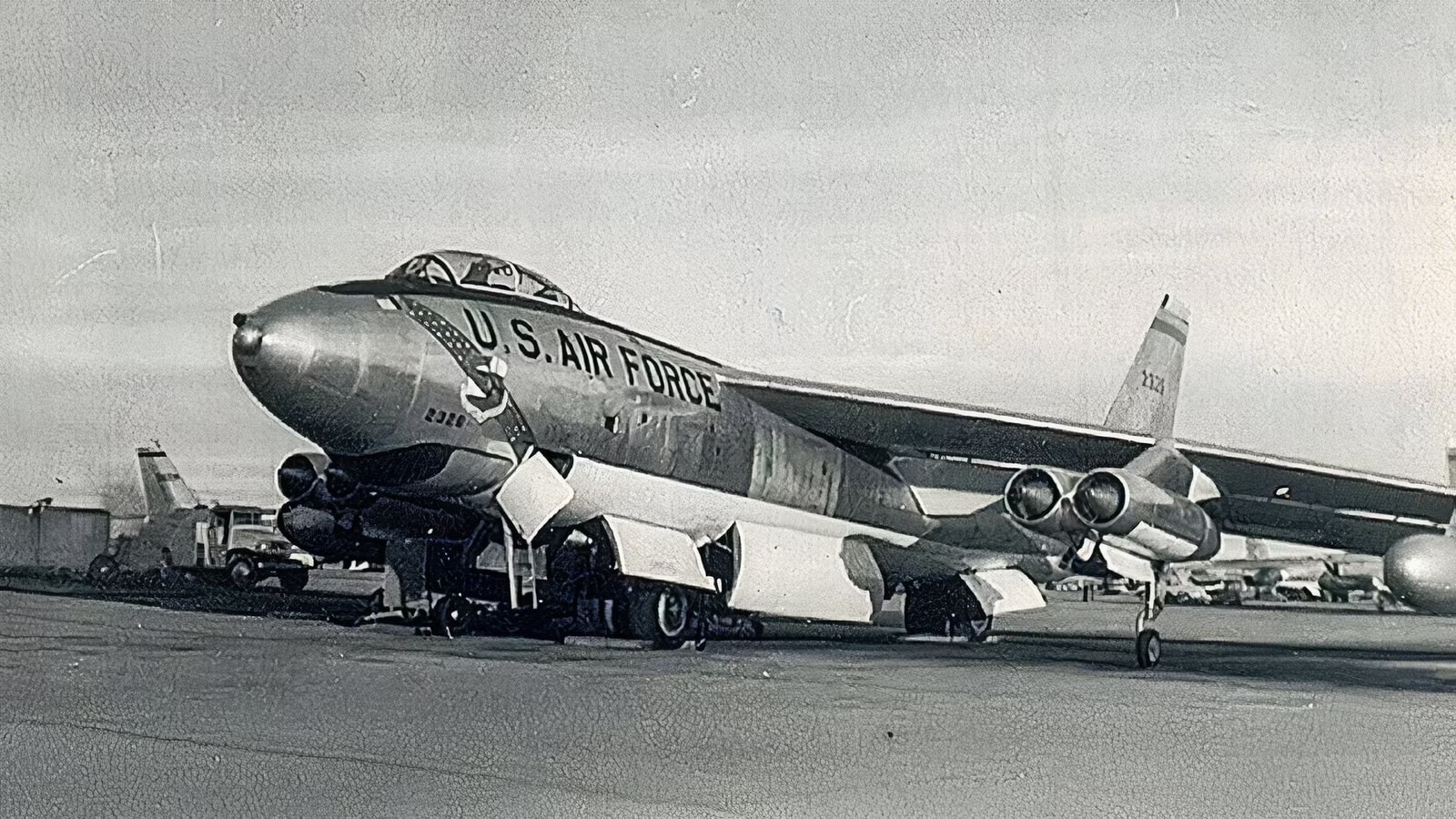
Lincoln Airport may look like a regional transportation facility, but its importance extends far beyond commercial aviation. Its long runway and military history connect the Nebraska airport to the United States’ (US) broader strategic airpower infrastructure, including the National Guard’s role in supporting heavy aircraft and global operations.
That role is becoming increasingly evident as Runway 18/36 undergoes a multi-million-dollar reconstruction. The project will restore one of the facility’s most important assets while ensuring Lincoln can continue supporting KC-135R Stratotankers and other large military aircraft alongside its growing commercial operations.
Lincoln Airport Has Seen Increasing Passenger Traffic, However Its Main Runway Needs Replacement

Lincoln Airport (LNK) is located roughly 5 miles (8 km) northwest of downtown Lincoln, Nebraska. The facility is listed by the Federal Aviation Administration (FAA) as a Class C airport with a ceiling of 5,200 feet above sea level and a visibility of 3 statute miles (4.8 km). The facility has three runways. Runway 18/36 (west side) is the longest at 12,901 x 200 feet (3,932 × 61 meters), while parallel Runway 17/35 (east side) measures 5,800 × 100 feet (1,768 × 30 meters). Runway 14/32, a crosswind runway located between the two, measures 8,640 × 100 feet (2,634 × 30 meters).
According to Nebraska NOW News, LNK has seen its highest passenger numbers in 20 years, with passenger-tracking data showing that July saw 17,757 passengers move through its gates and board flights from its three busy runways. Further, official documents from Lincoln Airport show passenger traffic as of June of this year at 154,202, compared with June 2025 at 128,249, a 20% increase.
As previously mentioned, Runway 18/36 is the longest and most significant of its three flight strips. Its existing pavement has been constructed or rebuilt over the decades, with some portions of the runway dating back to the 1950s when the airport was known as Lincoln Air Force Base. During that time, the massive runway was needed for  Boeing B-47 bombers and the Cold War deterrence mission that they once took part in. Today, this main runway is a critical asset to “. . . the Nebraska Air National Guard’s 155th Air Refueling Wing, the 55th Wing at nearby Offutt Air Force Base, and the Department of Defense . . .”
Over the last ten years, maintenance and repair of the pavement has become increasingly expensive, with the last repaving project having taken place in 1991. The runway surface had reached the end of its operational life, and an extensive engineering design and investigation determined that the concrete should be fully removed and replaced. Runway 18/36 will be rebuilt to modern FAA standards and specifications.
Work Is Currently Underway To Rebuild Runway 18/36

The 18/36 Reconstruction Project, which began in January of this year, is slated for completion by fall 2027, but could extend toward the end of that year. The work is one of the largest infrastructure projects in the facility’s history and represents a major investment in the aviation future at Lincoln, supporting and easing commercial air service and military operations.
The reconstruction project, which is worth $100 million (£75.6 million), Lincoln Airport, states that “. . . the National Guard Bureau (NGB) is funding almost half the cost of the project. The remaining funds come from Federal Aviation Administration (FAA) grants, the State of Nebraska, the Nebraska Department of Transportation (Division of Aeronautics), and the Lincoln Airport Authority (LAA).”
The work on the nearly 13,000-foot (3,962-meter) runway will be completed by Constructors, Inc., the project’s primary contractor. As shown in the photo above, the company is laying a 17-inch (43 centimeters) thick surface of reinforced concrete that, when finished, will cover roughly 250,000 square yards (209,000 square meters), or more than 51 acres (21 hectares).
This massive commercial and strategic project has been divided into three phases. Phases 1 and 2 will pave up to the intersection of Runway 14/32 and the crosswind runway (as shown in the first photo); this section is expected to be completed by the end of this year. Once this initial work has wrapped up, the completed section of 18/36 will reopen in a shortened configuration for takeoffs and landings while Phase 3 is underway. During Phase 3, the remaining portion of 18/36 will be completed, requiring the intersecting Runway 14/32 to close temporarily.
“This runway can handle some of the heaviest and most critical aircraft in our nation’s inventory, including the C-5 Galaxy and the E-4B Nightwatch National Airborne Operations Center,” stated Major General Craig Strong, adjutant general of Nebraska and commander of the Nebraska National Guard. “Its reconstruction ensures we can continue supporting mission readiness, global mobility and national defense operations for years to come.”
The 155th Air Refueling Wing’s Capabilities and Mission

Aerial refueling allows the United States military to launch timely, effective operations anywhere in the world within hours. These aircraft let fighters, bombers, and cargo aircraft extend their range and effectiveness with convenient, on-demand refueling. As a result, military aircraft going to or already in theater have greater range and effectiveness, and transporters can take off with less fuel and, consequently, more weapons, cargo, or personnel.
As General Stephen Lyons, former Commander of the United States Transportation Command, aptly stated before the United States Senate Committee on Armed Services, “. . . aerial refueling is the lifeblood of the joint force’s ability to project power immediately. There is nothing in the joint force we can do without that capability.”
KC-135 Stratotanker General Characteristics | Related Data |
|---|---|
Primary Function | Aerial refueling and airlift |
Prime Contractor | The Boeing Company |
Power Plant | CFM International CFM-56 turbofan engines |
Thrust | 21,634 pounds each engine |
Wingspan | 130 feet, 10 inches (39.88 meters) |
Length | 136 feet, 3 inches (41.53 meters) |
Height | 41 feet, 8 inches (12.7 meters) |
Speed | 530 miles per hour at 30,000 feet (9,144 meters) |
Ceiling | 50,000 feet (15,240 meters) |
Range | 1,500 miles (2,419 kilometers) with 150,000 pounds (68,039 kilograms) of transfer fuel; ferry mission, up to 11,015 miles (17,766 kilometers) |
Maximum Cargo Capability | 83,000 pounds (37,648 kilograms), 37 passengers |
The 155th Air Refueling Wing of the Nebraska Air National Guard, based at Lincoln Municipal Airport, operates eight KC-135R tankers. This aircraft began entering operational service in 1957, has a fuel capacity of 200,000 pounds (90,718 kg), and a fuel offload rate of 1,100 gallons (4,164 liters) per minute. The Nebraska Blue Book (an official Nebraska Legislature reference publication), states that the 155th, in addition to the 170th Group located at Offutt Air Force Base and the Air Element of the Joint Forces Headquarters, has a total authorized strength of 980 members.
The crews perform such missions as aerial refueling, airlift, and aeromedical evacuation missions, which support US and coalition contingency operations and the US Strategic Command’sdeterrence mission. The latter relates to the US ability to maintain capabilities strong and credible enough to convince an adversary that attacking the United States or its allies would not be worth the consequences.
Initially, The 155th Was a Fighter Squadron

The Nebraska Air National Guard is the second-oldest Air National Guard in the United States. The unit was activated as the 401st Fighter Squadron at Westover Field, Massachusetts, on July 1, 1943. The squadron was based in England during World War II; during that time, it operated Lockheed P-38 Lightnings and North American P-51 Mustangs and flew nearly 250 combat missions. Over the course of the war in Europe, the unit was active in such campaigns as the Ardennes, Northern France, Normandy, Rhineland, and Central Europe.
Following decades of service with combat aircraft such as the Lockheed F-80 Shooting Star, North American F-86D and F-86L Sabre, and McDonnell Douglas RF-4C Phantom II, the unit was directed to transition to the Boeing KC-135R Stratotanker mission in April 1992. At that time, the US Air Force began retiring the last of its F-4 Phantom IIs. By January 1993, the unit began receiving its first Stratotankers, and on October 1, 1995, the unit was redesignated the 155th Air Refueling Wing. A little over a year later, the 155th was certified as fully combat ready.
The 155th’s baptism of fire occurred during Operation Allied Force, the NATO bombing campaign over Serbia and Kosovo, which was initiated in order to pressure Yugoslav President Slobodan Milošević to end his campaign against ethnic Albanians in Kosovo. As the first Air Guard tanker unit to support the mission, it deployed more than 80 personnel, who took part in refueling operations that resulted in the transfer of more than 800,000 gallons of fuel (3.03 million liters).
Following the September 11, 2001, terrorist attacks, approximately 600 members of the Nebraska Air National Guard served in support of Operation Iraqi Freedom and Operation Enduring Freedom. They deployed to forward locations around the globe, including bases in Iraq, Afghanistan, Qatar, Kuwait, Spain, France, Germany, and several others. Of those deployments, 1,200 hours were flown on combat or combat-support missions for Operations Noble Eagle, Enduring Freedom, and Iraqi Freedom. Additionally, 155th Air Refueling Wing volunteer crews flew 225 combat hours to and from Bagram Air Base, Afghanistan.
Lincoln Airport’s Role in US Strategic Airpower

Lincoln Municipal Airport is an important piece of infrastructure for Nebraska, providing a crucial link for residents to convenient air travel, as shown by its recent increase in passenger flow. While facilitating commercial flights is important for the local and state economy, the facility’s dual use as a military hub is just as important.
LNK is situated at the southern terminus of a strategic airpower corridor, with Ellsworth Air Force Base (AFB) and Minot AFB to its north. If needed, the 155th Air Refueling Wing’s KC-135s could be called to active duty. In doing so, they could link up with strategic bombers from the northern airbases, either for conventional missions or, if required, to launch a devastating nuclear strike.
It is clear why Runway 18/36 had to be resurfaced and why it is so important. This is also highlighted by the fact that the National Guard Bureau is funding nearly half of the work. With the runway scheduled for completion next fall, both the civilian and military applications of the site will again be in full operation.