dailynewsnblog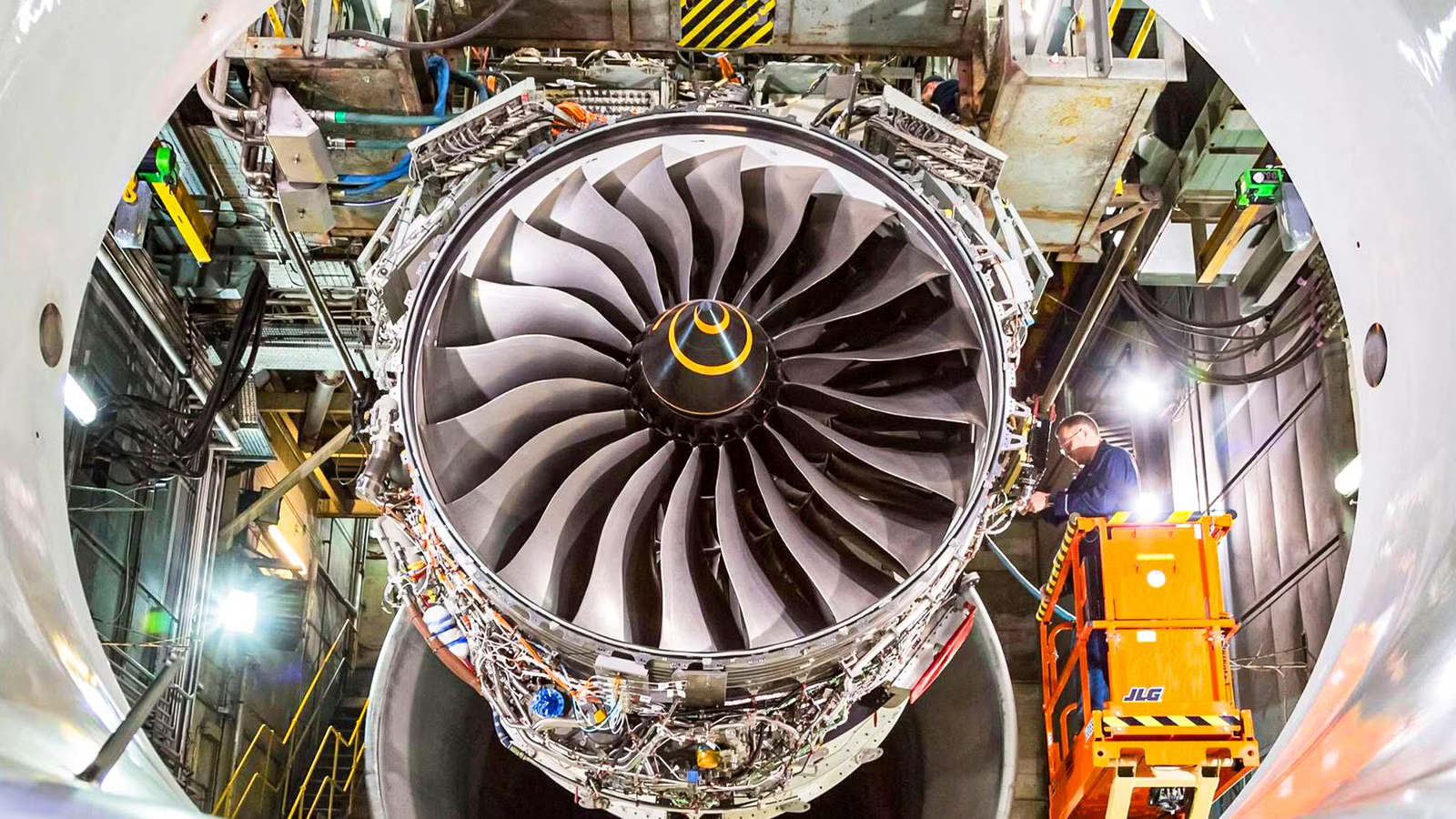
Before a commercial turbofan ever gets to power a passenger aircraft on a revenue flight, it needs to survive a punishing series of ground tests designed to push mechanical components far past their breaking points. In the US, the Federal Aviation Administration (FAA) sets these baseline requirements under 14 CFR Part 33, while the European Union Aviation Safety Agency (EASA) enforces equivalent certification criteria through CS-E standards. The philosophical basis of engine certification is not just proving that a power plant operates efficiently under normal conditions, but ensuring that catastrophic mechanical failures can be entirely contained within the engine structure when extreme events occur.
With everything from high-velocity foreign object impacts to explosive internal structural failures, every modern airliner engine must demonstrate its airworthiness through repeatable, highly regulated destruction. The certification process takes the extreme forces and translates that into measurable engineering data, guaranteeing that even when an engine suffers structural destruction, the airframe and passengers remain protected.
Bird Strikes

The main regulatory framework governing aircraft engine airworthiness in the US is FAA 14 CFR Part 33, with EASA CS-E enforcing matching standards in Europe. Within this framework, Part 33.76 and Advisory Circular 33.76-1B set out strict parameters for bird ingestion testing. These rules address one of the most common hazards in commercial aviation, evaluating structural resilience during low-altitude departure and arrival phases below 1,500 feet (457 meters), where bird activity is most concentrated.
To simulate real-world conditions, technicians use compressed-air cannons to fire birds directly into the inlet of a running engine, as per the Bird Strike Association of Canada. In this kind of test, the power plant operates at 100% of its maximum rated takeoff power, with the front fan assembly spinning between 2,000 and 3,500 RPM. Under small and medium flocking bird requirements, multiple birds target critical areas including the core flow path and fan blade tips. The engine needs to absorb the impacts, avoid automatic flameout, and continue producing the required thrust for at least 20 minutes to enable a safe emergency landing. When testing large flocking birds at speeds up to 230 mph (370 km/h), the engine has to maintain its structural integrity without uncontained failure.
The single large bird ingestion test is what would be considered the ultimate limit of foreign object impact. Launched at high velocity, a single large bird strikes the spinning fan assembly with massive kinetic energy. Under Part 33.76, the engine is permitted to lose all thrust and suffer severe internal structural destruction. However, the resulting failure must be entirely non-hazardous. What this means is the engine casing needs to contain all debris, prevent sustained fires, and ensure the power plant is still securely attached to its airframe mounts.
Fan Blade-Off Test

The fan blade-off test, codified under 14 CFR Part 33.94, is arguably the most violent trial required for commercial engine certification. To satisfy airworthiness authorities, a manufacturer has to prove that a power plant can lose its most critical fan blade at maximum permissible rotational speed without shedding high-energy debris outside the engine nacelle. At purpose-built facilities such as GE Aerospace’s outdoor test site in Peebles, Ohio, small linear explosive charges are embedded directly into the root retention groove of a target blade. When detonated while the engine operates at full takeoff power, the charge severs the blade in a fraction of a millisecond, launching a heavy titanium or carbon-fiber component into the surrounding fan casing at speeds exceeding 600 mph (965 km/h).
Preventing high-velocity shrapnel from penetrating the nacelle and puncturing wing fuel tanks or fuselage walls is nearly impossible without immense structural energy absorption. As noted in CSAA journals, modern high-bypass turbofans are built with special containment cases constructed from solid titanium armor or composite shells wrapped in hundreds of layers of dry Kevlar fabric, the same material used in bulletproof vests. When the severed blade impacts the interior casing, the structure needs to deform elastically to dissipate kinetic energy while also containing both the primary fragment and secondary debris generated as adjacent blades smash into the wreckage. Engineers also balance structural toughness with airframe weight, all with a view to making sure the casing holds together without adding excessive weight penalties to the nacelle.
The power plant also needs to survive extreme rotational unbalance without detaching from the wing, often referred to as a blade shedding event. As noted in engine research, severing a blade weighing up to 30 lb (13.6 kg) instantly shifts the rotor center of mass, generating over 50,000 lbf (222.4 kN) of off-axis radial centrifugal load that violently flexes the driveshafts and structural mounts. Under federal regulations, the engine needs to demonstrate that its mounting attachments can absorb these extreme dynamic loads for at least 15 seconds without catching fire or separating from the pylon. Although the internal turbomachinery suffers total mechanical destruction, keeping the wreckage contained and the mounts intact ensures that a catastrophic rotor failure is just an isolated power plant shutdown rather than an airframe-threatening hull loss.
Extreme Weather Testing

Simulating extreme weather is performed by flooding engines with torrential volumes of liquid and ice under 14 CFR Part 33.78 and Appendix A. High-pressure spray manifolds, known as water walls, are positioned directly in front of the inlet to deluge the turbofan with thousands of gallons of water per minute while operating at takeoff power. The combustor must maintain continuous flame stability under extreme moisture saturation, proving that unexpected tropical downpours or standing water thrown up by nose gear will not cause a total flameout. To simulate hail, compressed-air guns fire solid ice spheres up to two inches (5.08 cm) in diameter into the spinning fan assembly to ensure that ice ingestion will not bend fan blades or block core airflow, also known as ice ball testing.
Atmospheric icing tests push thermal resilience even further by evaluating how a power plant operates in supercooled cloud conditions. Engineers place the engine inside specialized wind tunnels or outdoor cold-weather test stands, spraying atomized water droplets at freezing temperatures to build heavy ice deposits on the spinner, inlet guide vanes, and fan blades, as noted in FAA advisory circulars. The engine will need to show that as ice sheds off rotating surfaces and passes through the compression core, the sudden ingestion of ice chunks will not damage internal compressor stages or cause engine surge.
The final phase of mechanical validation is the 150-hour endurance test mandated by Part 33.87. This protocol subjects a single test engine to a demanding schedule consisting of 25 separate six-hour operating blocks without interruption. During each cycle, the engine operates at redline exhaust gas temperatures, maximum continuous shaft speeds, and overspeed limits far exceeding normal flight envelopes. The idea is that subjecting a power plant to tens of hours at maximum thermal stress helps to verify that turbine blades, seals, and bearing assemblies can survive severe thermal fatigue before approving the engine type certificate.
The GE9X Certification Process

The certification campaign of the General Electric GE9X is a prime example of the modern scale required to satisfy federal airworthiness standards. As the largest commercial turbofan ever produced, the power plant underwent an exhaustive five-year certification program under Part 33 using eight dedicated ground and flight test engines, as per Simple Flying reporting. Across those test airframes, engineers logged nearly 5,000 hours of operating time and 8,000 test cycles, exposing the engine to severe crosswinds at GE Peebles, high-altitude flight trials on a Boeing 747 testbed, and hundreds of ice-ball impacts before receiving official FAA approval.
Despite the rigorous nature of ground trials, operational experience sometimes reveals edge-case failure modes that lead regulators to update certification standards. In previous decades, high-altitude ice crystal icing events caused unpredicted power loss in several modern engines, leading the FAA and EASA to revise Part 33 rules to mandate core icing tests. These regulatory updates help to retain engine integrity, so that as engine designs evolve with higher bypass ratios and smaller core architectures, certification protocols adapt to mirror real-world atmospheric hazards encountered during flight.
The ultimate objective of the Part 33 revision is ensuring that catastrophic engine failures are still extraordinarily rare events throughout billions of passenger flight miles. Every shattered fan blade, ingested bird, and melted turbine component generated on the test bench pays direct dividends in flight safety.
When Engines Cannot Succeed

The history of engine certification is full of test bed failures where revolutionary materials collapsed under regulatory scrutiny. In 1970, Rolls-Royce sought to certify the three-shaft RB211 turbofan using Hyfil, a breakthrough carbon-fiber composite material designed to drastically reduce fan blade weight. During bird ingestion testing, compressed-air cannons fired birds into the spinning rotor assembly, but the composite blades shattered completely under kinetic impact, as noted in Simple Flying analysis. The catastrophic bench failure was what showed that Hyfil lacked structural flexibility, leading to an urgent redesign back to titanium fan blades that delayed the Lockheed L-1011 TriStar and pushed Rolls-Royce into temporary receivership.
Modern computational fluid dynamics have reduced design risk, but testing still reveals unforeseen mechanical flaws. During 14 CFR Part 33 endurance runs for the General Electric GE9X in 2019, engineering teams uncovered premature wear and thermal distress on the second-stage stator vanes of the high-pressure compressor. Operating the test engine at extreme exhaust gas temperatures showed that heat buildup exceeded calculated limits. General Electric then had to redesign the stator vanes and repeat critical endurance blocks, delaying FAA certification and halting flight testing on the 777X airframe.
These high-visibility test bench failures show exactly what the fundamental purpose of the certification process is. Test facilities are built to push power plants beyond operational limits to induce mechanical failure in a controlled environment. Uncovering blade shattering or thermal degradation on a test rig costs millions of dollars and causes schedule delays, but it prevents structural weaknesses from reaching revenue service. As a result, airworthiness authorities ensure that catastrophic defects remain safely on the test stand a long while before an airframe carries passengers.
Why Safety Standards Are So Important

Ultimately, the existence of 14 CFR Part 33 and CS-E standards is to ensure that catastrophic mechanical failures are identified, contained, and corrected early and not found when an aircraft is in service. Whether through firing flocking birds at 200 knots (370 km/h), detonating explosive charges to shear fan blades at full takeoff RPM, or deluging combustors with thousands of gallons of water, the regulatory system is what gives manufacturers, airlines, and passengers the peace of mind that modern power plants can survive extreme stress.
The next stage of engine development is being played out with further propulsion technology advances in open-fan designs, hybrid-electric cores, and ultra-high-bypass engines. Naturally, certification frameworks will inevitably adapt to regulate new mechanical failure modes. However, the core engineering principle will still be unchanged across global airworthiness authorities. Emerging engine designs equally need to prove their structural integrity under the most punishing trials imaginable, and consequently, regulators can guarantee that when an unexpected emergency occurs, the engine casing contains the damage and the aircraft returns safely to earth.