dailynewsnblog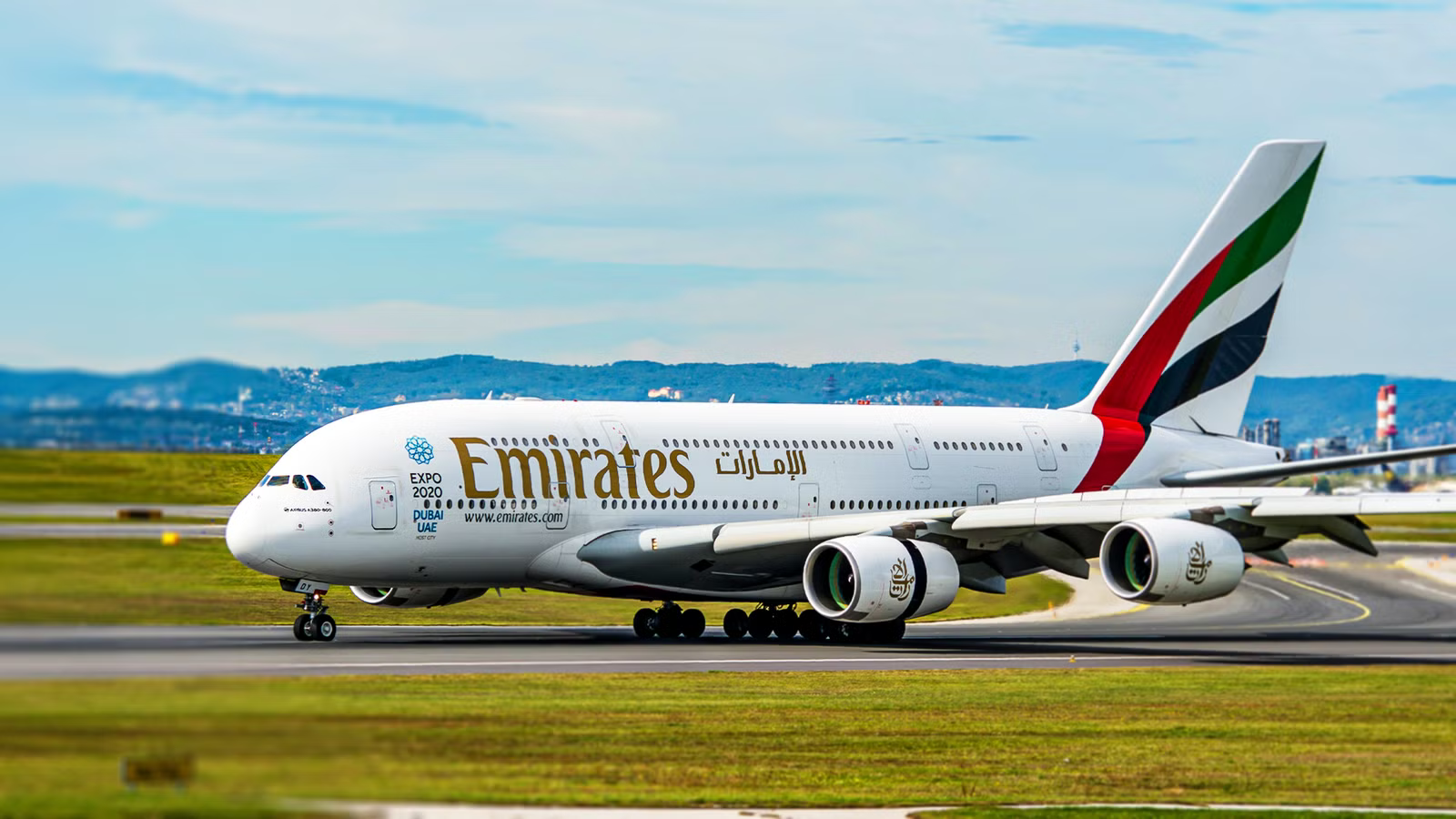
10 years ago,  Emiratesstopped flying its Airbus A380 jets from Dubai International Airport (DXB) to Dallas/Fort Worth International Airport (DFW). It downgraded the services to Boeing 777 planes, and passengers lost access to the A380’s geometry, onboard showers, and larger first and business class cabins.
Emirates has now taken the same step for its services to Washington Dulles International Airport (IAD) and George Bush Intercontinental Airport (IAH). The move should be analyzed within the context of a wider retrofit and yield-management crunch that is reshaping Emirates’ entire US network. Simple Flying has contacted Emirates for comment on the downgrade, and whether the 2016 move served as a blueprint.
Emirates Reshuffles A Dozen A380 Routes

This September saw an enormous reshuffle of Emirates’ use of the A380. The reshuffle involves 12 routes outside of the US (Kuala Lumpur, Moscow, Munich, Osaka, Prague, Singapore, Sydney, Zurich, Perth, Bangkok, Johannesburg and Rome), as reported by MiG Flug. Several of these routes are being fully replaced by the 777, while others are seeing frequency tweaks.
Some are temporary changes while others have no defined end date for the shift. The conclusion to draw from that could be that many of these changes will be permanent, with the A380 likely never to be seen again on such services. The full suite of changes impacting US travelers in September and October, according to Aeroroutes’ data, is detailed in the table below. It includes both A380 and non-A380-related changes, with further changes after October 25 pending.
Route | Effective date | Frequency change | Equipment change |
|---|---|---|---|
Dubai to Boston | September 15 onwards | 7 to 6 weekly | A380 to 777-300ER |
Dubai to Houston | August 25 onwards | 1 daily | A380 to 777-200LR |
Dubai – Miami – Bogotá | September 1 to October 12 | 7 to 6 weekly (5 weekly September 8 to September 30) | 777-200LR to 777-300ER |
Dubai – Orlando | September 1 | 7 to 4 weekly with 777-200LR, 5 weekly with 777-300ER from October 1 | N/A |
Dubai – Seattle | September 1 | 7 to 5 weekly from September 9, raises back to 6 October 1 | 777-200LR to 777-300ER |
The two services impacted in the US are the routes to Houston and Washington Dulles International Airport. The Houston route will now be operated by Boeing 777-200LR jets, while the Washington Dulles services switch to the Boeing 777-300ER. These seemingly permanent adjustments show a close resemblance to the DFW adjustment in 2016, with that route having not been regularly operated by an A380 ever since.
The Original A380 Pull

In early 2016, Emirates pulled the A380 from its DFW flights, replacing the jet with 777s. This was the first time that Emirates had removed an A380 from one of its routes to the US. Emirates was facing challenges from Qatar Airways and Etihad Airways, both of which were operating services from the Middle East to DFW. The result was that the 489-passenger A380s operating the route were often only reaching half capacity.
These ticket sales failures likely caused the route to be loss-making. Only switching to an aircraft that is cheaper to operate allowed the route to survive. “This decision was made as part of our routine operational review, to ensure that our capacity is deployed to best serve customer demand across our global network,” said Emirates, according to Star Alliance.
The aircraft had only survived on the route from October 2014 to February 2016. Emirates did not originally plan for the move to be permanent. It had said the A380 would return to DFW in September. The airline backed out of this promise and continues to operate the route without the superjumbo.
Why Pull The A380?

The A380 is a favorite among most passengers and all avgeeks. The world’s largest aircraft offers unmatched capacity and comfort, with unique premium features like showers. However, Emirates is removing it from routes, usually in favor of the 777-200LR or 777-300ER. These are aging jets with a significantly lower capacity. The advanced A350-900 fills in for the A380 where it has been removed from the Perth routes.
September’s A380 cuts were also preceded by a range of European cuts, with Emirates removing 286 European A380 flights in each direction during June, according to Deep Arrival. The changes have been forced in part by the grounding of 27 of Emirates’ fleet of 116 A380s, restricting what the world’s largest A380 operator can do with its superjumbos. Part of the reason for these groundings is the ongoing war in the Middle East.
This conflict is showing no signs of coming to a rapid conclusion and continues to soften demand for flights into the region. Simultaneously, Emirates is currently going through a retrofitting and reconfiguration program for its A380 fleet, specifically its 15 high-capacity A380s. These jets never had first class seats, raising the jet’s capacity to 615 seats.
Catch what other flight trackers miss
Emergency squawks, holds, NOTAMs — live signals, no signup.
Open tracker
Catch what other flight trackers miss
Emergency squawks, holds, NOTAMs — live signals, no signup.
Open tracker
The retrofit drops capacity to 569 seats, with the new configuration including a business class cabin that has grown to 78 seats, and the economy cabin shrinking by 120 seats to 437. These jets will also have 2-3-2 premium economy in what is usually the first class section. A6-EUX was the first, and it has been successfully retrofitted and returned to service. Emirates expects the same for the rest of its high-capacity A380 fleet by the end of this year, with each retrofit taking around 30 days to complete.
The A380 Offers Things That Twinjets Can’t

Switching the A380 for 777s will help Emirates to stay afloat in North America despite the ongoing conflict in the Middle East, and buy the carrier time to complete the retrofits of its high-capacity A380s. Yet, passengers could start to complain of an inferior experience as the A380 possesses a number of unique characteristics. The most obvious is premium capacity. Aeronautics Magazine notes that Houston’s A380 operation features 65,700 premium seats in 2026.
This drops to just 35,032 for the airline’s 777-300ER-operated Dallas route. The result could be increased demand for premium seats, and some passengers who would want to fly in premium seats being forced to drop down a class. The table below shows the current Emirates fleet according to the airline’s Fast Facts data, displaying how the A380 fits into the jets that the carrier operates.
Aircraft | In service | On order |
|---|---|---|
Airbus A380-800 | 116 | |
Airbus A350-900 | 27 | 46 |
Boeing 777-300ER | 117 | |
Boeing 777-200LR | 10 | |
Boeing 777-9 | 235 | |
Boeing 777-8 | 35 | |
Boeing 787-10 | 15 | |
Boeing 787-8 | 20 | |
Boeing 777 freighters | 18 | 4 |
Boeing 777-300ERSF | 1 (currently undergoing freighter conversion) | |
Total | 289 (270 passenger and 19 freighter) | 355 |
Even for passengers who can access the premium class they want to sit in, they will have a more restrictive experience. For example, first class A380 passengers can make use of two large shower rooms. These facilities have heated floors, high-end toiletries, and five minutes of running water each session, and they are refreshed by cabin crew after each use.
Emirates’ A380 also has a large walk-in cocktail bar on the upper deck, which serves as an onboard lounge. This facility is shared with business class. Passengers using it can enjoy complimentary snacks and premium drinks.
The 777X Will Provide An Additional Challenge To Emirates’ A380s

The reason there is always interest when Emirates moves a route away from the A380 is that this aircraft is Emirates’ iconic flagship. Pulling the jet from a route can be a sign that Emirates believes that demand for the trip is declining. The symbolic importance of the A380 will decline once the Boeing 777X comes to Emirates’ fleet, as the world’s largest twinjet will rise to become the carrier’s new flagship.
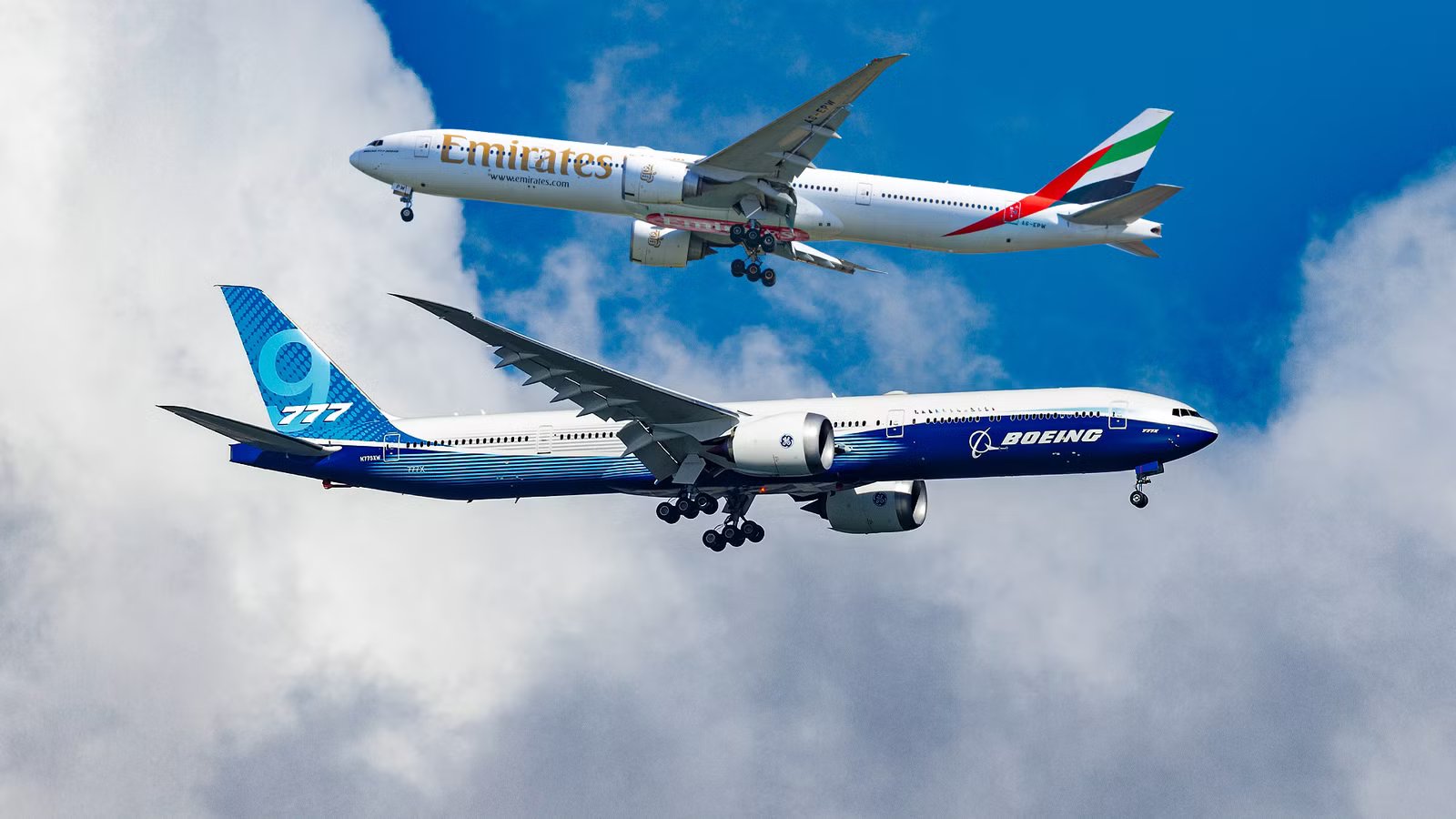
The A380 is no longer in production, and Emirates’ order of 270 777X jets also means that the jet will outnumber the A380 once they have been delivered. Boeing’s 777X will be better placed to replace the A380 on the carrier’s busiest and most premium-heavy routes when compared with older 777 variants. This jet has 400 to 450 seats, compared with 500 to over 600 for the A380 and 365 to 400 for the 777-300ER.
Emirates can currently only replace the A380 with 777s when demand is low enough to allow for a capacity drop. Such a problem will be far less significant with the 777X. Premium passengers will also face fewer disappointments when their usual A380 seat is replaced with a place aboard a 777X. Emirates will take measures to compensate for the smaller space aboard the 777X. Firstly, Emirates is set to remove the central overhead bins and use warmer color palettes, creating a sense of more space onboard.
Emirates also has plans to introduce a mid-cabin lounge aboard its 777X, located between two business class sections. Seating eight passengers, this communal space will be unstaffed, but passengers can make use of self-serve snacks and refreshments. This space is smaller than the A380’s lounge, but shows a commitment to sacrificing some capacity to produce a more rounded premium experience.