dailynewsnblog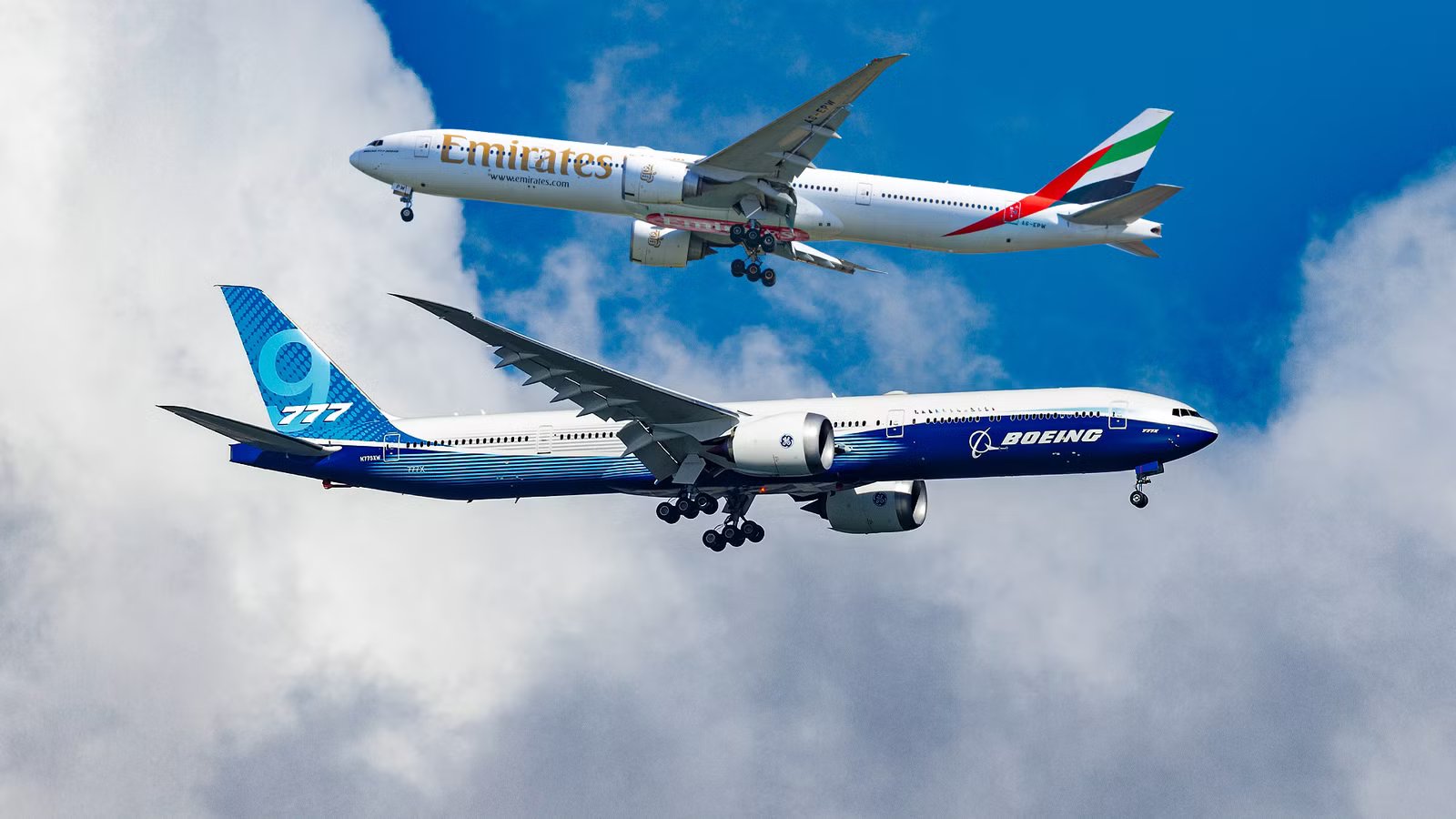
Boeing promised the aviation industry that the world’s largest and most advanced commercial twinjet would arrive in 2020. A saga of delays, regulatory scrutiny, and certification issues has led this jet to likely not enter service until 2027. The result has been billions of dollars in costs incurred by Boeing, while its customers have been forced to keep flying their aging jets to deal with capacity shortfalls.
Yet, Boeing’s customers have not walked away from the Boeing 777X, and the manufacturer still hopes that the aircraft will be a success. That is because the 777X offers a range of advances from previous generations of the 777, such as the Boeing 777-300ER, along with other manufacturers’ widebody aircraft. Five of these most significant differences are detailed below.
A Folding Composite Wing
Broad wingspan with the flexibility to fly at smaller airports

The most immediately noticeable advance made by the 777X when comparing the aircraft to older widebody planes is its folding wingtips. These wingtips fold up when the jet is not in flight, reducing the wingspan to 212 feet, 9 inches (64.8 meters). This is the same wingspan as the 777-300ER. They then fold out when the aircraft is in service. The result is that Boeing’s customers have access to an aircraft with a broad wingspan that generates a huge amount of lift and is highly aerodynamically efficient. Simultaneously, the jet is flexible, with the folded wings able to use smaller airports’ gates and facilities. In the new point-to-point era,  Boeing is hoping to avoid the jet being restricted to the world’s largest hub, a fate suffered by the A380.
The table below shows the key specifications for the 777-9 compared with the 777-300ER. It makes use of Boeing’s 777X and 777 family data:
Characteristic | 777-9 | 777-300ER |
|---|---|---|
Capacity (two-class) | 375 to 450 | 350 to 425 |
Maximum takeoff weight | 775,000 lb (351,500 kg) | 775,000 lb (351,500 kg) |
Range | 8,000 nautical miles (14,820 km) | 7,500 nautical miles (13,890 km) |
Wingspan | 235 feet, 5 inches (71.8 meters) when extended or 212 feet, 9 inches (64.8 meters) on the ground | 212 feet, 9 inches (64.8 meters) |
Length | 251 feet, 9 inches (76.7 meters) | 242 feet, 4 inches (73.9 meters) |
Height | 64 feet, 1 inch (19.5 meters) | 60 feet, 8 inches (18.5 meters) |
Apart from its folding nature, the wing also takes a substantial step forward through its carbon fiber reinforced structure. This huge wing has an area that is only slightly smaller than the one used by the Boeing 747-8. Simple Flying’s Daniel Osipov writes that development of this wing cost Boeing roughly $2 billion, which is similar to the amount spent by Airbus on the entire Airbus A330 program.
An Advanced Powerplant With The GE9X
The world’s largest operational commercial turbofan
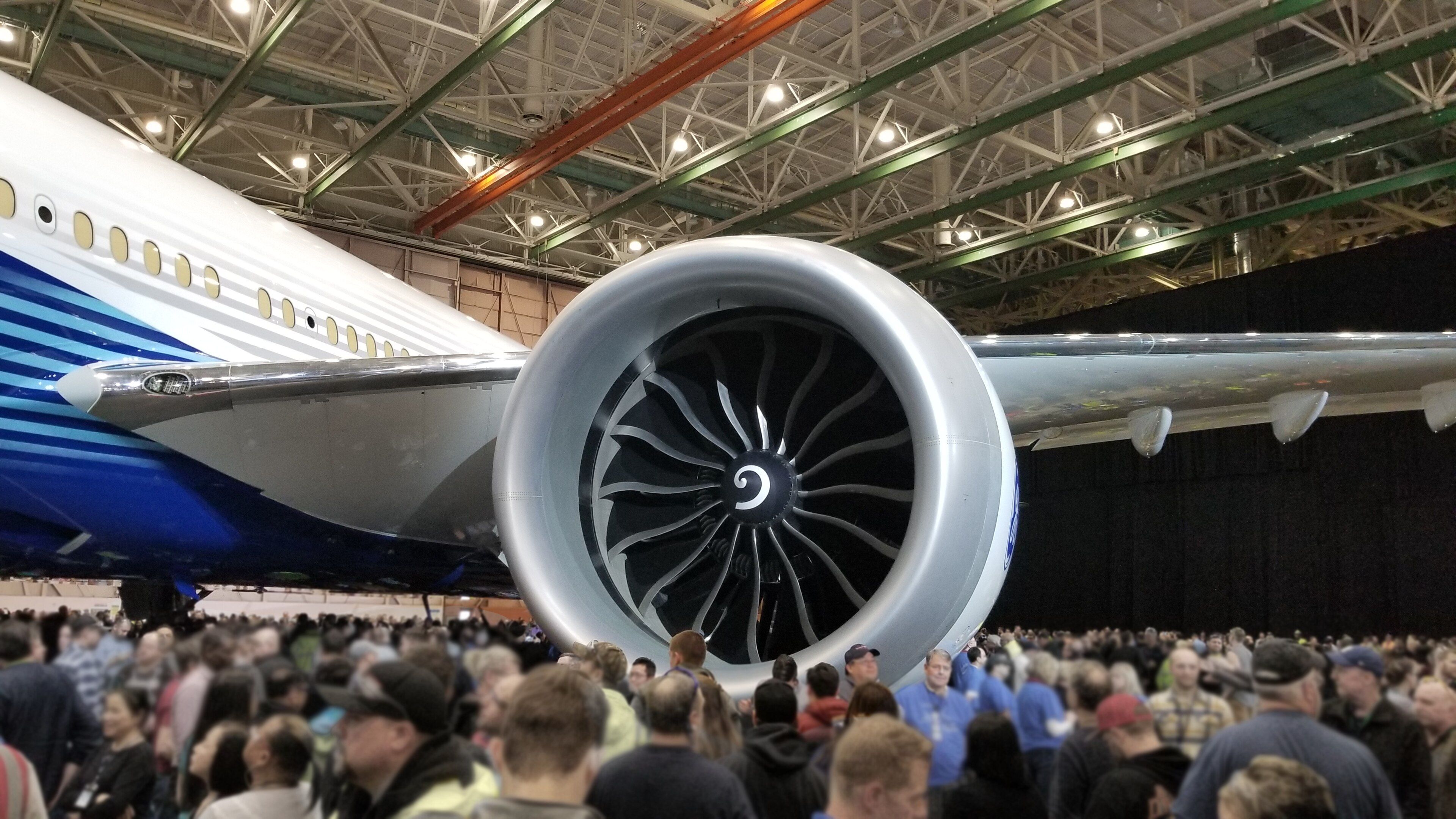
Sitting under the 777X’s carbon fiber reinforced wings are General Electric GE9X engines. This engine is based on the 777’s GE90. It first ran on the ground in 2016 and was tested in the air in 2018. The most startling aspect of this engine is its diameter of 161 inches (409 cm), with the 16 composite blades being 134 inches (340 cm) in diameter. That makes this engine wider than the fuselage of a Boeing 737. This size helps the engine to achieve a higher bypass ratio of 10:1, with a compression ratio of 60:1.
Components of this engine are made from ceramic mix composites, which give the engine the necessary strength and heat resistance, while helping the engine to be relatively lightweight given its size of 21,230 lb (9,630 kg).
The range of advances delivered by the GE9X allows it to be 10% more fuel efficient than the GE90. Yet, it also produces an enormous maximum thrust of 110,000 lbf (489 kN). Such immense power is necessary to get an aircraft of such astonishing size into the skies with just two engines.
Fuel Burn Per Seat Reductions
Efficiency improvements translate to lower operating costs per customer
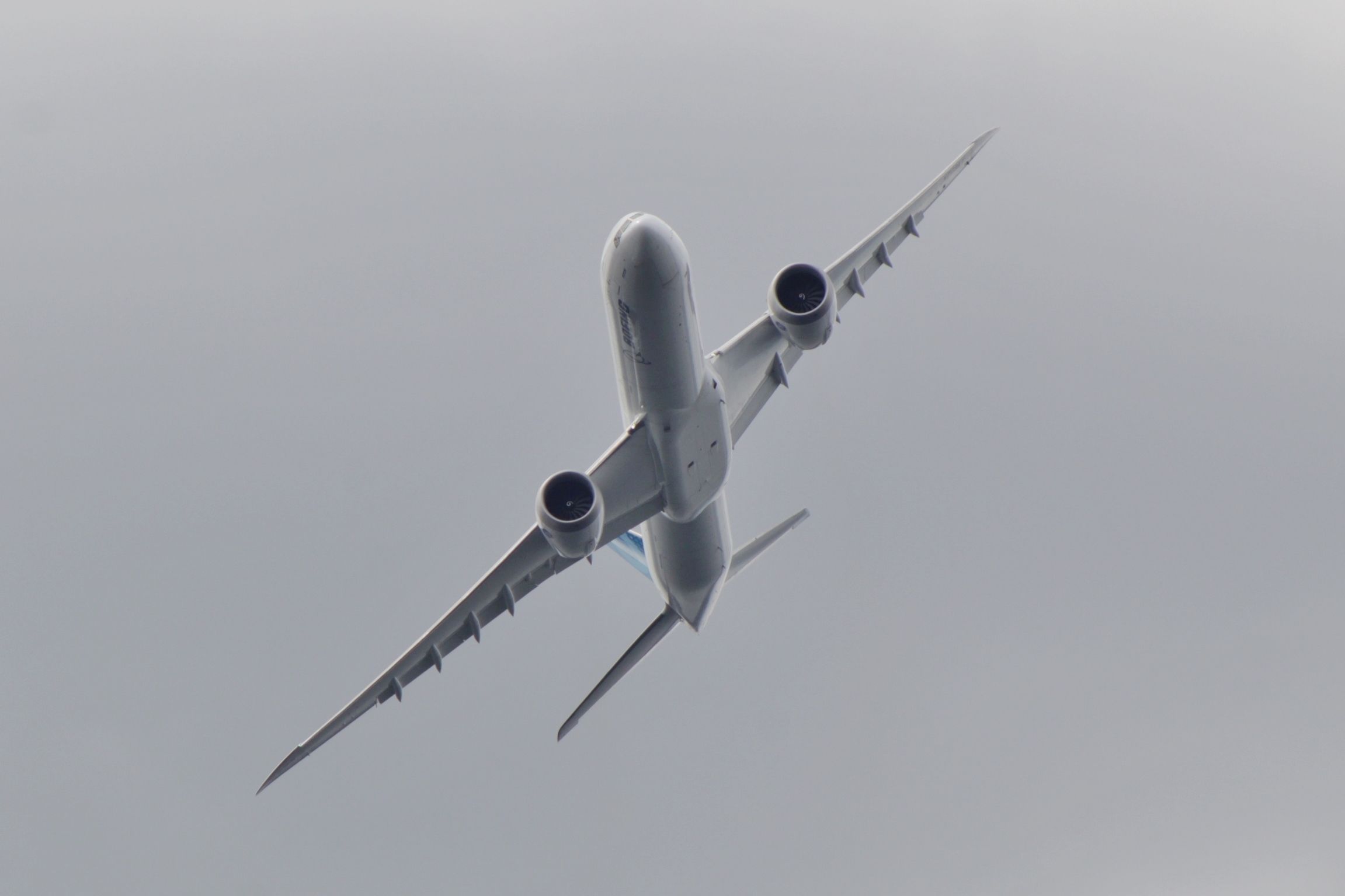
A combination of fuselage weight savings, wing design, and engine advancements makes the 777X one of the world’s most efficient aircraft. Combined with its high capacity, the efficiency improvements of the 777X produce a low fuel burn per seat. Airlines are able to improve their margins as a result of the lower operating costs on routes where the 777X replaces the 777-300ER.
The table below shows the specifications for the GE9X, a huge contributor to the low fuel burn per seat, according to claims made by GE Aerospace:
Length | 220 inches (559 cm) |
|---|---|
Weight | 21,000 lb (9,500 kg) |
Ceramic Matrix Composites parts | 100+ out of a 35,370-part total |
Fan speed (RPM) | 2,510 |
Core speed (RPM) | 11,119 |
Overall pressure ratio | 60:1 |
Compressor pressure ratio | 27:1 |
While cruising at Mach 0.84, the 777X burns 2,600 gallons (11,800 liters) of fuel per hour. Based on a standard capacity of 426 passengers, this gives the aircraft 87 miles per gallon per passenger. This is a roughly 20% improvement in fuel burn per seat over the 777-300ER at full capacity. The exact pax-MPG will vary slightly for flights that aren’t sold out or for airlines that configure their 777Xs with more or less dense layouts. Adverse weather conditions can also harm an aircraft’s efficiency.
Improved Cabin Width
More space is available for passengers of all classes
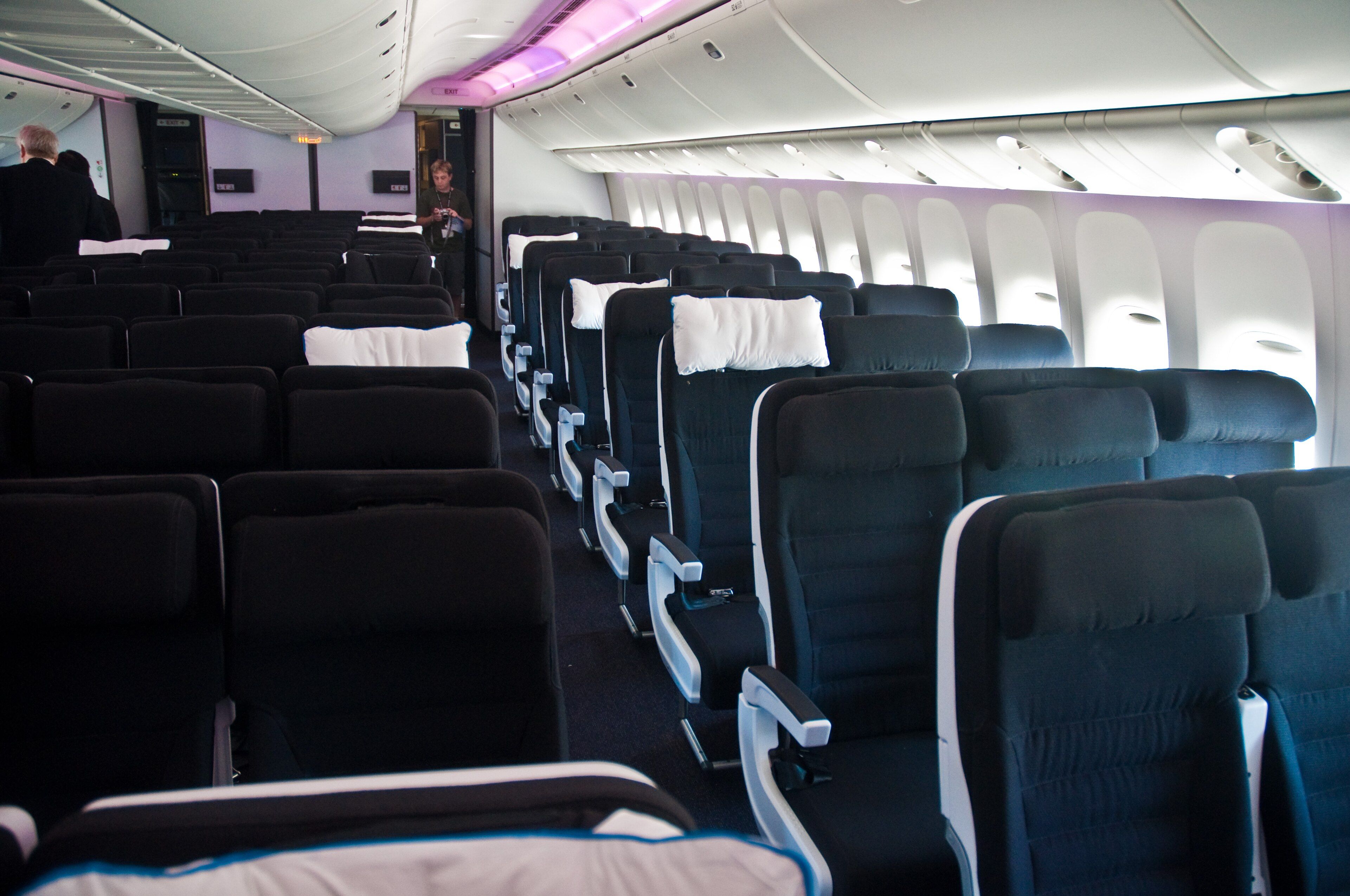
If you were to put a 777-9 next to a 777-300ER, you would immediately notice that the 777-9 is a larger aircraft by all metrics. The jet is 251 feet and 8 inches (76.7 meters) long, compared with -300ER’s 242 feet and 5 inches (73.9 meters) for the 777-300ER. The jet is also taller at 64 feet and 7 inches (19.68 meters). The 777-300ER is 61 feet and 5 inches (18.57 meters) tall.
The metric passengers are most likely to spot is the cabin width, which comes in at 19 feet and 7 inches (5.96 meters). This width is around four inches (10 cm) broader than legacy 777 jets like the 777-300ER. The difference is made possible because of the improved materials used to build the fuselage walls, allowing them to be narrower and producing more cabin space. The width is also an improvement over the 777X’s principal competitor in the modern twinjet widebody market. Its cabin is 16 inches (40 cm) wider according to Boeing’s claims.
Boeing says that this difference leads to “more space and comfort in each class.” It remains to be seen exactly what airlines will use the additional space for. It will likely lead to more seats per row compared with the A350. The internal cabin width of an A350 is 18.4 feet (5.61 meters). However, the four inches (10 cm) of difference between the 777X and former jets of the 777 family isn’t enough for more seats. Airlines will likely use this space for marginally wider aisles.
Bigger Windows
Enjoy far more natural light for a less tiring flying experience
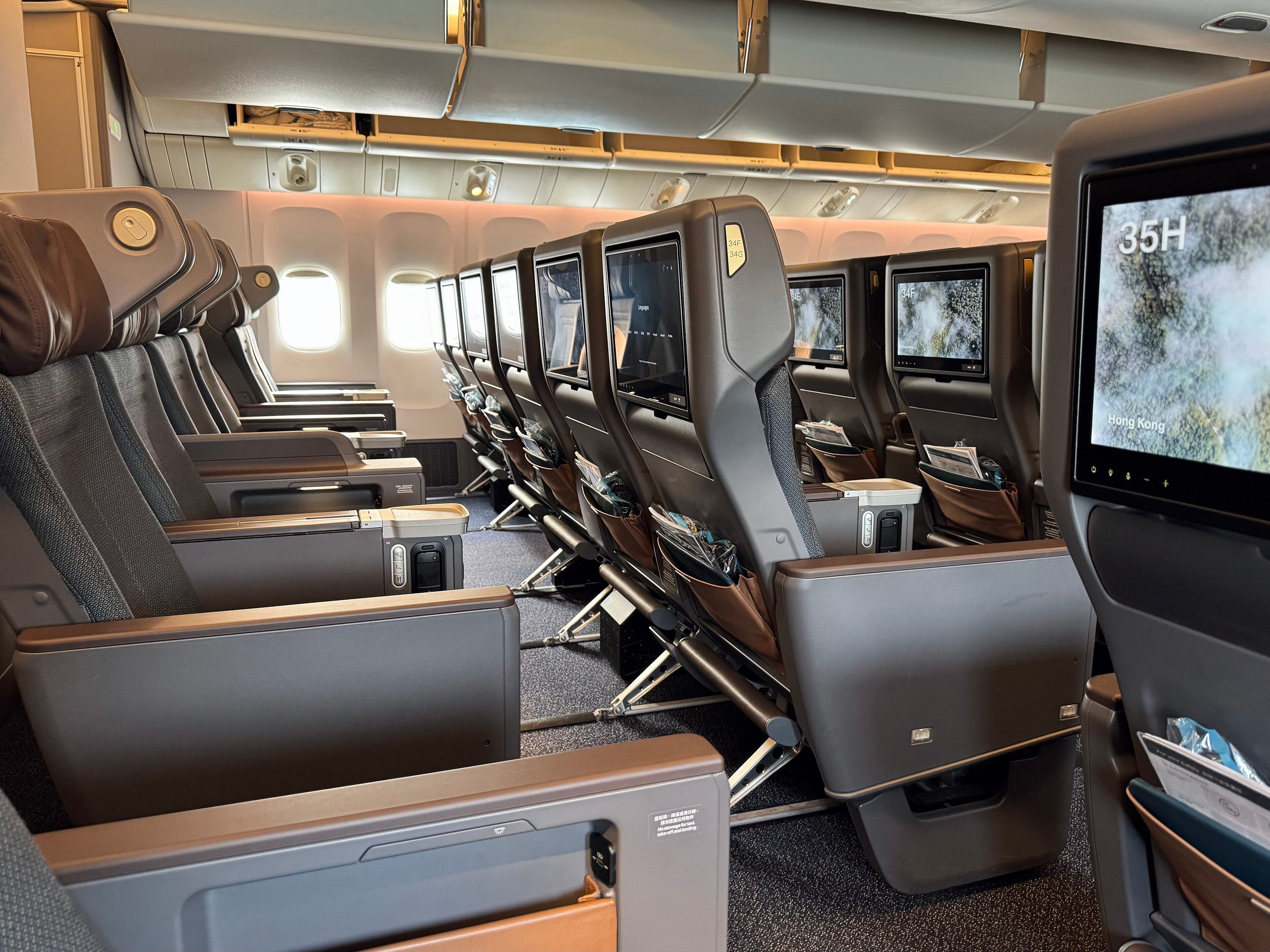
One of the most unpleasant aspects of flying is the huge amount of artificial light that you have to put up with. It adds strain to the eyes and feels like you are in a hospital. The 777X begins to deal with this problem with substantially larger windows. All 777X passenger variants will have windows measuring 162 square inches (1,045 square centimeters). That’s 16% more window area than the 777-300ER shown in the image for this section. This older 777 variant has windows with an area of around 140 square inches (903 square centimeters).
The shape and position of 777X windows are also important for passenger comfort and experience. Like most legacy aircraft, the 777-300ER uses rectangular windows that are too low for passengers to easily look out of. Meanwhile, the rounded 777X windows sit higher on the fuselage. You’ll be able to enjoy the view from them without craning your neck.
Another interesting aspect of 777X windows is that they don’t use traditional pull-down blinds. Instead, they come with Gentex Electronically Dimmable Windows (EDWs), technology that will be familiar from the Boeing 787. These windows use electrochromic smart-glass systems, usually a layer of gel in between the panes of glass that undergoes a chemical reaction when voltage is pushed through it. However, these dimmable windows are more advanced, darkening twice as fast and eliminating 99.999% of visible light.
The final difference between the 777X and the 777-300ER is that the advanced materials used to construct the 777X’s fuselage allow for a lower cabin altitude and higher humidity. The 777X will be pressurized to an equivalent of 6,000 feet (1,800 meters) at cruising altitude, matching the 787. Meanwhile, the 777-300ER is pressurized to the traditional 8,000 feet (2,440 meters). The result is improved blood oxygen levels, reducing the fatigue, headaches, and jet lag often associated with long-haul flying. The higher humidity also eases dryness in the eyes, skin, and airways.