dailynewsnblog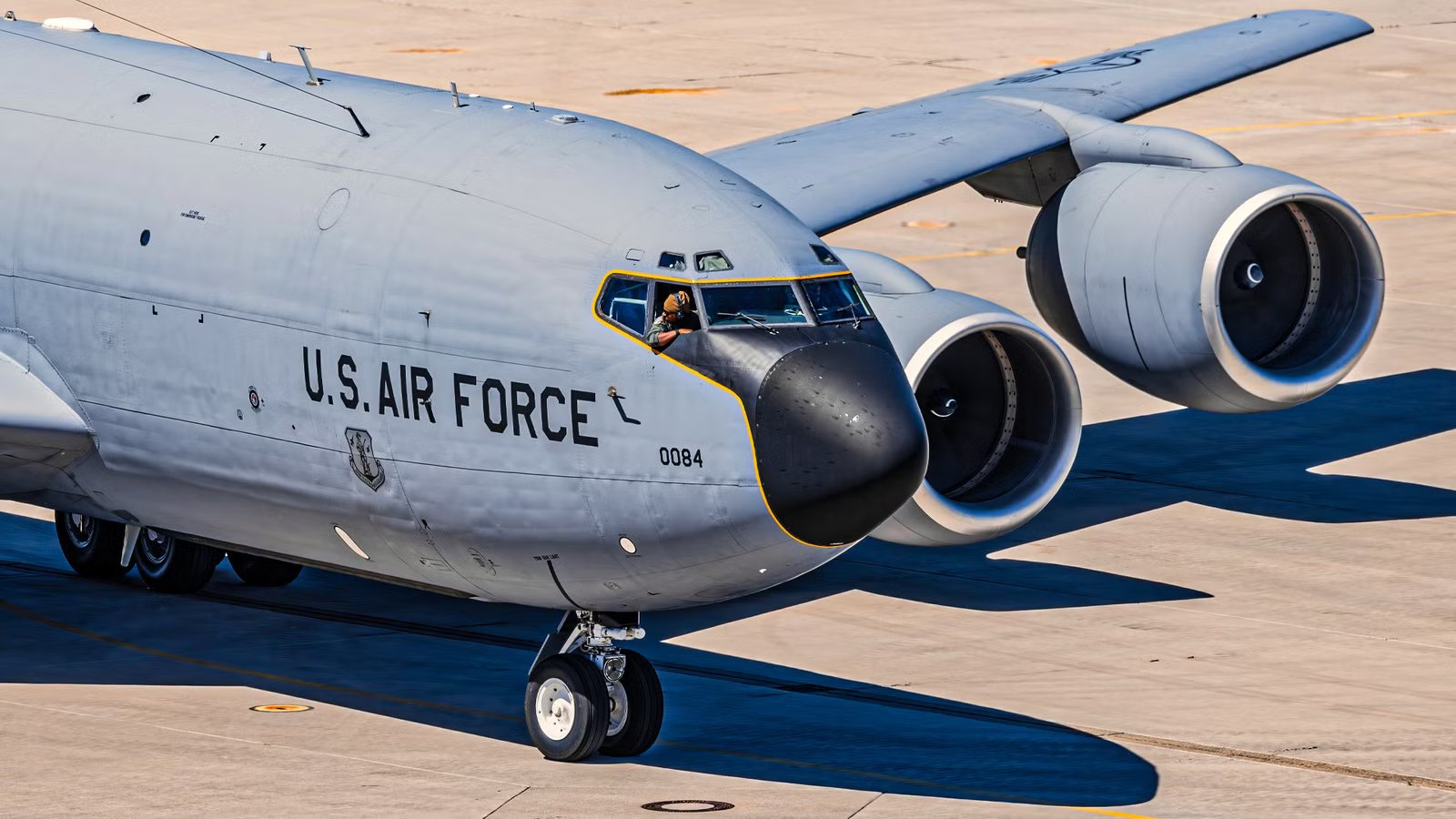
L3Harris has proposed a comprehensive overhaul of the flight deck on the Eisenhower-era  Boeing KC-135 Stratotanker as the US Air Force struggles to keep the half-century-old fleet operational. Dubbed the ‘Tanker Glass’ solution, the overhaul aims to update the aging aerial refueling tankers to keep them mission-ready and flying beyond 2050. The idea of digitizing these antique planes, which share DNA with the same prototype that created the Boeing 707, emerged only because of the long-delayed rollout of its successor.
In March 2025, the commander of Air Mobility Command warned that buying new tankers at a rate of 15 a year would force a service life extension program and push the KC-135 Stratotanker toward nearly a century of service. The modernization proposal focuses heavily on eliminating obsolescence, reducing costs, and laying a long-term foundation of 21st-century technology. The upgrade is designed to enhance situational awareness, improve flight safety, and decrease aircrew workload and fatigue.
The package would strip out obsolete flight deck instruments and analog electro-mechanical gauges, replacing them with modern, digitally enabled hardware and LED displays. The overhaul utilizes a Modular Open Systems Approach (MOSA) based on a government-owned architecture. By leveraging commercially proven components with industry-standard interfaces, the Air Force can source parts from multiple vendors. This makes it significantly easier and faster to integrate new software or hardware capabilities down the line.
What L3Harris Actually Put On The Table

The proposal explicitly claims the design satisfies both the strict technical standards and the operational intent of the MOSA. Yet, the design represents just one possible solution for sustaining the aging KC-135 Stratotanker fleet through an operational transition that is already stretching far longer than military planners originally anticipated.
As Air Data News reported, L3Harris says commercially available components would reduce dependence on individual suppliers and address the shrinking availability of replacement parts for the avionics now installed. The company describes the package as a low-risk design already flying on the RC-135 and WC-135, the tanker’s reconnaissance and nuclear-detection relatives.
L3Harris says the package could cut maintenance risk and aircrew workload while allowing new capabilities to be added without a major cockpit redesign. The pitch assumes the current cockpit is running out of road, even though the Air Force recently finished a major cockpit upgrade. What that earlier upgrade left undone explains why a second one is on offer.
Why The USAF Needs Another Upgrade For A Recently Modernized Jet

The fleet successfully finalized the Block 45 cockpit upgrade in fiscal 2024, modernizing the glass flight deck with digital engine displays, a radar altimeter, and a modern flight director. Ongoing modernization efforts continue to add critical subsystems, including a secure satellite link via the Mobile User Objective System, an Iridium satellite network to phase out legacy oceanic tracking gear, and a processing package that feeds Link 16 tactical datadirectly into mainline cockpits.
However, the original Block 45 series was never engineered to support the airframe this far into the future. While defense reports initially projected the upgrade would extend the tanker’s operational capability into the 2040s, that structural horizon now falls a full decade short of the Air Force’s official, revised intent to keep the venerable KC-135 Stratotanker flying past 2050.
A Government Accountability Office report released June 10 shows how the problem looks from the maintenance line. In short, Air & Space Forces Magazine wrote that the tanker fleet missed its availability and mission-capable goals every year from fiscal 2019 through 2025, mostly because of parts shortages and KC-46 delays. The KC-135 mission-capable rate was just under 68% in fiscal 2024, the last year the Air Force released figures, against 62% for the newer KC-46.
GAO found that some parts are no longer in production, especially for the older aircraft, and that continued reliance on the KC-135 has increased both the missions assigned to it and the maintenance work needed to keep it flying. Air Force officials told GAO that the critical parts shortages have since been resolved, partly through reverse engineering of key components. Obsolescence in the cockpit is therefore a documented problem and not a sales invention, though avionics are the easiest part of an old airplane to replace. The airframe is the harder matter.
Sustaining The Cold War Airframe For A Century

First flown on August 31, 1956, the KC-135 Stratotanker airframe was originally manufactured in a massive 732-aircraft production run that concluded in 1965. Nearly every onboard system has already been stripped and replaced once across its seven decades of service. Beginning in July 1984, 420 airframes were modernized with modern CFM56 turbofans to become the KC-135R.
Now, the Air Force faces a massive logistical challenge as it tries to sustain its aging aerial refueling fleet into the latter half of the century. The formal count is 376 remaining Stratotankers, including 325 KC-135Rs and 51 specialized KC-135Ts. Recent military budget documents place the active fleet closer to 370 following unpublicized airframe losses incurred during Operation Epic Fury.
The requirement to keep these vintage hulls flying stems directly from severe bottlenecks in the Boeing KC-46A Pegasus procurement program. Boeing delivered 14 tankers in 2025 and targeted 19 for 2026. Current fiscal requests are scaling back purchases to just 15 aircraft and pushing deliveries back to October 2029. Furthermore, Air Force leadership has frozen a planned 75-aircraft follow-on order until critical design defects are resolved.
Many planes from the first wave have been grounded for major deficiencies, including severe structural stiffness in the boom actuator and a software-plagued Remote Vision System, which has slipped its fielding date to early 2028. Replacing roughly 370 legacy tankers at a baseline pace of 15 to 18 deliveries annually will take 20 to 25 years. Until then, the ancient KC-135 structure remains the only available bridge to keep American airpower airborne.
What Combat Over Iran Did To The Timeline

Operation Epic Fury, the air operation against Iran, has dramatically worsened underlying procurement and fleet-management challenges for both the KC-46 Pegasus and the aging KC-135 Stratotanker. High-value aerial assets on the ground suffered tremendous damage throughout the fighting. Iranian ballistic missile and drone strikes on Prince Sultan Air Base (PSAB) in Saudi Arabia damaged or destroyed multiple KC-135s and at least one KC-46.
To support huge joint strike packages, more than 160 KC-135s and KC-46s had to be quickly rushed between CENTCOM and EUCOM. The continuous operational tempo drove older systems to their structural limits. This culminated in March when a KC-135R and its six-person crew perished in a deadly midair collision over Iraq.
To mitigate short-term sortie generation shortfalls caused by combat damage, the Air Force had to pull retired KC-135Rs out of the Boneyard at Davis-Monthan Air Force Base to begin restoring them and replenish the airframes that were lost. Yet, as KC-135s near nearly a century of planned flight life, the original manufacturer, Boeing, has long stopped making replacement parts. Sourcing parts for obsolete cockpits has become a maintenance nightmare.
To ease that burden, the L3Harris upgrade decouples the Air Force’s immediate operational readiness from Boeing’s sluggish KC-46 production line. It turns the vulnerable, aging KC-135 fleet into an easily maintainable, digitally relevant platform that can absorb high-tempo conflict attrition until a true next-generation tanker arrives. Still, the planned Next-Generation Air-refueling System (NGAS) is decades away from being fielded.
A Replacement That Is Perpetually Beyond Reach

While a next-generation tanker remains targeted for the mid-2030s, any new airframe will still face an enormous retirement queue. The Air Force completely zeroed out funding for the NGAS in its fiscal 2027 request, defunding the project after securing nearly $12 million the prior year. Instead, the service established a modest $13 million Advanced Tanker Systems line to fund software and mission architecture for the current fleet rather than an actual airframe.
The Department of the Air Force faces a constant buying-power squeeze, constrained by fixed procurement targets and high-tier priority programs. Consequently, the service is proceeding with plans to sign a bridge contract for 75 additional KC-46A Pegasus tankers once Boeing delivers its long-delayed vision system fixes in early 2028. However, to reach the full number of mandated tankers on the flight line, KC-135s will stay, as Air Force Vice Chief of Staff Gen. John D. Lamontagne told House Armed Services Committee members:
“[The Air Force was] previously retiring a KC-135 every time a KC-46 came off the line. We’re no longer doing that so that we can grow our tanker capacity from 466 to 502.”
Defense officials admit that with billions funneled into high-priority combat platforms like the F-35, F-15EX, B-21, and sixth-generation F-47, the mobility fleet is left getting by on scraps while future aircraft analysis stalls. The proposed L3Harris Tanker Avionics Modernization directly addresses this underfunded reality by serving as a low-cost, low-risk capability bridge. By adopting digital overhauls like the L3Harris cockpit, the Air Force can keep its mandated 500-strong tanker force intact without wasting scarce capital on an expensive sixth-generation airframe it simply cannot afford.