dailynewsnblog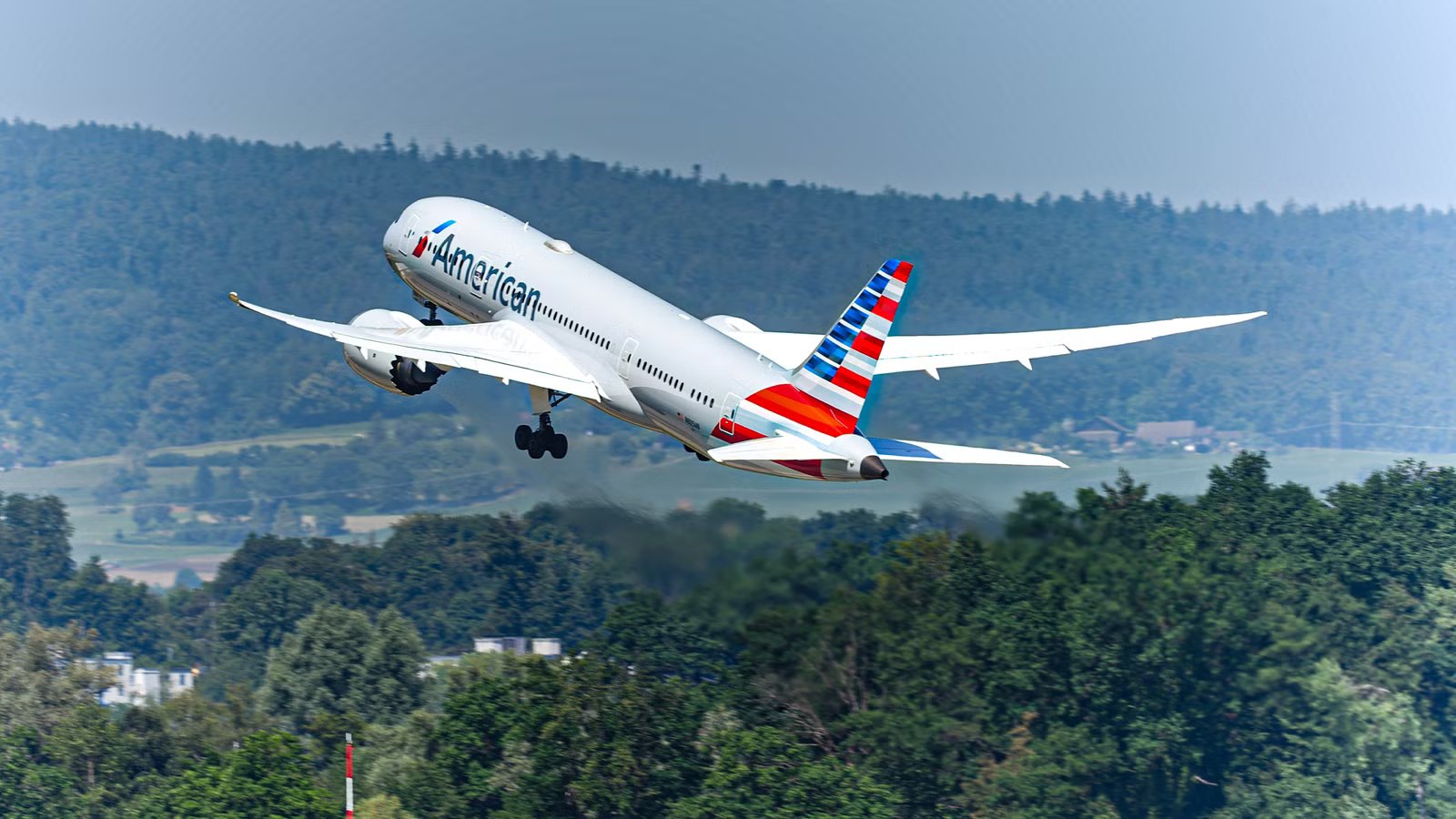
Although  American Airlines has the largest number of hubs of any US airline (ten), it arguably has the weakest hub structure out of the US three. It has three hubs in the Northeast, one of which is heavily constrained and cannot accommodate longer flights (Washington National), while it has only one hub on the West Coast.
It’s also relatively weak in New York and Chicago, while its position in Los Angeles has faltered. This leaves Miami, Phoenix, Charlotte, and especially Dallas/Fort Worth as its real moneymakers. American Airlines has focused heavily on growing its network out of core hubs like DFW and Charlotte, which are low-cost airports where it has massive feed.
This is a great way to make money in the short term, but the challenge is that the major markets where American is weaker are crucial to maintaining relevance within the country. Now, American has been shifting its focus to hubs like Chicago, but it’s had to make cuts elsewhere in the process.
Recent Changes To American’s Network

American Airlines’ operations at  Dallas/Fort Worth International Airport (DFW) are the second-largest airline hub in the US, behind only Delta’s Atlanta hub. Because the region is one of the fastest-growing in the country, American dominates the market, and the airport has low operating costs, the carrier has continued to invest in its DFW network.
In 2026, American revised its schedule to create 13 banks to reduce misconnects while it continues to grow its network out of DFW. It’s extremely lucrative, and American largely has the market all to itself. In addition to the growth at DFW, American has been boosting its presence at  Phoenix Sky Harbor International Airport (PHX), which is another fortress hub for the airline serving a rapidly growing region.
Catch what other flight trackers miss
Emergency squawks, holds, NOTAMs — live signals, no signup.
Open tracker
Catch what other flight trackers miss
Emergency squawks, holds, NOTAMs — live signals, no signup.
Open tracker
However, the most notable area of growth for American has been in  Chicago O’Hare International Airport (ORD), as this is a huge business market where it faces major competition from United Airlines. American is the number two carrier in ORD, and United has been growing aggressively in ORD at the same time as American.
However, while American has been focusing on growth in certain hubs, it’s also cut back some services out of  Charlotte Douglas International Airport (CLT). American has focused heavily on CLT in recent years due to the growing local market and the extremely low operating costs associated with this hub. Ideally, you’d think that American would want to grow in every hub, but it’s instead having to make cuts in CLT in part to fund growth in ORD, PHX, and DFW.
American’s Growth & Cutbacks

United Airlines is not only the largest airline in the US by mainline fleet size, but it’s also the fastest-growing airline among its contemporaries. This is true not only in fleet size but also in network and schedule, where the carrier is essentially growing everywhere. United can do this because it has hundreds of aircraft on order, and it’s been very slow with aircraft retirements.
It has the planes to sustain growth throughout the network, which is allowing new routes as well as upgrading from regional jets to smaller mainline aircraft. American Airlines, on the other hand, has been taking planes at a much slower rate than its Chicago-based peer. While American has over 100 A321neos on order, its 737 MAX 8 deliveries are done, while the 737 MAX 10 has yet to be certified.
American Airlines Orderbook | Delta Air Lines Orderbook | United Airlines Orderbook | |||
|---|---|---|---|---|---|
Airbus A321neo | 130 | Airbus A220-300 | 53 | Airbus A321neo | 132 |
Airbus A321XLR | 30 | Airbus A321neo | 83 | Airbus A321XLR | 48 |
Boeing 737 MAX 10 | 115 | Airbus A330-900neo | 16 | Boeing 737 MAX 9 | 44 |
Boeing 787-9 Dreamliner | 19 | Airbus A350-900 | 17 | Boeing 737 MAX 10 | 167 |
Airbus A350-1000 | 20 | Boeing 787-9 Dreamliner | 70 | ||
Boeing 737 MAX 10 | 100 | Boeing 787-10 Dreamliner | 56 | ||
Boeing 787-10 Dreamliner | 30 | ||||
In addition, American’s long-haul growth is only coming from its A321XLR and 787 orders, the latter of which it has only 19 left to arrive. United has over 100 787s still on order, which are arriving at a much quicker rate than American’s Dreamliners. United is growing at a rapid rate from nearly all of its hubs and is receiving a record number of widebodies annually, but American’s fleet growth is much more tepid.
Because of this, it has to pick and choose where to grow, and depending on the scale of this growth, it has to make cuts in other areas. The routes that American cut out of CLT proved to be low-hanging fruit, while its growth in ORD was necessitated by the competitive environment. Meanwhile, Phoenix is growing and is usually operationally reliable, while DFW is always lucrative.
American Airlines’ Debt Load

American Airlines embarked on a massive fleet renewal project in the 2010s, ordering hundreds of Airbus A320 and Boeing 737 family aircraft. This required taking on a fairly high debt load, which has been reduced to around $35 billion. American also has a relatively high debt leverage ratio compared to Delta Air Lines and United Airlines.
While American has made aircraft orders more recently, it’s generally focusing on paying down the debt rather than trying to grow rapidly. In addition to the debt load, American has also been recording much weaker financial results than Delta or United, posting minuscule profits year after year while operating with less than 3% margins, whereas its rivals post margins of over 8%.
The carrier has not been in a strong position to take on more debt to fund expensive growth, and this arguably wouldn’t solve its issues anyway. For the most part, American’s problems stem from a lack of corporate business, its brand image, and network design (among other factors) rather than pure size. Of course, this discussion primarily centers around the carrier’s domestic operations.
American’s long-haul network is noticeably smaller than those of its peers, as the carrier relies more heavily on joint venture partners and has a smaller presence in New York, the US’s largest international gateway. This aspect of the network has received criticism, and American is noticeably light on widebody orders. With its domestic network, which makes up most of the airline’s business, it’s not size that’s the problem.
Competition In Chicago

United has always been larger than American in Chicago (the former is even based in the city). However, the two have long coexisted as formidable competitors to one another, and there was a time when American actually captured a higher share of the local market, while United was larger overall due to its sizable connecting network.
However, post-COVID, United has focused heavily on domestic growth network-wide to complement its massive long-haul network, and it has especially grown its ORD operations. In 2025, United received access to five new gates in ORD, while American lost four gates. The Chicago Department of Aviation assigns gates based on prior-year utilization and departure volume.
This meant that United’s already substantial growth in 2024 rewarded it with more airport capacity. ORD was always the airline’s largest hub, but its new gates at ORD, a general initiative in domestic growth, and an especially strong position against American have led United to grow far more rapidly than ever before. During the 2026 summer season, United planned up to 750 daily departures, whereas it averaged 541 in 2025.
The sheer size of the expansion led to growing concerns about the airport’s ability to handle so much traffic, and the FAA imposed capacity limits that cut United’s schedule down to around 650 daily departures, which is still a massive number. American, meanwhile, has responded to United’s growth to prevent itself from being drowned out in the market and is currently operating over 500 departures per day out of ORD.
American’s New Strategic Positioning

American Airlines has very much focused on domestic flights out of its strongest hubs, while keeping its transatlantic and transpacific route portfolios light. American moved downmarket regarding its product positioning, and it focused away from corporate bookings while selling schedule as the main product. When the airline made many of these decisions, it was relatively unclear what the future of the US market was.
However, today, the market has not rewarded American’s decisions. It’s now looking to change course as a result. As described, American is making network adjustments, part of which is about maintaining its competitive position against a growing rival in a major business market. In addition, the carrier has been investing more heavily in its product.
Initially, these consisted of minor improvements like lounge catering upgrades, but the airline recently announced that it would install seatback screens across its mainline single-aisle fleet, along with larger first class cabins and more Main Cabin Extra seats. American is now looking to place an order for widebody aircraft, which would potentially be for growth, to replace the carrier’s aging Boeing 777-200ER fleet, or both.
Depending on the scale of the order, this could allow for significant long-haul growth, which would shake up the status quo and represent a major strategic shift for American. In addition, the carrier is increasing the size of its premium cabins on its widebody aircraft, and it seems that it’s now making serious efforts in its strategic shift to become more competitive in multiple areas.