dailynewsnblog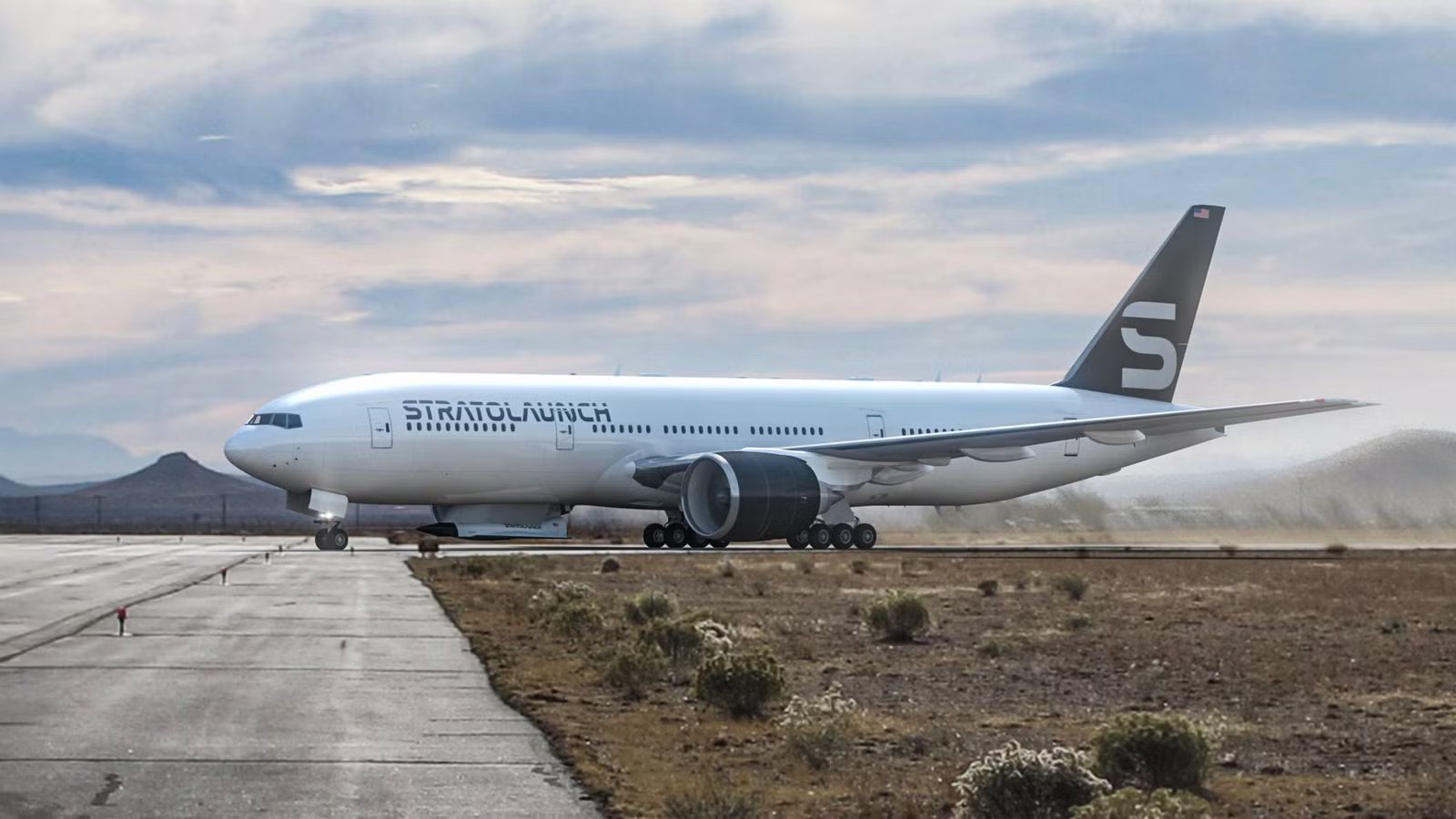
Stratolaunch Systems is an aerospace company best known for operating the Scaled Composites Model 351 Stratolaunch, or ‘Roc‘, a twin-fuselage testbed aircraft that still holds the record for having the largest wingspan of any aircraft in history. The monstrous-looking aircraft was originally intended to carry air-launch-to-orbit rockets, but is now used for hypersonic vehicle testing, and it’s flown 25 times since its introduction in 2019. However, this isn’t the only aircraft used by Stratolaunch Systems.
In 2023, the company announced that it would acquire a Boeing 747-400 to complement Roc for hypersonic vehicle testing. The aircraft, now named the ‘Spirit of Mojave‘, has been used multiple times as a more cost-effective and flexible option alongside Roc, as it’s essentially a standard 747-400 repurposed for this mission. Meanwhile, in September 2026, Stratolaunch announced that it would be acquiring a third aircraft, selecting a used Boeing 777-200ER to be the company’s third carrier platform.
Stratolaunch’s Newest Plane

On September 30, 2026, Stratolaunch Systems announced the acquisition of a 777-200ER to join its carrier fleet, which currently consists of the aforementioned 747 and Roc. It’s unknown what the tail number of the aircraft is, but it is believed to be a Trent 800-powered example formerly operated by Air New Zealand. Upon taking delivery of the 777, Stratolaunch will modify the aircraft in-house for its future mission, and it aims to get its new Boeing widebody flying again in 2027.
Reportedly, Stratolaunch has already certified pilots to operate the 777, and the plane is undergoing modifications already. This includes a fresh coat of paint in the company’s livery, while also fitting attachment points. Apart from that, however, the 777 will be kept largely as is, with the avionics, engines, and much of the airframe still more than functional for the purposes of its mission. This also improves the business case of buying the aircraft, as more elaborate changes would drive up modification and maintenance costs significantly.
Stratolaunch has stated that the addition of the 777 will increase the company’s flight capacity by 35% and enable it to operate parallel missions globally. While the purchase price of the 777 has not been publicly disclosed, 777-200ERs are not expensive on the used market, and given how readily available parts are for the 777 as well as for the Trent 800 engines, it should prove to be a very cost-effective option for Stratolaunch. Meanwhile, demand is up for the company’s services, which necessitates a third carrier aircraft.
Growth For Stratolaunch

The company that first commissioned Roc is not the same one as today. Stratolaunch originally intended to use the Roc as a platform for air-launch-to-orbit rockets, but the plane never formally served this role. After its first flight in 2019, Stratolaunch ceased operations and all assets were listed for sale, including Roc. Later that same year, Stratolaunch Systems was acquired by Cerberus Capital Management and pivoted towards developing hypersonic vehicles, initially using Roc as the launch platform for test flights.
Stratolaunch is currently working on the ‘Talon-A‘ line of hypersonic flight vehicles. These are fully autonomous, rocket-powered aircraft capable of flying past Mach 5 and are designed with the capability to operate from runways. However, it’s much cheaper to strap the vehicles to Roc or one of the Boeings, take the aircraft to cruising altitude, and then deploy the test craft to hypersonic speeds, which is why this is the standard procedure for the company. Ultimately, this is a less expensive approach, and the company isn’t studying the craft’s takeoff or climb performance.
Stratolaunch Carrier Fleet | Type | First Flight | Year Acquired |
|---|---|---|---|
Roc | Scaled Composites Model 351 Stratolaunch | 2019 | 2019 |
Spirit Of Mojave | Boeing 747-400 | 2001 | 2023 |
TBA | Boeing 777-200ER | Unknown (TBD) | 2026 |
The company has completed over ten Talon-A hypersonic test flights, and in February 2026, Stratolaunch was awarded a $90.8 million contract from the US Department of War to continue hypersonic testing. With this contract, the company has increased business and will need to perform testing more often, which could easily overwhelm the current fleet. Therefore, the 777 is necessary to meet the heightened demand for Stratolaunch’s services and is expected to be used extensively.
The Choice Of The 777-200ER

The aircraft choice for this new addition to the fleet is interesting. Although it’s not been revealed which exact aircraft Stratolaunch has taken, all of Air New Zealand’s former 777-200ERs are around 18 to 21 years old today, which is not particularly old for a modern widebody aircraft. In addition, these planes were mainly used for major long-haul routes, meaning that they might be relatively high in hours but low on cycles. This role will not see it fly as many hours as before, and the 777-200ER that Stratolaunch selected should have plenty of life left.
The 777-200ER has a high payload capacity, and it’s fairly cheap to maintain these planes. In addition, they’re also far more efficient than a 747 while still being appropriately sized for the role. Notably, used 777-200ERs are also quite affordable, as secondhand demand for the type has been relatively limited. Ultimately, airlines focused on long-haul growth favor the more modern airliners currently on sale, while those looking for an older aircraft in this size segment often find that the Airbus A330-300 is only slightly smaller while burning less fuel.
In addition to these factors, the 777-200ER also lacks demand in the cargo market. The 777F is the exact same size while having a much higher payload capacity, as it’s based on the 777-200LR. While some companies (particularly package shippers) don’t need the added payload capacity, converted A330-300s are, again, more efficient for this role. There’s ultimately little demand for cargo versions of the 777-200ER, which is why a structural freighter conversion program has never been launched, further drying up the type’s prospects on the secondary market.
The 747 Already In Use

Spirit of Mojave is Stratolaunch’s 747-400 that augments Roc for Talon-A launches. The aircraft was first constructed in 2001 and was delivered to Virgin Atlantic, which operated the aircraft (originally named ‘Cosmic Girl‘) until 2015. Aside from an incident in which the aircraft’s number one engine struck the ground when landing during intense crosswinds at Heathrow, Cosmic Girl had an uneventful career. In 2015, Virgin Atlantic ended up removing the aircraft, and it was transferred to Virgin Galactic, then later to Virgin Orbit.
Virgin Galactic and Virgin Orbit required the 747 specifically for its carrying capacity, and the aircraft began carrying the LauncherOne rocket shortly afterwards. The rocket was originally intended to be launched from the White Knight Two, but it ended up increasing in size due to evolving market demands, and this necessitated the larger, more capable 747. Virgin Orbit ended up going bankrupt in 2023, and Cosmic Girl was put up for auction. It’s here that Stratolaunch acquired the aircraft, and the aircraft was subsequently renamed as Spirit of Mojave.
As the Spirit of Mojave, the aircraft has carried Talon-A vehicles multiple times, carrying the aircraft slightly ahead of the wings on its underside. It operates in parallel with Roc, allowing Stratolaunch to pursue significantly more missions and accommodate customers more easily. The aircraft isn’t particularly old by 747 standards and the worldwide fleet of 747s is still relatively large, improving the economics of maintaining this aircraft, and it’s much more flexible than Roc. As such, it’s become an extremely important asset to the company.
Outlook On The Purchase

With a used 747 in the fleet and a used 777 joining, Stratolaunch’s operations provide an interesting perspective on the second-hand widebody market. 747s have long been desirable for their size and payload capacity to a certain type of buyer, but they’ve primarily been scooped up for cargo conversions. However, demand for 747s is declining as they age out and as the Airbus A350F and Boeing 777-8F progress in development.
The 777-200ER, meanwhile, is only really desirable on account of its price. Operators that need heavy payload and long range usually opt for a new Boeing 787 or Airbus A350, while the A330-300 is more economical and seats nearly the same number of passengers. Stratolaunch is a unique case in which the plane’s payload capacity is quite valuable, but otherwise, the used market prefers newer aircraft or the A330.
The 747 and soon the 777 are quite valuable assets to Stratolaunch. Not only do they allow for more flights to be performed, but they’re much more flexible since they can use most airports with a reasonably sized runway. In addition, both are used by airlines worldwide and only feature light modifications for their mission, which makes it easy for Stratolaunch to maintain them.
But then, there’s Roc. The aircraft is giant, requiring massive runways, and its six engines also consume huge amounts of fuel. In addition, because Roc is a one-of-one, many of its parts are unique, which increases maintenance costs. However, while many of Stratolaunch’s missions arguably don’t require the capabilities of the twin-fuselage giant, the company plans to use Roc for much larger aircraft than the current Talon-A vehicles and to launch multiple test aircraft simultaneously. For these missions, Roc is the only aircraft in the world that can do the job.